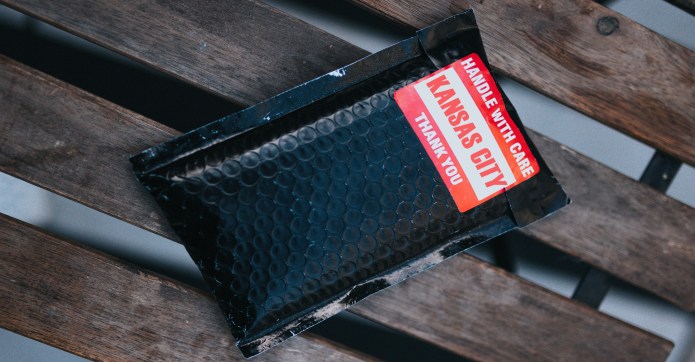
Little Grateful Earthquakes

As we close out the Thanksgiving weekend, two little moments from 2025 have sprung to mind in contemplating gratitude. I have so much to be grateful for, and I also have a bedtime ritual of detailing those gratitudes from the day. That said, the moments, incidents, good news, etc, that seem to hold the most meaning for me, as far as gratitude goes, are the ones that crack the earth a bit. Jar me. Teach me something I needed to learn. And so these two.

Moment One. About 4 months ago, I bought a man on the street some food. He’d asked for money before I’d walked into a Starbucks to have a coffee, and to sit and read. But I rarely keep cash on me, so I had to decline him. He was an elderly man walking with a cane. It broke my heart that at his age he was in this predicament Made in America, when I could tell this hadn’t always been the case. I was in Starbucks for awhile because I was there to read, but when I came out he was still sitting there. I walked up and asked him if he’d like any food, and when he said “yes please” I told him I’d get him something from the Chipotle next door. I asked him what he liked, he told me, and I did the deed.

I’m SO very grateful that I was nudged to go beyond what I customarily do when someone asks me for money (if I have a few dollars, I give it. If I don’t, I politely decline and keep moving). And, in fact, I’ve had no intentions of sharing this story, because I’ve lately been in this mindset of not wanting to be that person who does something kind just so they can tell everyone about it. But in this case, I didn’t actually walk away thinking ALL THAT about myself, because I was instead given an incredibly humbling experience.

I walked out with his food and handed the bag to him. He was full of gracious thank yous and I offered back, “it’s my pleasure.” I wished him well and turned to walk away, and he mumbled something behind me. I turned back to him, wondering what else does he want? And I said “I’m sorry I didn’t hear that.” He then repeated, his voice still soft, “my name is Roderick Peterson.” And in that moment, which shook me, I realized I hadn’t truly made him human in my mind. He was just a nameless, faceless shadow on the street. In that moment, Roderick Peterson had more self-regard and class than I’d been exhibiting. He wanted me to know who he was.

When we meet someone, don’t we exchange names? Yet it had never dawned on me to do that. I said my name back and repeated what a pleasure it was to meet him. This time, though, that “pleasure” was fueled with something it should’ve been fueled with from the beginning. Sonder. I’ve only recently learned of this noun, which, according to various dictionaries, means “the feeling you have in realizing that every other individual you see has a life as full and as real as your own, making you just a background character in their epic story, a perspective that contrasts with our usual self-centered perspective where WE are always the protagonist.

What’s ironic is that the thing I find most important in being a writer is the ability to see humanity in all its endless layers, and to give (especially if I’m creating characters) each layer, to the best of my ability, the right to be heard, seen, and expressed. And for the most part, as a writer, especially of fiction, I think I’ve honored that ethos. I’ve had friends who, after reading a book of mine, say, “what a horrible person X was” or “I hate Y!” And I always consider that a compliment, because it means I’ve taken a flawed character and made them real enough to elicit such an emotion. Which is the point. And I maintain, always, that any gravely flawed character deserves for their story to be told just as much, if not more, as any hero of a tale. Because it’s in those dark crevices that we find humanity’s depths. It’s a writing practice that I believe expands me as a human being, and I hope it expands a reader.

Now, that example of my consciousness about sonder is not in any way intending to suggest that Roderick Peterson is a horrible character. He actually demonstrated far greater grace than I was demonstrating in that moment. Though, clearly, something horrible had happened in his life that homelessness was now his lot. What my example IS intending to say is that I fully recognize the irony in my being a writer and yet not truly seeing Roderick Peterson until he graciously insisted I see him. I will feel incredibly grateful to him for the rest of my life. Grateful for meeting him. For interacting with him. And for his presence in the grander scheme of my ongoing spiritual lessons.

Moment Two. Somewhere around the same season this year that I encountered Mr. Roderick Peterson, I was hosting a table at a public bazaar to sell some of my books. It was a social event, so I didn’t just stand behind the table; I milled and chatted with others. At one point, I was probably several yards away from my table, chatting with another person who was also selling their wares, and from the corner of my eye I watched a woman pick up one of my books and walk casually away. And I knew for a fact she’d seen me selling copies to others, not giving them away, so I don’t think she was confused about what she was doing. I excused myself from the chat and walked over to her.

“I see you’re interested in my book,” I said.

She looked up and smiled uncomfortably, only then asking, “Is it something you’re selling, or can we just help ourselves to one?” I didn’t challenge her on what I believed she already knew; I simply said the books were for sale. She promptly apologized and in the same breath explained how short of funds she was and how life was not treating her so kindly these days. It was equal parts apology and excuse. And I’ve made those same kind of apologies in my life. The ones that are immediately followed by an excuse for the behavior. I don’t do that anymore. What I learned some good time ago is that, at best, those are sheepish apologies. At worst, they are an unwillingness to be accountable. And while I don’t condone theft, and am not especially interested in those kinds of apologies, this woman’s spin on life being a struggle moved me. Even more so, I realized she was now embarrassed, and I didn’t especially feel great having put her in that position. So, just to end the exchange as quickly as possible, and to give her some tiny semblance of her dignity back, I said, “You know what? Don’t worry about it. It’s my gift. I hope you enjoy it, and I hope life turns around for you soon.” And I smiled and left her to get back to my station.

Several moments later, she came back up to my table, where I was now chatting with another buyer, and said, “please give me your Venmo or Zelle information. I need to pay you.” And when I insisted that it really was okay, she doubled down on her insistence that she be given the opportunity to right her wrong. And it was only then that I realized I was not giving her any dignity back by changing my tactic and offering her the book for free. I was furthering her humiliation. And while I knew that she wanted her dignity restored, she knew what I didn’t. That she had to be the one to restore it. And in that moment, I recognized that, yet again, I was simply out of touch with those who are struggling more than I am.

She’d been caught red-handed. But rather than feel entitled, or run away with her thieved booty while giving me the finger, or throwing the book back at me, humiliated that she’d been caught (all behaviors I’ve seen before), she made a choice to right her wrong, to own it, and to atone, right then and there. And she wouldn’t take no for an answer.

I said, “thank you for buying my book. I hope it gives you something worth buying it for. And I appreciate you.” And she said back, “thank YOU for your understanding.”

I’m not a person of wealth and means. I’ve lived paycheck to paycheck my entire life. But it’s been an extraordinary life in more ways than I can count, and in that way I’m richer than most. I’ve also never been without a roof over my head, and I’ve never stolen something because I couldn’t afford to buy it. I’ve been incredibly fortunate in my life. And more and more do I feel the chasm that exists in this country between rich and poor, and it hurts my heart more than ever, in this time of life.

These two human beings, these divine examples, angels, if you will, were vessels of grace who flowed through my life right when I needed them to, to imbue me with sonder. I say “right when I needed them to” because I always see myself as being on a journey of spiritual transformation. And if I’m to get the fullest benefits of this marvelous journey, I’d better keep on knowing that every incident that comes my way is a portal, and every person a teacher. I’d better keep my eyes wide open, and truly see others. I’ll only be the better for it.

Blessings to Roderick Peterson and Carla Smith for being my little grateful earthquakes this year. I wish them both much ease in this life. They’ve already given me riches.

And get your copy now of HOW THE LIGHT GETS IN: 10 Principles for Reclaiming Your Spirit


No Regrets (well, maybe a few…and that’s okay)

My final professional gig as a singer (and I qualify that because I still sing at my church home, where it’s a different offering altogether from being a gigging musician) was June 27, 2024, playing a concert with the funnest project I’ve ever been a part of, the Orchestre Surreal. I’d been with that outfit longer than any other. It is unique and wild in a very goofy, brilliant way. It was fun as hell for 28 years. And it was the way I wanted to jump out of this main act of my life and dive into my Act 3.

This right here marks the first that I’ve said publicly about why I chose to retire from singing. I’ve just not wanted any kind of pity party, or to feel as though my confessions would’ve been designed to coax on the “No, you still sound fabulous!”-es or whatever. I just wanted to have a mega-meaningful final showdown, and then move on. And I got to have that in spades.

The reason I chose to retire was because the writing had been on the wall for a good 7-8 years prior that my singing voice was not moving into old age with very much grace, or spine, or muscle, or gumption, or however one sees these things. It had become a wilting flower. At first, a snail’s pace. Only I could hear it and feel it; it was imperceptible to anyone else. Then over time, it became more noticeable, and I started to feel the complete lack of control I was having over that splendid muscle that is our vocal cords. I mean, I’d always been aces at hitting a pure note, tamping down my vibrato upon stylistic command, no wavering, no pitchiness. I had nuance and subtlety. I could sculpt a song. But no more. Really tough to sing jazz without vocal nuance (if I was content to just sing some blues or rock in bars, and blast it out, I could’ve bought myself another 10 years). Bending a studied note with precision skill? Phrasing? It all just seemed to disappear. I couldn’t understand it, to my great frustration. I thought, “I haven’t stopped using it. I’m singing more than ever before. So, it’s not a case of like when people stop exercising and the muscle tone goes away and gets weaker. I’m workin’ the hell outta these cords. What gives???” It got to where I had to start taking certain songs off my list that any gig leader will call from when it’s my time to sing. Or I’d lower the key of certain other songs. Each particular adjustment would depend on what the specific struggle was when I’d sing a given song. 

The thing is, none of this baffling phenomenon was about losing my range. I’ve kept the range for the most part. I never had much of one to begin with. Never been the showy singer (except with the Orchestre Surreal) or the acrobatic singer. Didn’t have the crazy, sky-high notes, or the gaudy melismas. But also, early on in my career I got vocal nodules and was told not to sing for 6 months. And at the time I was waiting tables and not singing for my living, so I could afford to lay off. The nodules weren’t severe enough to require surgery or laser treatments, simply rest. 

When the voice slowly but surely came back, the one thing that never did return was my falsetto. And I was told I could nurse that back with some voice lessons and exercises, but I didn’t bite. Mainly because I never had money for vocal lessons on a waitress’ paycheck. So, I sufficed to live with only a chest voice and a limited range. I could live with a small range, because I decided that instead of any kind of vocal prowess (and vocal acrobatics never had any pull for me anyway) I would instead focus on honing my skills as an actor. I’d just come out of my studies at an acting academy, and had some real chops. And I believed in that kind of singer anyway. Someone who could tap emotional stores that exist deeply inside. Someone who would bleed when singing. Singers who could gut-punch me were the ones I loved best. So, I decided to develop that muscle instead. And I think it has served me well.  

But the long game, as it turns out, was going to be tough on my actual physical instrument. When the writing on the wall became a full-blown rebellion, I had just moved to Kansas City where I had hoped to continue singing. I was introduced to some musicians in this town early on in my arrival, thanks to my new friend (new at the time) woodwind player David Valdez, who set up some jam sessions expressly to introduce me to the community. And I did get a handful of gigs booked, including at the legendary Blue Room, which is connected to the Kansas City Museum of Jazz, and even a jazz festival with a wonderful octet led by woodwind player Ray Keller. They were very fun gigs, but the voice was quickly saying, “hey Angela, we’re not actually up for this anymore.” And the absolute last thing I wanted as a newbie in this town, after a robust 35-years amassing a respectable reputation in Los Angeles, was to be introduced to the insanely great Kansas City music scene donning this wilting flower of a voice. No thanks! So I abruptly stopped booking gigs. I’d gotten myself a day job (two, sort of), so I didn’t have to rely on gigging to pay bills, as I had in L.A., and that made the decision to stop a whole lot easier.  

I’m not even sure I felt a whole lot of grief around it, to be honest, as all I really wanted to do any longer was write. I’ve actually been a writer my entire life, but it had always been a back burner pursuit, if on the stove at all, while I was being steadily employed as a vocalist, signed up with several contracting offices, constantly learning new music, writing charts, steadily expanding my repertoire, especially for party bands and casuals (private parties). It was a full-time indulgence. I wrote on the side, and I hustled literary agents (went through two of them) and chased publishing deals, and eventually just established my own publishing imprint and went the indie author route. Fuck ’em. I wasn’t going to keep waiting around for some giant to give me legitimacy.

Today, in this Act 3 of my life, I want writing to be on the front burner. The only burner. All the burners. So, I essentially started my life completely over at the ripe old age of 60. And then ended one career to start a new one at 64. That takes some nerve, if not necessarily common sense, and I’m fully embracing the nerve.  

I do look back on my singing life, and, in wondering why my voice is largely failing me, I’ve come to some conclusions. But before I share what that is, let me explain that I say “largely failing me” because I can still eke out some adequate singing, if not with a stellar instrument, because I still have emotional expressions to offer. AND because I really want to continue singing at my church. It’s not gigging. It’s a spiritual offering. And I’ll do that for as long as they’ll have me, because I feel nothing but love and non-judgment coming from every single soul in this beautiful community that I have found to help keep my spiritual life alive and radiating.

Okay, so what I’ve come to realize about the current state of my singing voice is that I never took voice lessons. Never had a vocal coach. Never officially learned how to sing properly. Some intuitive lessons got learned once I recovered from the vocal nodes and got back to singing. I kind of had a sense of what not to do anymore, and I managed to get through a 35-year career on those instincts. But I’m certain I was using my voice (placement, breathing, etc.) incorrectly, and it would eventually prove to catch up with me.  

Ever since social media has become a mainstay in our lives, I’ve seen and read a lot of opinions and sternly righteous admonishments from some vocalists toward other vocalists on the ills of having never learned to sing correctly. It’s almost a kind of “how dare you!” And all I have to offer is … you know what you know until you know better. The fateful decision to go through Door 1 instead of Door 2 unfolded for me when I was very young, and arrogant myself. I could sing, and I ended up spending the better part of my life doing it, getting paid for it, and booking it constantly. Not only gigs but recording sessions in film and television. And all that without a single voice lesson. So, in many ways, maybe I felt like I was getting away with something. I simply didn’t know what I didn’t know. 

For awhile, in the present universe, when I would come across these admonishing Facebook posts, I’d find myself getting defensive. They’re never actually directed at me, so I never respond or contribute to the conversation threads. I just keep my defensiveness to myself. But I do wonder what their admonitions accomplish, other than making other singers (the ones like me whose voices are declining because we were never properly trained) feel horrible. It’s not like I can turn back the clock and do my life over. All I have is right now. And I’ve chosen to pivot my entire life in a different direction. And, more importantly, am loving the pivot.  

Believe it or not, I’m a perfectionist. I know. How can you call yourself one if you never bothered to get some proper training for your voice? Like I said, I believed I was sailing along effortlessly without that help. But I also know it’s the Perfectionist in me that decided to stop singing if I couldn’t do it to a certain standard.

So, first off, a perfectionist is not someone who does everything perfectly all the time (is that even possible?). Perfectionism describes the mental state of obsessive-compulsive behaviors that pick at a thing we deem flawed or in need of perfecting, fastidiously, till it bleeds and scabs over. It’s a kind of unquenchable pursuit. And I have done that with a lot of things in my life. Almost to the point of sabotage. I just never did it with singing because I thought I was doing everything right. And then when it started its decline, I abandoned ship as fast as you could blink. That’s a perfectionist. “If I can’t do it well, I want out.”

And that makes me think about the great goddess Joni Mitchell, who sounds nothing today like she did in her younger years. That otherworldly faerie of a voice has become a deep, resonating canyon of rich minerals. She didn’t abandon ship. She reinvented. To a certain degree I did that when, early on after the nodes, I turned my attentions toward cultivating the emotional component of singing instead of fine-tuning the instrument itself. But when it began its decline in these latter years, I couldn’t bear no longer having the voice of my prime. Joni is brave, where I am not. It’s all a process.

I discovered my Inner Perfectionist working a 12-step program, and have been steadily, with the help of much inward-turning, self-examination, and climbing that 12-step staircase, transforming the perfectionism into (I believe) a healthier state of acceptance of my flaws, my mistakes, and my missteps in this life. I’m trying hard not to berate myself as much today as I have in the past, yet at the same time still maintaining a healthy sense of regret. Some may get their haunches up over that phrase, as I think we’ve become a culture that believes it’s healthier to have no regrets. Maybe that’s true. My gut tells me that a moderate level of it actually helps us to: not repeat the past, learn from our mistakes, and a whole bunch of other familiar tropes I think we all can agree are good ones to follow.  

So, I’m learning to be self-forgiving. I can berate myself better than anyone else could. It doesn’t serve me. I like gentler me. And I also still have my moments, but I shut it down if I’m conscious enough to catch it. 

The state of my perfectionism today is such that I’m actually beginning to embrace IMPERFECTION almost to the point of it being kind of like a spirit animal to me. I have no shame whatsoever now in saying, when asked why I retired from singing, when most of my singing peers are going stronger than ever, that I fucked up. A long time ago I fucked up. I wish I’d done it differently. I do have some regrets about that. And I guess a little bit of grief, after all. But only a little bit, as I couldn’t be happier having made the decision to turn all my burners on to this writing thing. Writing gives me life and always has. And Kansas City, especially, has embraced me for it. So, I’m on the right track. If there is even such a thing. I’m more inclined to believe we’re all just on tracks, period: many, a few, maybe only ever ONE like a hyper-focused beast of brilliance, and we do what we do on those tracks until we’re ready for some new ones. 

So, now when I see these posts about what singers do wrong, I just smile, keep scrolling, try to channel a little Joni, and know that the choices I’ve made in my life (the good, the bad, the ugly, the head-slapping) have built me into who I am. And I kinda like her. She’s scrappy. She started her whole life and career over from scratch at an age when most are prepping for the cruises and the golf course. Is it bat shit crazy? Possibly so. In fact, probably so.   

HOW THE LIGHT GETS IN: 10 Principles for Reclaiming Your Spirit

“With gentle encouragement vs. harsh directives, sharing rather than simply instructing,
Angela nudges us to play with practices that are deep in their simplicity.”
— Michael McMorrow, D.D.

Friends, I’ve written a new book! And it’s a book that’s a very different turn for me. I guess you could say it’s the way I know how best to contribute something of value and urgency to this American life we’re presently living.

Navigating the murky waters of life is a job with tenure. All the money and station in the world won’t reprieve us from the task. From living through the pandemic to being thrust into a present-day American culture whose democracy and basic humanity are being threatened, we are experiencing a life that has become more surreal, more unpredictable, and more challenging every day. What tools do we have to cope with the uncertainty of these anxious times?  How the Light Gets In offers a practical guide of 10 principles to aid in taking care of our spirits, keeping sanity, serenity, and joy in our daily toolbox, living with greater authenticity, and staving off the harmful effects of the “fight or flight” mechanism of a sympathetic nervous system in hyperdrive. This little book does not propose we shut our eyes on the world we live in, but that we cultivate stronger, more lasting practices with which to sanely take on our world, while maintaining crucial emotional and spiritual wellness through self-reflection and personal application.

In addition to spending my life as a writer, musician, and artist, I’ve also spent pretty much half that life in the study or practice of Buddhism, Taoism, metaphysics, yoga, meditation, and many other inward-turning disciplines, each of which has contributed to the formulation of this 10-pt practice for rejuvenation of the spirit.

Other than the purchase of this book, there is no further money asked of you, no miracle potions to buy for younger skin or longer life, no ongoing prescription that takes money out of your bank account every month, no predatory pitch at the end of a long “free” video. This path-to-wellness idea is contained solely within this little book for anyone who wants it, and all it costs is the desire it takes to put these principles into practice.

How the Light Gets In is suitable for readers new to wellness topics. I will, of course, greatly appreciate your support, but even more importantly I believe this book and its principles can be a valuable augmentation to your radiant life already in progress.

And as always:

Create — even if you’re not an artist.
Support artists — especially the independents.
Live well — doesn’t take money to do it.
And be whole.

Love & Wellness,
ACB

The Aunties

A couple of years ago, I had the pleasure of joining a Zoom gathering, hosted by GirlTrek that featured political activist and author Angela Davis and poet/activist Nikki Giovanni, who just made her earthly transition a few days ago on December 9, 2024.

The following poem is to dedicated Ms. Davis and the late great Ms. Giovanni.

auntie nikki

auntie angela

teachin’ preachin’

our whole lives

paving the way for

us black girls

ill-fitting in our

human suits

till we learned the magic

of words the power

in our hair the strut

in our stride the mama mojo

click of our teeth that says

I am here!

the aunties

paving the way

for our voices

& the songs

those voices

sing

Rest In Peace, Goddess Nikki, Poet Eternal

And to read my favorite poem by Ms. Giovanni: https://poetrysociety.org/poems/winter-poem

Cotton Candy

in my mamas bosom

i would bury my eyes

wet with salty seas

and talk about how

rodney jones snatched

my cotton candy and

buried it in the sand today and

miss adams didnt

even do a thing like

make him sit in the

corner the way she

would do me when id

hit somebody and andy

white kissed me when i

wasnt even lookin and

mama would rock me

close with a rhythm

i knew well

and hum one of those

old familiar gospels

and read me an appropriate

passage from the scriptures

that i never quite

understood and when those salty

seas dried and trails of crust

decorated my face my

mama would wet her finger in her

mouth and cleanse me

again and that warm

silky moistness

would make me forget my lament and id

attach an extra thank

you at the close of my

prayers for the gift of

my mama

From the Black Church to New Thought

As spoken at Unity Southeast in Kansas City’s Black History Month commemoration, entitled “From the Black Church to New Thought” on February 1, 2024.  An evening filled with music and attestations.

I grew up in the Black church. It’s almost a label — “Black Church” — as it doesn’t merely describe a church peopled with Black folk, but instead regards an institution uniquely of its own creation. Packed with history, much of which is trauma-generated, the Black Church has come to symbolize a kind of spiritual ablution & healing of the ancestral painbody, demonstrated in the exhortations, the dancing and shouting, and the speaking in tongues. My dear mother used to call it “gittin’ happy.” The Black Church is an unparalleled experience to behold. I was baptized at age 10, at Trinity Baptist Church in Los Angeles, under the ministry of the Reverend Elliott Mason. My siblings and I all sang in the Youth & Young Adult choir. For a brief time, as a teen, I was even the choir accompanist, as our choir director also happened to be my piano teacher, the Reverend Carl Johnson, and he believed in giving his students opportunities for growth and grown-up responsibilities, because in the Black Church you weren’t just raised by your parents; you were raised by the village. And to this day, Carl remains a force in my life. My maternal grandfather, the Reverend Felix Shepard, was a Baptist minister in St. Louis. My paternal grandfather, Prentiss Brown, had been a deacon at our church in L.A. My roots in the Black Church run deep. 

There came a point in my early adulthood when I graduated away from the church; not only the walls of Trinity, but the church as an institution. Because I had questions. About everything.  I questioned what I considered to be the fire & brimstone aesthetic. I questioned the very idea of a patriarchal deity, and an iron-handed one at that. I had questions. And my own personal experience was that you don’t have questions. You adhere. So I drifted away. And for a good decade or two after that, I lived with no relationship whatsoever to a church community.

Then Eastern Thought came into my life. The ancient Buddhist principles of the 8-fold path. The wisdoms of the Tao. Yogic practices of turning inward. Meditation. I joined retreats and dharma sits, led by Thai Buddhist monk, Thanissaro Bikkhu, of the Metta Forest Monastery in San Diego. I found great resonance with those practices. Still do, and always will. And it was during that time that I was invited by a friend to sing at my first Unity Church, Unity of Pasadena, under the helm of the Reverend Marilyn Roth, who singlehandedly brought my early church upbringing back into my personal fold in such a loving and beautifully metaphysical way that my heart began to expand in even newer and greater unfoldments. And what stood her out from the many is that though she blessedly didn’t sell the story of fear, as many Christian churches do, she also understood that rather than a reliance on feel-good salves for fragile souls, without the crucial first steps in any authentic spiritual work of courting the caves for exploration and excavation, the practice becomes precious rather than revolutionary. I loved her for that.

And before I knew it, I was singing and communing with the many Science of Mind and Unity communities around L.A. In addition to Unity of Pasadena, two other churches I also call home are the Center for Spiritual Living Granada Hills, under the Reverend Michael McMorrow, and the Center for Spiritual Living Simi Valley, under the Reverend Stephen Rambo, who both entrusted me with their choirs, and who have lifted me up always. And what all three of those churches have in common is that they are New Thought. New Thought has this tiny gem of an idea that God isn’t outside of us, and only reachable through a prism of dogma. God is the power within every cell and every molecule, living and demonstrating through every thing and every one.

I was chatting with a friend not long ago, and I mentioned my involvement with New Thought, and he, a very devout Christian traditionalist, reacted to the term, which he had never heard before, with “New Thought, huh? Like, as opposed to the Old Thought?” And his question betrayed a concern that his religious beliefs were now considered old and dusty. And my response to him was: “No. Not as opposed to. There is space for all of the voices out here trying to make sense of this baffling world we live in, and the immense responsibility we have, to wear these flesh uniforms and do our duty of making our connections with each other. And toward that goal, one size doesn’t fit all.” 

We are all connected, not separated. Not by religious labels, the color of our garments, the flag we wave. And for me, this is what New Thought holds as its essence. A welcoming of the mighty forces, many, for us to ponder, consider, examine. Even question. What New Thought has actually done for me is allow me to draw my childhood church experience back into my embrace, after all of the years away, and to think of that puberty in my life with a new set of eyes. When I examine my life today, and the Black Church in which I was raised, I realize I never truly left it, as I have taken with me into the rest of my life its uniquely roof-raising music. Its impenetrable sense of community. And I have taken its Christ Consciousness with me into the rest of my life, to sit right alongside the Buddha Consciousness. The Tao Consciousness. The Abrahamic Consciousness. The Pagan Consciousness. For the first time in my life, this past holiday season, I actually commemorated the 7 days of Kwanzaa. It just spoke to me to do so, out of the blue, and was a deeply meaningful experience. This is how Spirit, or Source, or God, works. It integrates. Not segregates. 

Three years ago I moved to Kansas City, where I had no family, and knew no one. It happened right at the beginning of global lockdown. And after a few months here, getting my footing, finding a job, and all in a locked-down environment, I decided to try and find the New Thought here. I actually just Googled it, and started calling numbers. And everything was closed. Except for Unity Southeast in Kansas City, under the helm of the Reverend Randy Fikki. It was still open, though with the strictest policies of temperature tests at the door, mask mandates, social-distance seating, and hand-sanitizer everywhere you turned. But it was still operating, I came to learn, because of its unwavering ministry to the houseless community, which didn’t stop needing help just because a pandemic had arrived. In that instant, I kind of fell in love. And I was welcomed in, embraced so fully and so instantly. And I knew I was home. One of many.

Part of writing this has been to recognize the importance of roll-calling all of the spiritual leaders who have been pivotal and vital to my life and personal growth. That’s why the litany of names and shout-outs to the Pastors, the Monks, the Teachers, who have shaped me, lit a fire under me, tempered my pain, and still aid me in finding my way in this world. Because — again — this is how the majesty of it works. It integrates. Not segregates.

Threnody for a Leap Year

As we are mere days away from another leap year, I thought I would re-post a poem of mine that reflects on our last leap year. Perhaps the world’s most infamous. Thanks for reading.

Before 2020 even arrived
I claimed for all to hear that it was going to be an auspicious year
One for the books
This is my modern habit
Claim it and it becomes truth
Or as the proponents of this idea say
It’s already truth and just awaiting your agreement
Clever that one
Whenever I am at the end of my tether
I cling to clever mystical ideas
One-One-Twenty-Twenty
A milestone birthday
I had just turned the same age as the year I was born
and a leap year to boot
A virtual bonanza of numerological magic

too luscious not to play with
Life has felt stifled for so long that
I’ve taken to making ridiculous claims
Not even certain I believe
but more than willing to be loud
A coming move
A new town
Resuscitation
Breathing room to be artful
to recover health and spirit
Say it loud and the world is yours
An unapologetic child’s belief in magic
where not much else matters
but my own contentment

And then an entire planet folded in on itself

A dying star in the midst of my own brilliantly sketched intersection of stars
I found myself positing with spit that the only use for a Klan hood
was to operate as a medical mask
A snark not nearly so absurdly cutting once I read of
a man in San Diego who did just that
For years I felt alien to my own race
A terrible affliction
Suddenly I was thrusting fist into air and shouting about Black Lives
Couldn’t NOT see my siblings’ necks under that knee
blood seeping from tear ducts like plastic Jesus tchotchkes
On the corner for $1.89 but you can always bargain
The threat of extinction nearer than the sun bleeding through
raggy human-stained ozone threads
When the phalanx of law enforcement swarmed protestors
and I watched from the anxiety-disordered safety of my flat screen
and was more fixated on who was social distancing and masking up
than on the power of protest
my brain seized the way a computer freezes and needs a moment to untangle
When death came and came and kept on coming
A party crasher who WOULD NOT LEAVE
Breaking the furniture and pissing on the carpets
When the pulverized bones of Black Lives, Asian Lives, Trans Lives
by lynch mobs and those enlisted To Protect and To Serve
When the pulverized lungs of those who did not survive ventilators
were blown by a restless wind
and the powder gusted and gathered
as airborne as this virus
dusting like topsoil the heads of a system committed to its status quo
because we led  (as we always seem to)  with privilege and hubris
and a baffling new war was declared: “to mask or not to mask”
a ghost town was erected in the place where
equitable society tried in futility to exist

And as pandemic-age babies were born
from mothers who risked safety to be in hospitals
and fathers not even allowed in delivery rooms
As they came into this life    into this collective terror of a country
that went and made itself pariah to the rest of the world
these babies were anointed with the ancestral coding to one day
thrust arms wide and take hold this earth
wresting it from a generation
that did not deserve it
Their wild infant hearts will one day make whole again
soil and sky and oxygen and humanity
They will claim it audaciously
An unapologetic child’s belief in magic

All I wanted to do was hit sixty and be fabulous
Party a little too hard and do the next-morning walk of shame
with the straps of my resale Steve Maddens in my teeth
Instead I keep skimming back over this hope
of the consecrated newborn
taking over this world
but have found it hard to find its pulse
without losing breath
And that very thought
feels an insult to the memory
of George and Breonna and Elijah
but I gear up     strap on     start my way
through an untilled jungle
ready to be one in the revolution
even leaning in just a bit for the rending of thorns
against bare arms
The tiniest symbol of atonement
for all my self-absorbed days
A flash of grace from a tubercular year

Is Bigger Actually Better? (art + adamance)

When did the value of a piece of art get determined by the hours logged?  Is it me, or does that idea seem counterintuitive to the very spirit of art? That spirit is, among other conceptions, that which reflects something more than the surface thing it is made of, and that “something” has the power to entertain, enlighten, challenge, tickle, anger, transform, and the oh, so many other splendid eruptions of the human heart that art can accomplish. And to clarify “more than the surface thing it is made of” I mean that a canvas, some paint, and a brush don’t make the thing art. What makes it art is how it speaks. If it speaks. Of course, that idea is so very subjective and abstract that anything can be called art.  And, personally, I think that’s the very beauty of it.  

I had a conversation maybe 6 or 8 months ago with a woman who’d come to an art show that a couple of my alcohol ink pieces were in. She didn’t have a thing to say about my pieces (I knew right away that my small abstracts were not her thing; and that was a-okay with me), but she did go on and on about a piece she had flipped out over. She had been interested in buying it but was stopped by the price tag. In a nutshell, it was a painted cello; I mean an actual cello that was painted, and the imagery painted on there was abstract, but not like the large, sensuous brushstrokes of O’Keeffe, or the random splatters of Pollock. They were squiggles and lines and shapes, geometric, detailed, and meticulous. It sort of resembled code, and even a bit of hypergraphia. It was colorful, every color under the sun, it seemed. I really liked it. It hearkened to me aspects of Basquiat, Haring, Kandinsky, and even Schnabel, as there were also bits and pieces of found objects glued on, and which gave the whole thing a very New Orleans vibe, or a voodoo vibe, or a creole vibe, and I may or may not be saying redundant things. It was a compelling piece. Since the canvas was the wooden instrument itself, I figured it must have a meaning related to music, but it was such an abstract concept that I didn’t linger too long on what that might be, because when it comes to abstract art, I give up everything to the piece, my need to make sense of it, or to create some kind of order. 

In any case, while I liked the piece, this woman loved it. But she was indeed bugged by the price tag. It was selling for $8000. I didn’t blink an eye, except in the knowledge that I can’t buy a piece of art for $8000 and may never be in a position to do so. So, it was a non-issue for me. If the artist believes the value of his work is $8000, and can get that, then it’s worth $8000. (For the record, I never pursued finding out if the piece ever sold, or if the artist took his piece back home with him and re-thought his price tag). The value of a thing is self-evident, as it really is determined by two things: The decision of the artist to put the piece’s value at X. And if the market bears that.

The woman begged to differ with me, and proceeded to break down what she felt the worth of the piece should be based on the number of hours at the task of creating it. She took a guess on how long it might’ve taken. And then broke down that number into dollars. I can’t even remember what the number was, because in all frankness even THAT is an abstract, since neither of us had a clue how long it took this artist to create the piece. But let’s say she came up with $1000 per hour. Is the artist worth that wage? was the bottom line for her. And the fact that she looked at it in terms of a wage was fascinating to me. I happen to believe that what goes into any artistic endeavor, from painting, to composing music, to playing an instrument, to writing a poem or a novel, to directing a play, to acting, to dancing, to choreographing, to photographing, to sculpting…..is more than the rudimentary, physical manifestations: Telling an actor to move here, take a beat there; affixing the paint onto its canvas with the stroke of a brush; mastering the physical constraints of a pirouette, typing words onto a manuscript. And it’s more than the amassing of hundreds of hours on a timesheet. First, there is the quite crucial element of the thing birthed, forming, growing inside one’s brain, then on the canvas, staff paper, dance floor, typewriter, etc., conceptualizing, determining what message or non-message this creation is. Artists are often in search of healing, which is customarily why they’ve been led to an art form to begin with. A way to offload trauma. Which means, there is the inner resonance. What is it speaking to?

The measurement of a piece: it’s size, girth, length of time it took to create, tells us little of its emotional, spiritual, cosmic impact. Really, it all comes down to one question: What does it do for your soul? The rest doesn’t matter. 

That’s MY bias, of course. This woman, an art lover herself, had a different set of criteria for what something was worth, and was definitely coming from that left-brain, linear hemisphere in her assertion. Which I realized does have its place, because the deeper into the debate we got, the more I could begin to see a bit of both assertions. As there is also the Emperor’s New Clothes Syndrome. Modern legend has it that Picasso scribbled on a napkin for a waiter, as his tip for the service. And the first thought on anyone’s mind who knows this bit of modern lore is, “Get thee to an appraiser!” It’s Picasso, for God’s sake. His name alone, at a certain point in his meteoric ascent, became the thing that defined his worth. The legitimacy of that phenomenon is a whole other conversation, a more cynical, less pure one. Or maybe it’s not. Maybe this was exactly the woman’s point about the value of a thing. If Pablo had merely spat on the napkin, it probably would still have been canonized as “a Picasso.” And so, the game is played. She was challenging this artist of the cello piece to qualify his ownership of his worth. I don’t mean to say that she actually approached him at the art opening, armed with gall and too many glasses of free champagne. It was merely a whispered aside to me, posing the question: what gives him the nerve? with, of course, the inference of it’s not like his name is Picasso.

I think about my own artwork. The medium I’m presently working in is small (9″x12″). Alcohol ink on Yupo. I keep being told, “go bigger!” And honestly, at present I’m not inclined to. The reason I even qualify the size of my pieces is because this woman asked me, during this debate about worth and value, how long it takes me to finish one of my “little trifles.” I’m pretty sure she meant that as “like a sweet confection.” Nonetheless, it came off as belittling (pun intended), and I got the feeling she’s probably someone damned artful at passive-aggression, for she never lost the warmth. I responded, “anywhere from a few minutes to a few hours.” She never said a thing beyond that, but her reaction clearly betrayed, if it only takes you a few minutes to create, how are you rationalizing $100 for your pieces? I didn’t answer that question, because she didn’t actually ask it. But I did sell both my inks that evening for the price asked, and I have to admit the tiniest tinge of schadenfreude at letting her know my good news.

My alcohol inks are all abstracts, at least so far on this journey. I’m partial to abstracts. So, when a friend bought one of my pieces a few years ago, she took it to a workshop she was conducting, where she asked her attendees what they saw in the painting. She was kind enough to share with me the varied responses. Something I will treasure forever:

“Beauty in the un-manifest, infinite possibilities.”
“Core of darkness reaching out to be brought to light.”
“Nature and the outdoors.”
“Underwater world.”
“Mermaid fairy with a flower.”
“Hummingbird with the spirit of a dragon.”

and quite possibly my favorite…
“A gathering of monks.”

These answers not only moved me beyond words, but also affirmed for me what I believe is most powerful about the abstract realm—art of any realm, for that matter—that we each glean from a piece what shows up for us; what we need in the moment. And that makes something worth whatever the art lover is willing and able to pay to take it home and be moved by it every day.

The experience of art is far more than just a surface observation of: Nice colors! Nice notes! They’re in tune! Stellar spin! She must have really strong muscles! He uses pretty words! That’s gonna just about cover my giant wall and match my sofa! So how can it be quantified? The very experience of art is an intangible abstract. It can open us wide open. Give us what we need in that moment.

Or it doesn’t, and we move on. 

There’s also absolutely nothing wrong with admiring a pitch-perfect note, a gorgeously rich hue, someone’s logic-defying technique or prowess. It’s just, there’s so much more experience that can be had if we don’t allow ourselves to be contained by mere surface. Surface has nice things to offer. But beneath it? Can you imagine what you might be missing if you stopped just short? Perhaps a magnificent rebirth. And therefore, again, what is that worth?

If something isn’t grueling or doesn’t take a chunk of flesh from us to create, or doesn’t take months and years to finish, or doesn’t require a vast studio space in which to contain its girth, does that mean its value is less? Or can’t have impact? Because impact is the endgame. If a work of art collides with someone, and the explosion from that collision is life-altering, or even a tiny shimmy, art has done its job.

Some of the most compelling art I’ve ever experienced is from Japanese minimalist artists known for line drawing. Matisse and Picasso did incredibly compelling line drawings. These are not the intricate layer after layer of exploding color and texture and brush skill in replicating a figurative image, which is what Picasso was known for in one of his many eras. This is the use of pen or pencil, and drawing single lines. And these “trifles” can be quite startling. Or how about: a brilliant haiku packs no less a punch than a brilliant novel. Does Blind Willie Johnson’s simple guitar and warbled voice on Dark was the Night, Cold was the Ground connect less to struggle and pain than Penderecki’s Threnody for the Victims of Hiroshima? For some, there is no difference in the connection to pain. And for someone else, hell yes, there’s a difference. Which is perfectly valid. Except the difference won’t be because the Penderecki has about 10 billion notes and a riot of tone clusters and 52 stringed instruments and is a discordant behemoth, and Blind Willie’s is merely a precious, tiny, single voice and 6 strings on an old bottleneck slide guitar. Deep, exquisite pain is felt every time I have listened to either of these heart-wrenching, power-packed pieces of music.

Size really does kind of lose its meaning when we dare to probe deeper. So, then, if it isn’t size, what is it that makes a work of art worth something? Is it, after all, the amount of labor invested and hours logged? Is it education and an MFA vs. being self-taught? Is it something completely intangible that only the person colliding with the piece can experience, because their experience will be funneled through and informed by their own history, and what speaks to them will not be replicated by any other person’s collision with the same work of art?

It is a random concept, the worth and value of a thing. So random as to be, actually, a kind of silly debate. I realize that. But thank you anyway, woman I argued with. There’s nothing more enjoyable than to exercise the critical thinking mechanism in the splash pool of wonderment. The value of a work of art is whatever the market will bear. Plain and simple. And yes, there is some wicked capitalism and sleight-of-hand opportunism often involved. I wrote a microfiction once called Supernova that I’ve offered below. It speaks to that very abstract idea of value, and just how unstable, unquantifiable, and exploitable it actually is. Enjoy my dark little trifle, and—if you even care about such things—ask yourself what you think makes a work of art worth anything. 

Or just relax with a glass of wine, and stay away from us pontificators. You’re surely better off.

Supernova

He sold the painted canvas on the street for $1, a striking abstract created by his own homeless hands. Years later it sold at a gallery for $800. The original purchaser, an artist himself, had put his own name on it. By the time many more years passed, and it sold at Sotheby’s for a million (as the artist/thief eventually enjoyed astronomical fame), the homeless man, who never thought of his painting again beyond that corner sell, had long ago died, impoverished. The art thief did not fear God. He did, however, feel the dread of ghosts now and again. 

from the 100-word story collection Aleatory on the Radio

The Magical Land of Twenty : Tales From the Renaissance (& the Ledge)

Our Twenties


“When I was in my twenties, it felt like I was riding wild horses,
and hoping I didn’t go over a cliff.”

― Chaka Khan


Our twenties are supposed to be for wayward, rude, selfish, irresistible sex.  A bit precarious to do when your twenties take place in the decade of the 1980’s, with said decade bearing the contrails of the brand new AIDS crisis and understandable hysteria. My roommate and I lived in spitting distance of West Hollywood and its thriving bar scene, yet even though AIDS seemed to be all around us, we weren’t stopped one bit from trying hard to be reckless and wanton and fulfilled, because it was a solid directive of our generation. We just had to be cleverer about how to navigate the waters, and the bars.

I’ve often heard, from a sociological context, how awful and awkward and messy our twenties are supposed to be. And sure, the growing pains. I was constantly broke, and breaking someone’s heart nearly as often as someone was breaking mine, yet I was voracious in my various appetites; the sexual, the creative, the partying, the being-out-of-my-mother’s-house euphoria, the enticement of being considered an adult for the first time in my life, and the scary responsibility that entailed. I was unstoppable. And clumsy.  And, frankly, I find myself often yearning for that deeply flawed but fearless energy again.

I had left my mother’s home for the first and only time. I had left my very first relationship. My first love. He and I had been so Raging Bull with each other. So full of youthful Sturm and Drung.  We wore each other out equally, to be honest; I was just the first to act on it, needing desperately to have lightness back in my life. And off I went to my new adventures as a grown-up. I was instantly wild, as if I’d been cooped up and bound my entire life prior to that moment.

On more than one occasion, I dated two guys at once who were friends with each other. And it really was only ever just a matter of time before they’d talk, end up discovering the mutually shared component in the landscape of their conversation, and decide (rightfully so) that I was a pretty nervy bitch, and be done with me. I always knew it meant that I’d been found out whenever they would both stop taking my calls at the same time. My rationale was always, “Awwww, too bad, I was having so much fun. But hey, I’m single. I’m playing the field. We never made a commitment to each other. What exactly have I done wrong?”  In hindsight, and in the slightly calmer edge of my older self, I can see how remarkably self-absorbed that is.

Self-absorption may just go with the territory of being in one’s twenties. Is that insulting to twenty-somethings? Because I don’t actually mean it as an insult. I think it’s necessary for the decade of finding oneself to be a little self-absorbed. It requires all of one’s focus just to get the proper sea legs as a newbie adult. Lots of falling down. Plenty of injuries. Copious discoveries. Getting our way. Not getting our way. Brutal tears. And infectious laughter. We are babies.  At the same time, while our twenties are meant for discovering the world and ourselves, and is, as a decade, inherently, even acceptably, self-serving, should we be let off the hook for it?  Because while selfish may be sort of OK in our twenties, it still usually involves others’ hearts.

Take what happened with my next door neighbor.  I made the mistake of dating him.  Mistake only in that we literally shared a wall. Again, I’m thinking casual dating. And so, on an evening’s social excursion that did not include him, I found myself with the interesting prospect of a one-night-stand.  And as I giddily shared the details of that exploit with my roommate the next morning, guess who heard my boisterous story through the thin walls?  I found out later, as he was confessing his eavesdropping to me (although, confession isn’t really the right word when you’re the one backed into a guilt-targeted corner) that he’d actually placed a water glass to the wall like you’d see in movies.

“That trick really works?”

He was not in the mood for chatter.

From that moment on, living next door to him while trying to continue conducting my wild twenties was proving to be pretty excruciating. Let’s just say there were lots of slammed doors meant for my ears. Years later, when he and I ran into each other, both older, hopefully more mature, calmer, wiser, he actually apologized for being “a little crazy” back in the old days. And while I gratefully accepted his apology, somehow I felt like my incredibly selfish nature had been given an undeserved reprieve.

I’ve been rather lucky that no one ever murdered me out of some kind of crime of passion because of my impetuous immaturity. Like what nearly happened with yet another neighbor (same apartment complex on Detroit Street in the Fairfax District―many wild nights and crazy memories there). Let’s call this neighbor Ron. I honestly don’t remember his name. For all I can recall, it might’ve actually been Ron, making my efforts to protect his privacy moot. But oh well, Ron it is. My roommate and I were sitting at the kitchen table eating crispy, drippy melon on a hot summer evening, when a brusque knock came at our door. Those kinds of knocks always shoot my stomach right up into my throat. There stood Ron, a meek individual both in stature and voice, who very calmly offered that he’d been stabbed and could we please call 911 for him. What?!  No one who’s been stabbed is standing there talking to you calmly. Haven’t you ever seen Starsky and Hutch? But he proceeded to turn around and show us his bloody back. Freaking out as only two twenty-year-old girls can, we yanked him into our apartment, and rushed to call an ambulance. He told us we might want to close the door as his boyfriend was still storming around outside and brandishing the knife. Holy shit!  Now we were officially harboring a crime victim from his perp (I’ve always been a sucker for 1970’s cop show lingo).  As we locked the door and closed all the curtains, we could finally hear Agamemnon (not his real name either. Hey, no John Doe’s in this story) outside in a drunken rage, and we were scared shitless. We called for a paramedic and the police.  I then called my stepfather, who was a retired paramedic, to ask him to advise us on what to do until an ambulance arrived, as Ron Doe might’ve been slowly bleeding to death, for all we knew. What could we do to stop the bleeding? My dad advised, imploring us to “be careful!”  The authorities showed up, an ambulance carried Ron Doe away (he survived), while the police carried Agamemnon away to County, and we two pretty naive, sheltered, middle-class girls shivered in our boots once everyone left, and promptly graduated from melon slices to tequila shots, as we stared at our blood-stained sofa, and squealed in delighted horror that this kind of heart-thumping thing would never have happened living under our mothers’ roofs.

And while that one is always a you-won’t-believe-this! story to tell, with no other needed context, I relay it now to say that at least the callous heartbreaking I tended to do in my twenties never resulted in someone trying to kill me. I don’t think I had a clue just how lucky I was back then; not even after Ron showed up at our door with his domestic violence in the palms of his hand (or the fold of his back).  As far as I was concerned, I was indestructible.

My twenties were not just filled with me being the one breaking hearts. I was on the receiving end of that one plenty. Which is only fair. Take Frederic. Also not his real name, though I am awfully tempted to out this magnificent prick. Frederic was from Argentina, and we both worked as waiters at a pizza joint. He was very cute, and the accent was thick and alluring. We slept together the first day we met. It was cold and impersonal from the start, but I barely noticed, so fulfilled was I by someone’s attention and approval. It was always about that, if I’m being brutally honest. Things were going fairly normally until a young pretty thing started working at the pizza joint, and Frederic’s eye turned completely toward her. Well, not completely; he was still sleeping with me, which is where normal gradually moved into dysfunctional.

It blows me away to think that I looked at this little beauty as a “young thing” as compared with my old ass, which was twenty-five!  I would trade a lung for twenty-five again. The point is, it doesn’t matter where we are in life; someone will always come along to make us feel not as young, not as pretty, not as smart, not as desired, not as something.

But on to the pretty young thing ― or PYT, in Michael Jackson parlance. Frederic, magnificent prick that he was, would be in my bed and be talking about her. And I allowed it!  If he was a prick, I was a stooge, and I’m not honestly sure which is worse.  Yes, he and I were just casual.  I was still happily in playing-the-field mode myself, but for god’s sake at least I’d had the decency not to share whatever other exploits or interests I had with the guy I was presently with (thin neighboring walls notwithstanding).

The reason Frederic was still sleeping with me is because PYT was still a virgin, and was not about to have anything to do with Frederic. I was his convenience, until he could get what he really wanted.  He had no qualms about telling me so, and I would say things like “fuck you, asshole” in response to those kinds of comments, in my desperate attempts to counter stoogedom, I think.  Of course, not sleeping with him would’ve done the trick, but that’s way too self-respecting.

Here’s the thing: Frederic really got into the name-calling. The first time I realized it, I was taken aback, as I’d been looking for an actual argument. I could really get with a good screaming match. But he liked it. And then he thought I might like it.  And eventually I realized without ever consciously deciding on this, that we were actually mutually agreeing to have an abusive relationship.  Never physically, other than the sex (which didn’t even get particularly wild); just verbally and emotionally, which is damaging enough.

Eventually our interests both turned away from each other. Probably because, truth be told, that kind of relationship is boring, in addition to the more obvious spirit-decimating. But when I think back on it today, wasn’t it really only a matter of time before verbal would become corporal? And couldn’t I have ended up being the one to knock on a neighbor’s door with a knife wound in my back?  I am amazed I got out of my twenties alive. 

It also wasn’t just about a sexual revolution either. There was a creative explosion happening, as well. One I honestly wish I could recapture. Because while I love the artist I have become today, so much more than the one I began with in my twenties, a present level of unadulterated lust, gumption and nerve has just never quite matched that of my beginnings.

I was in the midst of writing my first novel. I’d started it the day I graduated from the American Academy of Dramatic Arts. I’d loved acting, and thought I could’ve actually been gifted at it, but it never tugged at me the way writing did. Nor has music, to be frank, which might surprise those are are aware of my nearly 40 years in the business. I love being a musician, but it was always the writing. I was still living under my parents’ roof at that point. My stepdad had made our basement his office, and down there, in the cold cellar walls atmosphere, on his old (now vintage) Underwood typewriter, circa … around … 300 BC? … I started writing my first novel. The story takes place in London between the world wars. I didn’t have a single identification or connection with England or its culture, and I was the last thing from a history buff to even have much of a clue what was going on politically or socially there and then. I was a girl from Compton circa the 1960’s and 70’s. My sole inspiration for choosing 1936 England as the backdrop for a story I didn’t even have in my head yet was that it would be the absolute last thing anyone would ever expect of me. I was always the girl who hungered for a life no one could peg.  I hated cliches. I hated people who were cliches. I hated being able to read upon the lips of anyone talking to me, within seconds of meeting them, just exactly who they were down to their taste in fetishes. Mainly what I feared was the reflection back to me of myself. I did not want to be one. So, whenever I encountered someone who blew my mind for surprising me with an angle in their lives I could never have guessed, I would always say, “That’s what I want to be.  Unpeggable.”

That became the engine that has driven practically every decision, every life choice, every path I’ve ever traversed. It’s also exactly how I would describe all of my artistic idols: Coltrane, Tom Waits, Nina Simone, Joni, Jimi, Basquiat, Bukowsky, Van Gogh, Bartok . . .

So I took this story on, one that took eight years, practically my entire twenties, to write merely its first draft. I took it on and was determined to learn what I didn’t know, which was everything, about this time and this place I had randomly chosen. Long before the internet existed, I spent hours daily for years in the public library reading books and locating archived newsreels, to help create this world I was attempting to create. The directive many in the writing world consider to be the absolute sacred cow of credos is, “write what you know.”  It’s practically biblical. And I broke that rule straight out of the gate. I had nerve, if not common sense.

My main character was a kind of contemporary (for 1936) philosopher known for radical ideas about politics and religion, so I spent the bulk of my twenties with my head buried in Plato, Mao, Nietzche, Kierkegaard, Sartre, and on and on, as well as any books on the rising Fascist movement of that era. That is, when I wasn’t raving in the gay bars with my best friend and hooking up with boys who hadn’t found themselves yet. My sister, the intellectual, was quite instrumental in pointing me in the direction of whom I should read.

By the time I had finished my first draft, I truly believed I’d written a masterpiece. And typing “the end” to a 400-page novel held a power I cannot describe. It was the very first of such moments. I was twenty-eight years old, and I had written a book. And not a romance novel, or “young adult fiction” or stories of boyfriends and partying. No. A hefty-themed story of politics, war, and identity. I thought I was a badass. I still think I was a badass.

I also began singing in the gay bars. The cabaret scene was thriving. I entered a contest put on by the now defunct but forever legendary (and deeply fond to my heart) Rose Tattoo in West Hollywood, called Stardom Pursuit. I won. The winning was a good chunk of money and a residency there. I started learning a bizarre mix of songs, when most of the other singers around me were amassing their Broadway repertoires.  I remember pulling Pirate Jenny, by Brecht and Weill, out of some warped hat (I’d done The Threepenny Opera while at the Academy, and found I had a taste for the salty and the nasty). And so, while everyone around me was slaying Sondheim and Bernstein and Webber, and these were some of the best singing voices I’ve still ever come across, I was trying to take everyone to Hell with this enigmatic song of hurt and revenge and nastiness. It was my very first, ever, standing ovation. Message received … the dark crevices approach was working. Or at least the different was working. I decided right there and then that I wasn’t interested in the same repertoire everyone else around me was choosing. Even though, like I said, these singers I grew up with in the bar scene (most of whom are tragically no longer with us) could break my heart on a cold day.

First off, full confession, I didn’t have the kind of voice most of those singers did. Frankly, I couldn’t handle Sondheim. I had a different instrument altogether, with its limitations, and if I knew better I’d employ what I learned in acting school to make a song come alive. The high notes and virtuosic stuff were always going to be elusive to this slightly raspy, small-ranged alto. But my gift, it turns out, was in my ability to use that texture to interpret a lyric with genuine intimacy, and connect to a song the way an actor connects to a character she is hired to play. So, mom and dad’s money for school wasn’t a complete waste.

The very first of my songwriting also came out of this era. And also came from a most cracked and introspective place. I wasn’t creating infectious hooks and house beats. I was calling on other realms, the ancestors, archetypal hauntings, to fuel the stories inside my songs. For better or for worse, it remains the way I compose. I personally think it’s for better, because I’ve established a unique voice, even though not following trend has largely cost me opportunity over the course of my life.

If only I’d had the stubborn standards no one could shake from me with regards to my personal life. As a budding artist, I was fairly peerless and fearless. But as a budding woman, I was so full of insecurities as to wear the bloat of it on my very desperate soul.

It’s been a long time since I was a twenty-something, but one thing I know for sure is that it’s a very different world today for people in their twenties than it was in my day. I believe it’s much harder today. Most of my peers were out of the house as soon as they were legal. Today, kids largely stay under their parents’ roofs as long as they can, because a living wage seems to be so much more elusive to come by today. The economy is tougher. When we left home, I was a waitress, and my roommate was a file clerk. We managed to keep a pretty nice 2-bedroom apartment with hardwood floors and crown moulding, in the Fairfax District, with no significant struggles, and also no financial help from our parents. We were pursuing our careers (me in the arts and performance, her in psychology), even though our present jobs weren’t yet reflecting them.  And it was do-able!  And, at least from my vantage point as a performer, we didn’t live in a culture where if you weren’t “made” by twenty (or younger!), you were already over-the-hill and close to extinction.

The twenty-year-olds I know today are beating their asses to a pulp to hustle their careers and meet benchmarks, and are working round the clock, and maybe even juggling several jobs at once (while still trying to be in school), and are exhausted in the way we think of our elders as being exhausted, because the window from being a child to being a superstar is smaller and smaller, and panic seems the overriding emotion. Today what’s most important, what’s most revered, are ambition and relentless drive. There are even television shows right now that pit twelve-year-olds against each other in competition in order to inspire the shark in them. I am incredibly bothered by that. Unless you come from money, the world at your feet to explore and discover at your own pace seems to be a lost gem.

I spent my twenties doing some of the stupidest things imaginable. I’m not advocating for stupid. But I deeply appreciate the leisure I had of growing up by way of the mistakes I was allowed to make, and the lessons learned from them, which builds a certain muscle, and which doesn’t seem to be a luxury afforded the twenty-somethings of today. For one, we’re a more protective culture with our children than we were in my youth, living with more fear of predators, especially as social media has become THE major character in the play. It seems that rather than being allowed the gradual process of growing up, and finding themselves, and floundering, and grabbing hold, and tossing away, twenty-somethings are pressured to grow up instantly, and to produce! produce! produce! And the ones who are celebrated are the ones who’ve “made their millions by twenty-five,” or “gone viral by sixteen.” Today, the people that kids are programmed to view as their heroes are the ones who write code not books.

It seemed an easier time to be twenty when I was twenty. Of course every generation says that.  Is every generation right?  Is it literally becoming a harder and harder world to live in?

Like I said, I did some stupendously idiotic things in my twenties. Things I would shudder to think of my own twenty-year-old daughter doing, were I a parent. But not only did I survive it, I was shaped by it. I learned some lessons there, and had an unforgettable decade. I became an artist there, in the Magical Land of Twenty. You’ve heard of The Unsinkable Molly Brown?  I had firmly and irrevocably established myself as The Unpeggable Angie Brown. My twenties were equal parts cringe-worthy and rhapsodic. And I can honestly say that no other decade for me has been nearly as extreme, or as fertile, on both ends.

I truly hope the twenty-somethings of today aren’t being so protected within the bosom of their frightened parents that they aren’t allowed to breathe a little, and find themselves. Yeah, spoken like a true childless woman. I get that. I don’t know what it feels like to let go of a child who is growing up. But I’m still rooting and cheering for some freedom and wiggle-room and memorable odysseys for those who are coming along.

There are some pretty extraordinary twenty-somethings in my life right now, and whether I’m right or wrong about it being harder today to be in your twenties, what I see in these young folk is backbone likely formed because of the tougher times the present seems to hold. And they are taking the world by storm, on their terms, and tearing it up. Are they enjoying their lives? I pray so. I don’t want them burning out by thirty because we’re a more ambition-centric society than ever before.

We’re going to need them to be our hope for a future that presently has rights being retracted and constricted and snatched from our grip. And with the heavy burden that will eventually be theirs, I pray they are loving their time in this decade now. Loving it with a ridiculous ecstasy, because there truly will be no other decade like it. I adore being a witness to their personal renaissance. Because what I know is that when they reach my age, they’ll have a tale or two of their own to ramble on about their Magical Land of Twenty, how it built them into who they are today. And there’ll be a twinkle in their eye as they tell it.


Your Package Has Been Delivered

The Rockies were even more majestic than I had imagined. The Kansas Prairie, as stark as I’d expected but I hadn’t made room in my brain for the smell of cow patties for miles. The storms of Utah scared me so profoundly I knew I’d never make this trip back by car, ever again.

Of course, the first stop was Vegas, where I’d been a thousand times, and the 118 degree temps that did something weird to my car engine didn’t surprise me in the least. Thankfully, it was temporary, as I continued east and gradually north, making this move I never remotely had in my plans for my life.

I’d managed to amass 60 years on this planet without ever living anywhere other than Los Angeles, and now I was moving to Kansas City, Missouri, the heartland, the prairie, the home of tornadoes and Charlie Parker, a red state but a blue town, artful and socially progressive, even though it was here that I was called the N word for the first time ever … at least that I’ve known about. Seriously, I may just be the most sheltered Black person on the planet.

I am trying to find my identity in this new place that doesn’t require me to let go of what LA built in me, while wanting to flow with this KC charm and warmth. Trying to be both, trying to have both. In LA, I was regarded in my town’s music scene. Here, I’m barely a smudge on a wall, largely unnoticed, but not in a rude way, just the experience of a new birth and my own penchant for cocooning. I don’t even go out for auditions for the many plays that are being cast at the very theater where I work. My instinct, as I’ve said, is just to stay a little bit cocooned, and I’m not even certain why. The fight-or-flight pace of LA kind of did me in a little, so I guess I just want to breathe slower, talk slower, decide things slower, get involved slower, emerge slower. I guess. Just looking for simple.

Two years here now, and no I have not done the drive back west again (though I’ve flown home a few times now). I meant it when I said I had sworn off those torrential rains. I feel very settled here, and happy. Still not completely out of my performance shell yet, but that’s okay. I’ve done some singing. I chased fame and travel and record deals and pizzazz for so long in LA, and it beat me to a pulp, frankly. Just looking for simple. And yet even with the agenda to simplify, I still manage to over-commit myself. Total co-dependency thing. I definitely need more than just my once-a-week Al-Anon meeting. Winters blow here. I know, weird segue. I will never embrace the snow. It just isn’t in the bones of this Cali Girl. I know, I know, be open-minded.

I love the friends I’ve made in my new town. Few, which means fewer choices of who to call for a hang, or whose invitation to accept for a hang. I miss my LA friends like nobody’s business (thank God for Zoom!). That circle was and is VAST, and I am so much luckier and more blessed than I ever truly appreciated when I was actually there. But here, I sort of like it that my circle is small. Fewer decisions to make. Have I said yet that I’m looking for simple?

Here, I can embrace being 62. There, it’s the thing you’re supposed to hide. Artistic pursuits are blowing up for me here. In LA, I did the gig beat for nearly 40 years, and it was every experience from dazzling to grueling. No regrets at all. It was an extraordinary time in my life, but there wasn’t really any other avenue of my pursuits that ever went anywhere for me. Here, I’ve had firsts. Of course, everything I did in LA began as firsts, it being where I began life. But the firsts that have happened since I’ve been here are kind of dizzying. Amazing, humble, grand, small, precious firsts. My first-ever poetry reading where I was invited to be the featured poet (and I’ve had a few now) in a town known for its vibrant and weighty poetry community. First time having a hand in getting a jazz series started (at the theater where I work). First time I’ve gotten to be a participant in a wall mural (up at the iconic Unity Village). First time making a little documentary short about a Kansas City community event (the citywide Black Lives Matter street murals), and having it be my first ever Official Selection in a film festival. My first time ever having art of mine juried into a gallery exhibit, which is opening in a few days. My alcohol inks ‘bout to make their li’l splash! Pun intended! (If you know the medium, you’ll know it’s a lot of splashes of ink…never mind…)

I know that my children’s videobook winning multiple film festival awards (whaaaat???) has nothing to do with Kansas City, nor an alcohol ink of mine making the cover of a literary journal, nor having an entire concert of music (by the LA Metropolitan Master Chorale) created and performed around several of my short stories (all firsts), but I’m giving KC the credit anyway, because all these things happened while living here, and somehow here, more than in LA, I’ve managed to cultivate better focus in order to carve the space for these blessings to be made possible. Too much the blitzkrieg of Los Angeles, I guess, and all that that allegorically means, and which kept me just running, bouncing, collapsing, recovering, then running and bouncing again. Ad nauseam.

I’m exhausted. Still, two years later. Walking along the Missouri River humming “Shenandoah,” and the hiking trail that gives me genuine serenity, and strolling the halls of the Nelson-Atkins Museum of Art weekly — are all great balms that are slowly recovering me.

Did I mention I moved here 2 months into global lock down? Talk about throwing my own roadblocks in my way. I trip and fall a lot. Like…physically. I’m a klutz. But I’m starting to think that has whole other metaphorical layers of meaning for me and my life. And yet I persevere like a cockroach.

I like Kansas City. I might actually love it. No, yes, I definitely love it. I love Kansas City. I am mesmerized by how much art and theatre and music is embraced here. And then there are the city fountains (more than in Rome!), and the recent citywide installation of giant heart sculptures, 154 of them, all painted by different local artists, and which demanded my obsessed attention for 3 months, finding and photographing as many as I could. And the West Bottoms, and the River Market. And the 18th & Vine Jazz District, and the First Fridays Art Walks. And the stupefying amount of live theatre I’ve loved seeing, and not just at the one where I work. And my favorite building on the entire planet, the downtown KC Public Library, whose design is that of a GIANT bookshelf of classics. Crazy cool!

And even if none of that was going on, this move also means I now will not die having never left home. That’s huge for me. A dream I’ve had forever, though in my imaginings it was more along the lines of somewhere in Europe. But that’s okay, since KC is actually known as the “Paris of the Plains.” 🙂 No kidding.

I wouldn’t have chosen it on my own, but Kansas City came my way, and I happily said yes. Leapt. In a way I am not prone to do. I’m still saying yes. No looking back. Well, maybe some looking back. After all, I would take California earthquakes any day over the “Severe Thunder Storm” alerts that routinely pop up on my phone, and do indeed freaking deliver!