HOW THE LIGHT GETS IN: 10 Principles for Reclaiming Your Spirit

“With gentle encouragement vs. harsh directives, sharing rather than simply instructing,
Angela nudges us to play with practices that are deep in their simplicity.”
— Michael McMorrow, D.D.

Friends, I’ve written a new book! And it’s a book that’s a very different turn for me. I guess you could say it’s the way I know how best to contribute something of value and urgency to this American life we’re presently living.

Navigating the murky waters of life is a job with tenure. All the money and station in the world won’t reprieve us from the task. From living through the pandemic to being thrust into a present-day American culture whose democracy and basic humanity are being threatened, we are experiencing a life that has become more surreal, more unpredictable, and more challenging every day. What tools do we have to cope with the uncertainty of these anxious times?  How the Light Gets In offers a practical guide of 10 principles to aid in taking care of our spirits, keeping sanity, serenity, and joy in our daily toolbox, living with greater authenticity, and staving off the harmful effects of the “fight or flight” mechanism of a sympathetic nervous system in hyperdrive. This little book does not propose we shut our eyes on the world we live in, but that we cultivate stronger, more lasting practices with which to sanely take on our world, while maintaining crucial emotional and spiritual wellness through self-reflection and personal application.

In addition to spending my life as a writer, musician, and artist, I’ve also spent pretty much half that life in the study or practice of Buddhism, Taoism, metaphysics, yoga, meditation, and many other inward-turning disciplines, each of which has contributed to the formulation of this 10-pt practice for rejuvenation of the spirit.

Other than the purchase of this book, there is no further money asked of you, no miracle potions to buy for younger skin or longer life, no ongoing prescription that takes money out of your bank account every month, no predatory pitch at the end of a long “free” video. This path-to-wellness idea is contained solely within this little book for anyone who wants it, and all it costs is the desire it takes to put these principles into practice.

How the Light Gets In is suitable for readers new to wellness topics. I will, of course, greatly appreciate your support, but even more importantly I believe this book and its principles can be a valuable augmentation to your radiant life already in progress.

And as always:

Create — even if you’re not an artist.
Support artists — especially the independents.
Live well — doesn’t take money to do it.
And be whole.

Love & Wellness,
ACB

The Aunties

A couple of years ago, I had the pleasure of joining a Zoom gathering, hosted by GirlTrek that featured political activist and author Angela Davis and poet/activist Nikki Giovanni, who just made her earthly transition a few days ago on December 9, 2024.

The following poem is to dedicated Ms. Davis and the late great Ms. Giovanni.

auntie nikki

auntie angela

teachin’ preachin’

our whole lives

paving the way for

us black girls

ill-fitting in our

human suits

till we learned the magic

of words the power

in our hair the strut

in our stride the mama mojo

click of our teeth that says

I am here!

the aunties

paving the way

for our voices

& the songs

those voices

sing

Rest In Peace, Goddess Nikki, Poet Eternal

And to read my favorite poem by Ms. Giovanni: https://poetrysociety.org/poems/winter-poem

Cotton Candy

in my mamas bosom

i would bury my eyes

wet with salty seas

and talk about how

rodney jones snatched

my cotton candy and

buried it in the sand today and

miss adams didnt

even do a thing like

make him sit in the

corner the way she

would do me when id

hit somebody and andy

white kissed me when i

wasnt even lookin and

mama would rock me

close with a rhythm

i knew well

and hum one of those

old familiar gospels

and read me an appropriate

passage from the scriptures

that i never quite

understood and when those salty

seas dried and trails of crust

decorated my face my

mama would wet her finger in her

mouth and cleanse me

again and that warm

silky moistness

would make me forget my lament and id

attach an extra thank

you at the close of my

prayers for the gift of

my mama

Threnody for a Leap Year

As we are mere days away from another leap year, I thought I would re-post a poem of mine that reflects on our last leap year. Perhaps the world’s most infamous. Thanks for reading.

Before 2020 even arrived
I claimed for all to hear that it was going to be an auspicious year
One for the books
This is my modern habit
Claim it and it becomes truth
Or as the proponents of this idea say
It’s already truth and just awaiting your agreement
Clever that one
Whenever I am at the end of my tether
I cling to clever mystical ideas
One-One-Twenty-Twenty
A milestone birthday
I had just turned the same age as the year I was born
and a leap year to boot
A virtual bonanza of numerological magic

too luscious not to play with
Life has felt stifled for so long that
I’ve taken to making ridiculous claims
Not even certain I believe
but more than willing to be loud
A coming move
A new town
Resuscitation
Breathing room to be artful
to recover health and spirit
Say it loud and the world is yours
An unapologetic child’s belief in magic
where not much else matters
but my own contentment

And then an entire planet folded in on itself

A dying star in the midst of my own brilliantly sketched intersection of stars
I found myself positing with spit that the only use for a Klan hood
was to operate as a medical mask
A snark not nearly so absurdly cutting once I read of
a man in San Diego who did just that
For years I felt alien to my own race
A terrible affliction
Suddenly I was thrusting fist into air and shouting about Black Lives
Couldn’t NOT see my siblings’ necks under that knee
blood seeping from tear ducts like plastic Jesus tchotchkes
On the corner for $1.89 but you can always bargain
The threat of extinction nearer than the sun bleeding through
raggy human-stained ozone threads
When the phalanx of law enforcement swarmed protestors
and I watched from the anxiety-disordered safety of my flat screen
and was more fixated on who was social distancing and masking up
than on the power of protest
my brain seized the way a computer freezes and needs a moment to untangle
When death came and came and kept on coming
A party crasher who WOULD NOT LEAVE
Breaking the furniture and pissing on the carpets
When the pulverized bones of Black Lives, Asian Lives, Trans Lives
by lynch mobs and those enlisted To Protect and To Serve
When the pulverized lungs of those who did not survive ventilators
were blown by a restless wind
and the powder gusted and gathered
as airborne as this virus
dusting like topsoil the heads of a system committed to its status quo
because we led  (as we always seem to)  with privilege and hubris
and a baffling new war was declared: “to mask or not to mask”
a ghost town was erected in the place where
equitable society tried in futility to exist

And as pandemic-age babies were born
from mothers who risked safety to be in hospitals
and fathers not even allowed in delivery rooms
As they came into this life    into this collective terror of a country
that went and made itself pariah to the rest of the world
these babies were anointed with the ancestral coding to one day
thrust arms wide and take hold this earth
wresting it from a generation
that did not deserve it
Their wild infant hearts will one day make whole again
soil and sky and oxygen and humanity
They will claim it audaciously
An unapologetic child’s belief in magic

All I wanted to do was hit sixty and be fabulous
Party a little too hard and do the next-morning walk of shame
with the straps of my resale Steve Maddens in my teeth
Instead I keep skimming back over this hope
of the consecrated newborn
taking over this world
but have found it hard to find its pulse
without losing breath
And that very thought
feels an insult to the memory
of George and Breonna and Elijah
but I gear up     strap on     start my way
through an untilled jungle
ready to be one in the revolution
even leaning in just a bit for the rending of thorns
against bare arms
The tiniest symbol of atonement
for all my self-absorbed days
A flash of grace from a tubercular year

Is Bigger Actually Better? (art + adamance)

When did the value of a piece of art get determined by the hours logged?  Is it me, or does that idea seem counterintuitive to the very spirit of art? That spirit is, among other conceptions, that which reflects something more than the surface thing it is made of, and that “something” has the power to entertain, enlighten, challenge, tickle, anger, transform, and the oh, so many other splendid eruptions of the human heart that art can accomplish. And to clarify “more than the surface thing it is made of” I mean that a canvas, some paint, and a brush don’t make the thing art. What makes it art is how it speaks. If it speaks. Of course, that idea is so very subjective and abstract that anything can be called art.  And, personally, I think that’s the very beauty of it.  

I had a conversation maybe 6 or 8 months ago with a woman who’d come to an art show that a couple of my alcohol ink pieces were in. She didn’t have a thing to say about my pieces (I knew right away that my small abstracts were not her thing; and that was a-okay with me), but she did go on and on about a piece she had flipped out over. She had been interested in buying it but was stopped by the price tag. In a nutshell, it was a painted cello; I mean an actual cello that was painted, and the imagery painted on there was abstract, but not like the large, sensuous brushstrokes of O’Keeffe, or the random splatters of Pollock. They were squiggles and lines and shapes, geometric, detailed, and meticulous. It sort of resembled code, and even a bit of hypergraphia. It was colorful, every color under the sun, it seemed. I really liked it. It hearkened to me aspects of Basquiat, Haring, Kandinsky, and even Schnabel, as there were also bits and pieces of found objects glued on, and which gave the whole thing a very New Orleans vibe, or a voodoo vibe, or a creole vibe, and I may or may not be saying redundant things. It was a compelling piece. Since the canvas was the wooden instrument itself, I figured it must have a meaning related to music, but it was such an abstract concept that I didn’t linger too long on what that might be, because when it comes to abstract art, I give up everything to the piece, my need to make sense of it, or to create some kind of order. 

In any case, while I liked the piece, this woman loved it. But she was indeed bugged by the price tag. It was selling for $8000. I didn’t blink an eye, except in the knowledge that I can’t buy a piece of art for $8000 and may never be in a position to do so. So, it was a non-issue for me. If the artist believes the value of his work is $8000, and can get that, then it’s worth $8000. (For the record, I never pursued finding out if the piece ever sold, or if the artist took his piece back home with him and re-thought his price tag). The value of a thing is self-evident, as it really is determined by two things: The decision of the artist to put the piece’s value at X. And if the market bears that.

The woman begged to differ with me, and proceeded to break down what she felt the worth of the piece should be based on the number of hours at the task of creating it. She took a guess on how long it might’ve taken. And then broke down that number into dollars. I can’t even remember what the number was, because in all frankness even THAT is an abstract, since neither of us had a clue how long it took this artist to create the piece. But let’s say she came up with $1000 per hour. Is the artist worth that wage? was the bottom line for her. And the fact that she looked at it in terms of a wage was fascinating to me. I happen to believe that what goes into any artistic endeavor, from painting, to composing music, to playing an instrument, to writing a poem or a novel, to directing a play, to acting, to dancing, to choreographing, to photographing, to sculpting…..is more than the rudimentary, physical manifestations: Telling an actor to move here, take a beat there; affixing the paint onto its canvas with the stroke of a brush; mastering the physical constraints of a pirouette, typing words onto a manuscript. And it’s more than the amassing of hundreds of hours on a timesheet. First, there is the quite crucial element of the thing birthed, forming, growing inside one’s brain, then on the canvas, staff paper, dance floor, typewriter, etc., conceptualizing, determining what message or non-message this creation is. Artists are often in search of healing, which is customarily why they’ve been led to an art form to begin with. A way to offload trauma. Which means, there is the inner resonance. What is it speaking to?

The measurement of a piece: it’s size, girth, length of time it took to create, tells us little of its emotional, spiritual, cosmic impact. Really, it all comes down to one question: What does it do for your soul? The rest doesn’t matter. 

That’s MY bias, of course. This woman, an art lover herself, had a different set of criteria for what something was worth, and was definitely coming from that left-brain, linear hemisphere in her assertion. Which I realized does have its place, because the deeper into the debate we got, the more I could begin to see a bit of both assertions. As there is also the Emperor’s New Clothes Syndrome. Modern legend has it that Picasso scribbled on a napkin for a waiter, as his tip for the service. And the first thought on anyone’s mind who knows this bit of modern lore is, “Get thee to an appraiser!” It’s Picasso, for God’s sake. His name alone, at a certain point in his meteoric ascent, became the thing that defined his worth. The legitimacy of that phenomenon is a whole other conversation, a more cynical, less pure one. Or maybe it’s not. Maybe this was exactly the woman’s point about the value of a thing. If Pablo had merely spat on the napkin, it probably would still have been canonized as “a Picasso.” And so, the game is played. She was challenging this artist of the cello piece to qualify his ownership of his worth. I don’t mean to say that she actually approached him at the art opening, armed with gall and too many glasses of free champagne. It was merely a whispered aside to me, posing the question: what gives him the nerve? with, of course, the inference of it’s not like his name is Picasso.

I think about my own artwork. The medium I’m presently working in is small (9″x12″). Alcohol ink on Yupo. I keep being told, “go bigger!” And honestly, at present I’m not inclined to. The reason I even qualify the size of my pieces is because this woman asked me, during this debate about worth and value, how long it takes me to finish one of my “little trifles.” I’m pretty sure she meant that as “like a sweet confection.” Nonetheless, it came off as belittling (pun intended), and I got the feeling she’s probably someone damned artful at passive-aggression, for she never lost the warmth. I responded, “anywhere from a few minutes to a few hours.” She never said a thing beyond that, but her reaction clearly betrayed, if it only takes you a few minutes to create, how are you rationalizing $100 for your pieces? I didn’t answer that question, because she didn’t actually ask it. But I did sell both my inks that evening for the price asked, and I have to admit the tiniest tinge of schadenfreude at letting her know my good news.

My alcohol inks are all abstracts, at least so far on this journey. I’m partial to abstracts. So, when a friend bought one of my pieces a few years ago, she took it to a workshop she was conducting, where she asked her attendees what they saw in the painting. She was kind enough to share with me the varied responses. Something I will treasure forever:

“Beauty in the un-manifest, infinite possibilities.”
“Core of darkness reaching out to be brought to light.”
“Nature and the outdoors.”
“Underwater world.”
“Mermaid fairy with a flower.”
“Hummingbird with the spirit of a dragon.”

and quite possibly my favorite…
“A gathering of monks.”

These answers not only moved me beyond words, but also affirmed for me what I believe is most powerful about the abstract realm—art of any realm, for that matter—that we each glean from a piece what shows up for us; what we need in the moment. And that makes something worth whatever the art lover is willing and able to pay to take it home and be moved by it every day.

The experience of art is far more than just a surface observation of: Nice colors! Nice notes! They’re in tune! Stellar spin! She must have really strong muscles! He uses pretty words! That’s gonna just about cover my giant wall and match my sofa! So how can it be quantified? The very experience of art is an intangible abstract. It can open us wide open. Give us what we need in that moment.

Or it doesn’t, and we move on. 

There’s also absolutely nothing wrong with admiring a pitch-perfect note, a gorgeously rich hue, someone’s logic-defying technique or prowess. It’s just, there’s so much more experience that can be had if we don’t allow ourselves to be contained by mere surface. Surface has nice things to offer. But beneath it? Can you imagine what you might be missing if you stopped just short? Perhaps a magnificent rebirth. And therefore, again, what is that worth?

If something isn’t grueling or doesn’t take a chunk of flesh from us to create, or doesn’t take months and years to finish, or doesn’t require a vast studio space in which to contain its girth, does that mean its value is less? Or can’t have impact? Because impact is the endgame. If a work of art collides with someone, and the explosion from that collision is life-altering, or even a tiny shimmy, art has done its job.

Some of the most compelling art I’ve ever experienced is from Japanese minimalist artists known for line drawing. Matisse and Picasso did incredibly compelling line drawings. These are not the intricate layer after layer of exploding color and texture and brush skill in replicating a figurative image, which is what Picasso was known for in one of his many eras. This is the use of pen or pencil, and drawing single lines. And these “trifles” can be quite startling. Or how about: a brilliant haiku packs no less a punch than a brilliant novel. Does Blind Willie Johnson’s simple guitar and warbled voice on Dark was the Night, Cold was the Ground connect less to struggle and pain than Penderecki’s Threnody for the Victims of Hiroshima? For some, there is no difference in the connection to pain. And for someone else, hell yes, there’s a difference. Which is perfectly valid. Except the difference won’t be because the Penderecki has about 10 billion notes and a riot of tone clusters and 52 stringed instruments and is a discordant behemoth, and Blind Willie’s is merely a precious, tiny, single voice and 6 strings on an old bottleneck slide guitar. Deep, exquisite pain is felt every time I have listened to either of these heart-wrenching, power-packed pieces of music.

Size really does kind of lose its meaning when we dare to probe deeper. So, then, if it isn’t size, what is it that makes a work of art worth something? Is it, after all, the amount of labor invested and hours logged? Is it education and an MFA vs. being self-taught? Is it something completely intangible that only the person colliding with the piece can experience, because their experience will be funneled through and informed by their own history, and what speaks to them will not be replicated by any other person’s collision with the same work of art?

It is a random concept, the worth and value of a thing. So random as to be, actually, a kind of silly debate. I realize that. But thank you anyway, woman I argued with. There’s nothing more enjoyable than to exercise the critical thinking mechanism in the splash pool of wonderment. The value of a work of art is whatever the market will bear. Plain and simple. And yes, there is some wicked capitalism and sleight-of-hand opportunism often involved. I wrote a microfiction once called Supernova that I’ve offered below. It speaks to that very abstract idea of value, and just how unstable, unquantifiable, and exploitable it actually is. Enjoy my dark little trifle, and—if you even care about such things—ask yourself what you think makes a work of art worth anything. 

Or just relax with a glass of wine, and stay away from us pontificators. You’re surely better off.

Supernova

He sold the painted canvas on the street for $1, a striking abstract created by his own homeless hands. Years later it sold at a gallery for $800. The original purchaser, an artist himself, had put his own name on it. By the time many more years passed, and it sold at Sotheby’s for a million (as the artist/thief eventually enjoyed astronomical fame), the homeless man, who never thought of his painting again beyond that corner sell, had long ago died, impoverished. The art thief did not fear God. He did, however, feel the dread of ghosts now and again. 

from the 100-word story collection Aleatory on the Radio

Happy New Year 2022

May this New Year bring you peace, surrender, serenity, and a few breathtaking insights.  May you want for nothing, because you already have everything.  May the intentions you set this day be felt against the sides of mountains, ring into the ether with an ear-warming reverberation, and settle in the bones of those not as fortunate as you.  And may those intentions keep us all connected like a mighty woven net of love that always catches us when we fall. Happy New Year, one and all! 

As a working musician, the very last thing I do in the very last moments of every year is sing.

“… as it has been since forever ago and auld lang syne.  I am a New Year baby; it is in my DNA to usher out an old, usher in a new. To ritualize the idea of rebirth, renewal, and restoration; to chant, to pray, to dance, to give auspiciousness to new beginnings and rites of passage, to participate in burning bowl rituals and labyrinth walks, to summon the rains and the gods, to howl at the moon, to burn sage, to close my eyes, shut off the valve and listen. Listen to the wind in the trees tell me what I need to know next, what I need to do next, how I need to sing next. And then I sing.” ——— (Excerpt from my poem “Lost & Found” from the collection BONES)

HAPPY NEW YEAR!

The Richest Girl in the World

This post originated on Christmas Morning 2020, after I had just finished pressing the button on the Christmas launch of my most unusual creative offering, THE RICHEST GIRL IN THE WORLD! What I offered then was that I knew that so many of us were more than ready to leave that strangest of years behind us, and have hope for a better, cleansed, redeemed, renewed world. I know I did. For myself, and my part, I had decided to usher in the new year with a children’s book I had written, because I believe it holds within it lessons that ring in this time of upheaval.

Today I’m updating this post, because I’ve remastered the movie, and hope you’ll check it out. I also believe that it STILL holds within it lessons that ring.

It’s a book that never existed in print, but instead has taken on the medium of a videobook. Inspired, in part, by the children’s classic, Peter and the Wolf, I simply couldn’t envision this story without it being told aloud, in the beloved tradition of the bedtime stories from our own childhoods. It was first conceived and written nearly 40 years ago, and over the decades has finally become what it was meant to be. Featuring over a hundred colorful illustrations, I had a blast narrating this tale on the indwelling nature of friendship.

When a sage old man shows up in an enchanting village, he changes the life of a little girl forever, who changes his right back. Underscored with a whimsical music score by composer Chris Hardin, THE RICHEST GIRL IN THE WORLD sets the stage for a timeless and quintessentially fable-istic tale. Lessons of empathy, gratitude, and seeing beauty everywhere are taught by the story’s two characters. In this new age where turning inward, self-examining, and soul-tending are no longer fringe flower-child ideas, but are in our everyday lexicon, and Namaste is a word everyone now knows, THE RICHEST GIRL IN THE WORLD is right on time to offer Kid Lit for a risen consciousness. 

And this newly mastered version has arrived to YouTube, JUST FOR YOU, because why not keep saturating the world with messages of love, peace, and gratitude? Why not, indeed!

For kids ages 8 to 108!

And Read On About this 40-Year Journey

I wrote this children’s book nearly 40 years ago. My first, my only. It’s been tweaked and polished here and there over the years, and each time has been put back in the drawer (or on the computer, as the years went by). It’s even gone through a few titles. Then maybe 25 years ago I started, in earnest, looking for an artist to do the illustrations. An artist friend of mine, the astonishing René Norman, who would have made magic with her own hands doing this, gave me some beautiful direction, and encouraged me that I could do this myself, even though I have never been that kind of artist. But with her encouragement I spent the next few years drawing then painting each canvas. It was painstaking (and sometimes painful) and time-consuming, but I got it done. And yet, even the canvases just got stored away, never to be used, as I moved on to other creative projects that seemed more pressing.

So, more years passed, and the world of independent publishing came into vogue, and because I was always intimidated by the children’s book world and therefore never dared try to get a publishing deal for it, the idea of putting it out myself appealed to me. STILL, I now have seven books in print, and this children’s book is not one of them. Maybe it’s children themselves I’ve been intimidated by. In any case, who knows why the story felt safer at home with me, but it did.

Then just a couple of years ago, after making a handful of little mini-documentaries and some other fun, arty videos, and beginning to get a handle on video editing, I thought, instead of a book, it could make a very cool multi-media, spoken word thing. Think “Peter and the Wolf.” I sure did! It was my absolute favorite storytelling experience as a child. So I started looking at my story again and lining it up with the artwork, which had been collecting dust, and realized I actually still needed several more illustrations, which I hadn’t thought about, as I had added to the story over the years. By this time, I’d started doing digital graphic design, so I was able to add to the collection without needing any supplies except my software. So now the artwork is a hybrid of digital and organic, and I think this has made it even more interesting.

Then last year, with the help of my dear friend Craig Pilo, and his state-of-the-art recording studio, I set about the task of recording the narration. We had so much creative fun making this narration work with one narrator (me) yet several voices needed. Truly gifted, Craig is. We still needed one more session to get it polished, and then Covid hit. I mean, it might as well have been the next thing to stop this project in its tracks, since I guess I was determined to spend my entire life making this thing a reality. The good news is, in the span of 40 years, I think it’s a story that still holds up. But yes, I had to go with the narration as it was, which was already pretty cool.

I then set about creating the moviette, tweaking, and tweaking, and tweaking, like the obsessive/compulsive animal I am, over these past few months, until all the puzzle pieces were assembled into some sort of coherent narrative.

The final touch, of course, was the music. Of course I wanted this story underscored. There is nothing that is a better emotional conduit than music. Dare I try to compose said music myself? I’m certainly no Prokofiev! And I’m always wary of “one-man-band” productions, anyway, yet here I was thinking about trying to do that very thing. Enter composer, pianist, and dear friend Chris Hardin, as there are most definitely better people for this task than I. I didn’t commission him to write a score for this; I asked him if he had any existing recordings of original music that he wouldn’t mind allowing me to use. He pointed me to his album “Reflections,” which had only come out a couple of years before, and said, “have at it, girlfriend!” Well….I don’t truly know how best to impress upon you just how made-for-each-other these beautiful piano pieces and my little story were. It took several weeks to painstakingly cull through every piece (12 tracks in total) to find just the right chunk, from just the right piece, for just the right scene, to emotionally enhance a moment. But when all was said and done, you would think this music was composed specifically for my moviette. Chris Hardin, as a talent, and as a friend, is a revelation.

And that was the final piece of the puzzle. So, you may be thinking, what on earth finally made me leap to the finish line, after 40 years vacillating? Cosmically, my own tendency is to look at this problematic and enigmatic year as the year I was always intended to share this message. Who knows if it all really works that way. What I do know for sure is that if living in a pandemic, with the burden of a stunning global death toll by this horrific virus, an alarming reemergence of racial strife in this country, and a collective global trauma that the whole world is experiencing has taught me anything, it’s … don’t wait. Make it happen. Whatever IT is. Don’t second-guess if it’s good enough. Put it out there. It is valuable. I recently stumbled upon a Facebook post by someone I don’t personally know, and I wish I could remember whom to credit for this, but I only (and do I ever!) remember the sentiment: By envisioning the things we create as love letters, vow to keep creating, praying, and affirming those love letters into the world, knowing that in the energetic world, out beyond conventional ideas of time and space, fame or money, they are received and enjoyed, and they fulfill their mission.

So, that’s what I’ve done.

CREATING THE CHARACTERS

There are only two characters in this story (though there are lots of “extras” helping to create the very special paradise this takes place in). These two characters have lived with me a good 40 years now. And honestly, they’ve just gotten better with age. As with folktales and fables, I wanted to give them more of an archetypal existence, thus they are known simply as the Young Girl and the Old Man, instead of having contemporary Christian names.

The Young Girl actually began as a young boy, and was that way for years until I realized two things: I didn’t want this to be an all-male story, where a little girl couldn’t readily identify with any character. And also, I realized she was me. A child who marched to her own drummer, and didn’t fit in most social circles. These are often the struggles of childhood, with our attempts to assert a voice and an identity in our very own way. I was such a tomboy as a kid, and that seemed a natural for this character, so since she originated as a boy, there wasn’t a whole lot, visually, that needed to be changed. The more I could infuse the character with dynamics from my own often awkward, yet crazy curious, childhood, the more real she became.

Likewise, the Old Man is quintessentially fable-istic. The wise old seer, the elder, the one who has wisdom to impart, and an almost monastic centeredness that always draws others near. And like all lore, twists on that theme do happen, as the teacher also becomes the student. The Old Man was an instant and easy inspiration. He is an amalgam of my two fathers, at once artistic and creative, living with flights of fancy, as was my bio-dad, and grounded in sagacity and homey charm, which was quintessentially my stepdad. He is my grandfathers. He is the many teachers, mentors, ancestors, both male and female, whom I’ve learned from throughout my very blessed life. And his look and dress was very specifically inspired by an elderly bohemian I once met named Rozzell (introduced to me by the very artist friend, René Norman, of whom I spoke earlier). Rozzell had made an indelible imprint on me. And he seemed never to be without his red kerchief around his neck.

With these two characters, I have represented old/young, male/female (even the gender fluidity that is beautifully becoming a part of our present-day consciousness), and a world of color, both in the visual-hued sense of the word AND regarding ethnic and racial diversity. And none of this is anything that will likely dawn on a child watching this moviette, but is simply the very rich world we do live in. So, it was important to me that I create a story where inclusion was simply a given and a power.

Beyond that, these two characters have helped me to create a world where endless are the possibilities, and where the virtues of gratitude, compassion, and being present are paramount to existence. It’s an idyllic world, and at the same time there is a worldliness and a timelessness to it.

I think young children will be drawn to these two characters. They’re playful, but at the same time they’re thoughtful. They teach lessons about empathy, and seeing beauty everywhere. And here’s the rub; I think adults will be drawn in by these two as well. As, here we are, in an age—one might call it a New Age—where turning inward, self-examining, and soul-tending are no longer fringe, flower child ideas, but are in everyone’s everyday lexicon. “Namaste” is a word that now lives beyond the ashram and the yoga studio. And here stands a story, delivered by these two characters, that is all about risen consciousness, and perhaps a shifting of our ideas about what’s important in life…..told in a simple tale of friendship.

I have loved these two characters for a long time. And they finally became ready to tell this little tale for me. THE RICHEST GIRL IN THE WORLD. For kids ages 8 to 108, I like to say. Now available to watch absolutely free on YouTube. Because … let’s just spread love.

My Myriad Miracles of Mankind

tyler-nix-Pw5uvsFcGF4-unsplash

I love my friends who are fierce kings and queens.
I love my friends who struggle with their self-worth.


I love my friends who are artistic lions.
I love my friends who are proud tech-heads and science gurus.
I love my friends who are still searching for their mantle,
or are wrestling with creative malaise.


I love my friends who are kicking ass and taking names.
I love my friends who choose a quieter, unassuming, humbled life,
or whose lives have chosen that for them.


I love my friends who are deeply spiritual vessels of love and light and warriorship in the name of peace, and are meditative badasses.
I love my friends who claim no spiritual path but believe in self-will, intellectual reason, and empirical evidence.


I love my friends who are as keen as whips.
I love my friends who haven’t been exposed to much in the world, and have innocence.


I love my friends who can rock some serious fashion.

I love my friends who could give two shits about fashion.


I love my friends who are blissful in their romantic relationships.

I love my friends who are struggling in theirs.

I love my friends who are happy in their solitude, singlehood, and autonomy.

I love my friends who are lonely and desirous of finding love.


I love my friends who see and seek only light and positivity.

I love my friends who see value in the caves and the darker recesses.


I love my friends who find life in traveling the world.

I love my friends who find life in digging deep in the earth and taking root.


I love my friends to whom I have insights to impart.

I love my friends who have a thing or two to teach me.


I love my friends who don’t even know the brilliant power of their youth.

I love my friends who brilliantly embrace their wrinkles and their road.


I love my friends who have taken robes.

I love my friends who have cast robes aside.
Making way for revolution.

Making room for new growth.

Making mountains from molehills, and molehills from mist.

Making magic from mystery, and manna from the myriad miracles of mankind.


I love my friends, my myriad miracles of mankind.


Photo by Tyler Nix

An Old Black Man Someday (A Call For Peace)

110-copy

There is so much to say.  And I have been largely silent on the subject, in this social media playground.  Because others are more articulate.  The world is full of articulate polemics on the subject.  An entire movement – Black Lives Matter – has been necessitated.  This strange epidemic.   It is.  An epidemic.  And for much of the world, it is somewhat of an abstract.  But think of someone’s son.  Someone’s father.  Someone’s brother.  Think of them as children growing up.   Think of where (and why) we have turned a very wrong corner, after ALL of the vital work of the civil rights movement, of history! and the enlightenment of men that has continually tried to be fostered and fought for.

I added the following stanza to a song I wrote 15 years ago, because there is a new dynamic now:

In matters global to familial, my solemn heart doth daily pray;
Let not endangered be the old black man someday.

Endangered.  Think of that word.   That threat.   That awesome haunt of prophecy.

In the wake of this epidemic that seems to be our nation’s startling reality, my 15-year-old song rings now with a sobering irony.  It was originally written about my brother Mike, spun from, and into, a pastoral, nostalgic, childhood idyllic.

Today it chills.

I feel so strange about this offering, because as artists we always want to reflect the times, but what this reflects hurts me to my core.  I have three brothers in total, all young men still.  I just want them to live to be old men someday.  That they happen to be black . . .


An Old Black Man Someday


Angela Carole Brown is a published author, a recipient of the Heritage Magazine Award in poetry, and has produced several albums as a singer/songwriter, and a yoga/mindfulness CD. Bindi Girl Chronicles is her writing blog.   Follow her on INSTAGRAM & YOUTUBE.

An Elm & Houston Revelation

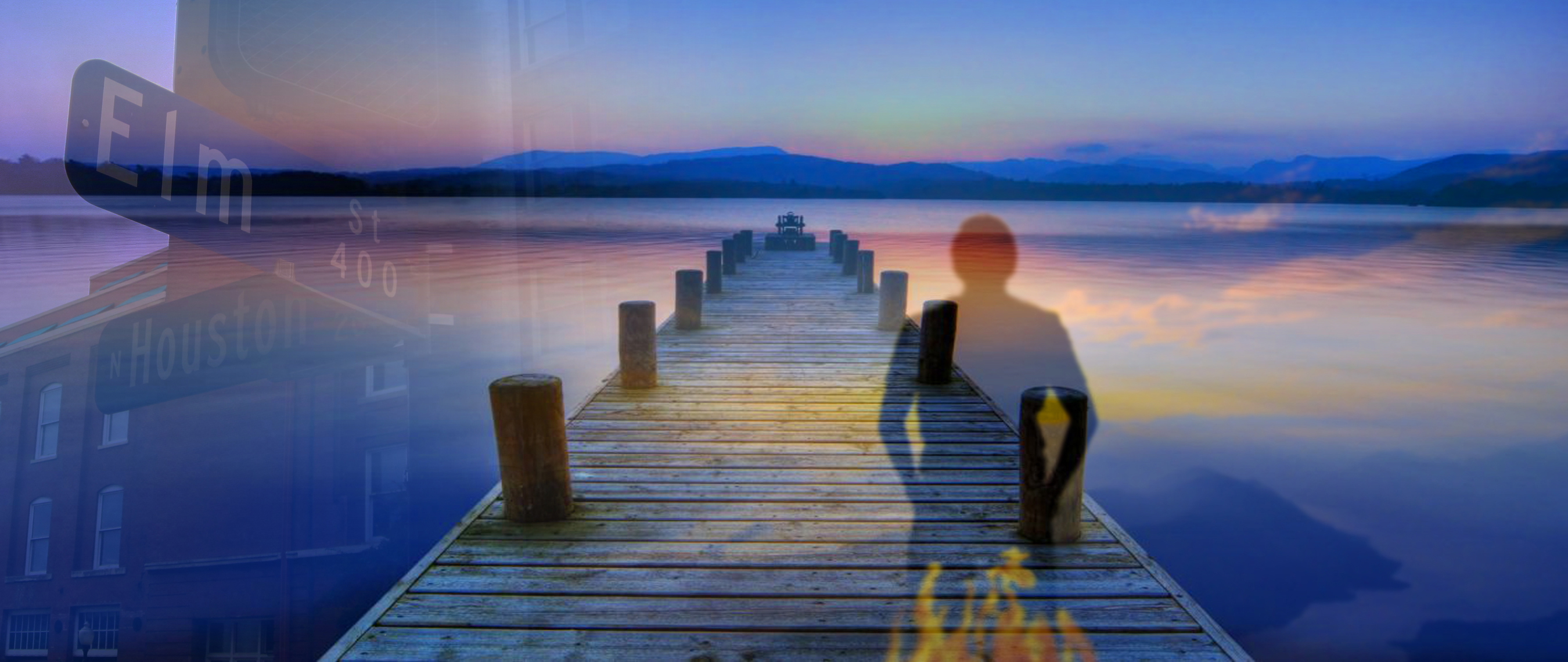
Elm & Houston Epiphany copy


Last week, for me, saw four intensive days in seminar with the iconic Tony Robbins and his “Unleash the Power Within” doctrine.  If you’re not familiar, look him up on YouTube. There are hundreds of lectures, TED Talks, etc, on the man.  If you ARE familiar, I’ve found, you’re either behind him with a sense of devotion that just about any other motivational speaker out there would be hard pressed to rival, or you’ve concluded that he’s a modern day Jim Jones. I find almost no one who has a tepid reaction to him.

Yes, I did the firewalk.  No, I was not injured.  Yes, it gave me a high like nothing else, for what it was designed to symbolize; the power to accomplish anything, even the seemingly impossible, a subject-matter I am painfully intimate with.  I had a personal stake in doing this.  And it delivered.

And finally, yes, we’re talking about the same UPWDallas2016 that blitzkrieged the news on the firewalk night. “Hundreds burned in failed Tony Robbins Firewalk!” As someone who was there, I can vouch for the real thing being nowhere near as dramatic or perilous as the coverage made it out to be, because, of course, “if it bleeds it leads.”

Dallas is a city I’ve barely been to, in all of my many trips to Texas.  It’s usually been a case of flying in or out of DFW and picking up connections to other destinations.  So in preparing to come to this city for the Robbins conference, on my menu of intentions was to visit Dealey Plaza, the site of the assassination of JFK. I really have a thing for visiting these kinds of historical landmarks, and this one especially has been on my list to visit, because our nation changed radically after (perhaps even as a result of) the assassination that day in 1963.

We only had the last day in town, after the seminar was over, to check it out thoroughly, though we did actually run across it by accident on the first night of the seminar.  The friend I was traveling with, and I, had decided to walk a few blocks away from the Convention Center to get our Uber, since eight thousand other people were all trying to get back to their hotels too. And at a certain point, a few blocks into our midnight walk (the night of the firewalk, so we were already on a kind of high), my friend suddenly stopped in his tracks, looked around, as if he was lost, and then said “I think this is it.” “What?” “Yeah,” he continued, ignoring me. He then proceeded to stroll across a grassy knoll (I’m still not catching on), and pointed to an X in the street. “This is where Kennedy was shot.”

It was a quiet night.  Clear sky.  Bright moon.  I was already open-veined and euphoric, because I’d walked on hot coals tonight, baby!  And I had not burned my feet, because I had applied the fierce focus and intention taught us earlier that evening.  And it was not a parlor trick; the coals were freaking hot.  And so, when everything finally came into dawning for me, and I saw the corner street signs of Houston and Elm, and the picket fence where the fourth bullet had allegedly come from, and the building formerly known as the Texas Book Depository, I stood there, having just experienced something rather larger-than-life, and cried a little, just to myself, at this other larger-than-life historical ground zero.  It was an eerie and haunting thing to stumble upon by accident at midnight.  We spent a bit of time there, as one does, then called for our Uber.  And then proceeded to end every night of the conference with the same agenda.

So, by the time we got to our last day in town, and had the seminar firmly behind us, and had a cousin of mine who lives in town escorting us for the day, to go experience this thing in the daylight, do the museum, and be official tourists, we had already experienced it the way everyone should, I’ve now concluded.  The midnight visit had been a sacred, internal moment that had allowed me to feel that bit of history in an intimate and private way, and to have an emotional reaction to it.  In the light of day, it was an entirely different experience.  All the opportunists were out in droves, selling their bogus copies of “the actual newspaper headline from The Dallas Morning News!” and their angle on what really happened that day.  Every wild theory was flying out of the mouths of the carnival barkers, creating a cacophony of chatter that was almost musical.

And then a most interesting thing happened.  One such barker that I was standing near, and trying to listen to, as he explained to a huddle of tourists about the fatal shot, couldn’t’ve been more than 50 years old, and yet was saying things like, “and that’s when we all hit the deck, and then ran across here behind the picket fence…”  He then pointed to a blurred figure, in a crowd of other blurred figures, in an old, dog-eared photograph he was holding, with the doomed presidential motorcade in the foreground, and said, “that’s me.”  Even though blurred, the figure he was pointing to was clearly an adult, someone who was not an infant, which, at a stretch, is the only way this guy could’ve potentially been present at this 53-year-old moment in history.  So yeah, we were dealing with crazy, I concluded, and he officially lost my interest in listening any longer.

From a distance, however, I continued to stare at him do his thing.  I sort of couldn’t take my eyes away, because I was suddenly reminded of the most profound thing that I had learned from Tony Robbins during his game-changing seminar intensive.  That all of our problems, struggles, dysfunctions, etc., exist and linger because they serve a need.  And as long as they continue to provide a benefit, they will not be repaired.  There is something that they fulfill.  I remembered that one stopping me dead in my tracks on, I want to say, Day 2 of this thing.  And so, as I stared at this man, who was more likely mentally ill than a simple con man, I was suddenly softened from the earlier eye-rolling, head-shaking, dismissive stance I’d taken against him, and wondered what need his story was fulfilling for him.  A sense of significance in a world that had rendered him insignificant?  Combating a crippling loneliness by surrounding himself with people who could potentially find awe in his story, and him?  Whatever the benefit was, it certainly wasn’t a financial one, since everyone around him had him nailed, and no one was buying his story, or his wares.  Yet they were continuing to hang on his every word, because crazy is entertaining.  And it was at that moment that I realized I would probably never look at any other situation again, neither another’s nor my own, without asking that question:  What need does this serve?

That changes the whole playing field, doesn’t it?

There is a plethora, a right worthy grocery list, to be honest, of struggles and hiccups that my own personal growth seems to be bombarded with these days.  Much of which I’ve chalked up to a case of what I do, or don’t, deserve.  Or I chalk up a certain behavior, which is nonetheless frustrating for me, to being a hardwiring.

For example, one sentence I’ve claimed for years as part of my story: I’ve spent my life not being picked.  Or at least believing, always, in that outcome (which pretty much means it’s guaranteed).  Case in point:  My boyfriend in 8th grade literally moved on from me to someone else without a word my way.  How I found out was when his “new thing” and I were racing against each other in a track meet.  The girl had actually been my friend, and the boyfriend and I had not had a single conflict, so while I get kids just moving on from each other thoughtlessly, I never understood the venal nature of the moment.  He stood at the starting line where she and I were poised to run the 50-yard dash, and he muttered, but for everyone to hear, “Beat her, Albertine!  Beat her good!” Albertine didn’t win that race that day.  I did.  But it gave me no pleasure in the victory, because I was also the one beaten.  I didn’t understand my breed, and I didn’t get what I had done so heinous to have deserved such malevolence.  Today I can see clearly how that one incident has been so indelibly stamped on me that I have always tended to enter into an agreement with isolation and outsidership.

I’ve just thought of it as a hardwiring, a simple case of, “This is who I am. I don’t fit into circles and clubs.” But here’s the danger in that; chalking anything up to a hardwiring presupposes that there’s nothing that can be done about it.  It takes the power (if it’s a plight we’re actually interested in fixing) right out of our hands.

And if I have taken nothing else away from this seminar, I have taken with me a new understanding that any emotional baggage we have only sticks around, and is given momentum, because there is a need it serves.  That one just blew my head right open.  Done.  Brains on the dashboard.  Blood and guts everywhere.  Absolutely nothing I’ve ever learned in my years’ long pursuit of self-examination has made more sense than that.

And so, rather than tossing off my penchants for outsidership, for example, as a hardwiring I can do nothing about, I need to figure out what the role of outsider in my life has been serving all this time.

One thing I know for sure is that it’s been a bit of a badge of honor.  I do love my solitude, and marching to my own drummer, and I have a natural penchant toward inward-turning and contemplation.  So, what it’s feeding is pretty obvious.  But it’s also a dubious badge, as there is always an overtone of loneliness and missed opportunity that is a part of the outsider landscape.  So, maybe it also feeds a kind of “poor me” comfort?  I’m not sure yet, but there is so much to play with here.  So much to discover, to answer for myself, so many lids to pry open, so that maybe I actually stand a chance of delivering myself from some of these frustrations, and finally give myself the permission to pursue just exactly what I want in this life.

As for Crazy Grassy Knoll Man, he will likely remain who he is, though we never know who or what comes along to change our state, and our stake.  But my attitude toward him (once I got past the stun of him cursing me out for not buying any of his wares) became more compassionate and empathetic to the battles that must be his, the battles we all experience to varying degrees of crazy.  And to know that there is an answer, somewhere, somehow, for every one of us.  I just want to be that little sprite whispering into Crazy Grassy Knoll Man’s ear, “I see you.  You are seen.”

This was merely one of fifty hours worth of ideas that were drilled into our heads by Tony Robbins during his four days of exhaustive saturation.  I haven’t even begun to scratch the surface on what this seminar did for me.  And honestly, I’m not sure I’m meant to share any more of the experience than this one example, because it was such a deeply intimate odyssey for me, one of identifying belief systems, and transforming them.  It was so intimate, in fact, that when my friend and I couldn’t get a seat together on Day One, we ended up not doing any part of the seminar together, as it was nice not having to be self-conscious around each other.  And that was easy enough to accomplish, in a sea of eight thousand people.  We just met up on dinner breaks and when it was over each day.  We didn’t even witness each others’ firewalk.  Instead, upon completion of the walk, I cheered for my triumph with the people around me, who were all doing the same, a communal pep rally.  New bonds got formed.  In fact, my firewalk partner and I decided to remain friends.  The experience was intimate and expansive at the same time.

I’ve been changed by this four-day event, that’s for sure. To what degree will be discovered in the days to come, as I venture forth to apply these tools and get out of my own way.  But I don’t think I truly got hit with that feeling of difference until my revelatory moment on the corner of Elm Street and Houston, the same corner that was John F. Kennedy’s last.  A setting ripe with ghosts and guile.  And maybe even a little grace.


Dedicated to my dear friend Ross Wright,
who gave me the gift of this experience,
went through it with me,
and who roots for me always.


Angela Carole Brown is a published author, a recipient of the Heritage Magazine Award in poetry, and has produced several albums as a singer/songwriter, and a yoga/mindfulness CD. Bindi Girl Chronicles is her writing blog.   Follow her on INSTAGRAM & YOUTUBE.