No Regrets (well, maybe a few…and that’s okay)

My final professional gig as a singer (and I qualify that because I still sing at my church home, where it’s a different offering altogether from being a gigging musician) was June 27, 2024, playing a concert with the funnest project I’ve ever been a part of, the Orchestre Surreal. I’d been with that outfit longer than any other. It is unique and wild in a very goofy, brilliant way. It was fun as hell for 28 years. And it was the way I wanted to jump out of this main act of my life and dive into my Act 3.

This right here marks the first that I’ve said publicly about why I chose to retire from singing. I’ve just not wanted any kind of pity party, or to feel as though my confessions would’ve been designed to coax on the “No, you still sound fabulous!”-es or whatever. I just wanted to have a mega-meaningful final showdown, and then move on. And I got to have that in spades.

The reason I chose to retire was because the writing had been on the wall for a good 7-8 years prior that my singing voice was not moving into old age with very much grace, or spine, or muscle, or gumption, or however one sees these things. It had become a wilting flower. At first, a snail’s pace. Only I could hear it and feel it; it was imperceptible to anyone else. Then over time, it became more noticeable, and I started to feel the complete lack of control I was having over that splendid muscle that is our vocal cords. I mean, I’d always been aces at hitting a pure note, tamping down my vibrato upon stylistic command, no wavering, no pitchiness. I had nuance and subtlety. I could sculpt a song. But no more. Really tough to sing jazz without vocal nuance (if I was content to just sing some blues or rock in bars, and blast it out, I could’ve bought myself another 10 years). Bending a studied note with precision skill? Phrasing? It all just seemed to disappear. I couldn’t understand it, to my great frustration. I thought, “I haven’t stopped using it. I’m singing more than ever before. So, it’s not a case of like when people stop exercising and the muscle tone goes away and gets weaker. I’m workin’ the hell outta these cords. What gives???” It got to where I had to start taking certain songs off my list that any gig leader will call from when it’s my time to sing. Or I’d lower the key of certain other songs. Each particular adjustment would depend on what the specific struggle was when I’d sing a given song. 

The thing is, none of this baffling phenomenon was about losing my range. I’ve kept the range for the most part. I never had much of one to begin with. Never been the showy singer (except with the Orchestre Surreal) or the acrobatic singer. Didn’t have the crazy, sky-high notes, or the gaudy melismas. But also, early on in my career I got vocal nodules and was told not to sing for 6 months. And at the time I was waiting tables and not singing for my living, so I could afford to lay off. The nodules weren’t severe enough to require surgery or laser treatments, simply rest. 

When the voice slowly but surely came back, the one thing that never did return was my falsetto. And I was told I could nurse that back with some voice lessons and exercises, but I didn’t bite. Mainly because I never had money for vocal lessons on a waitress’ paycheck. So, I sufficed to live with only a chest voice and a limited range. I could live with a small range, because I decided that instead of any kind of vocal prowess (and vocal acrobatics never had any pull for me anyway) I would instead focus on honing my skills as an actor. I’d just come out of my studies at an acting academy, and had some real chops. And I believed in that kind of singer anyway. Someone who could tap emotional stores that exist deeply inside. Someone who would bleed when singing. Singers who could gut-punch me were the ones I loved best. So, I decided to develop that muscle instead. And I think it has served me well.  

But the long game, as it turns out, was going to be tough on my actual physical instrument. When the writing on the wall became a full-blown rebellion, I had just moved to Kansas City where I had hoped to continue singing. I was introduced to some musicians in this town early on in my arrival, thanks to my new friend (new at the time) woodwind player David Valdez, who set up some jam sessions expressly to introduce me to the community. And I did get a handful of gigs booked, including at the legendary Blue Room, which is connected to the Kansas City Museum of Jazz, and even a jazz festival with a wonderful octet led by woodwind player Ray Keller. They were very fun gigs, but the voice was quickly saying, “hey Angela, we’re not actually up for this anymore.” And the absolute last thing I wanted as a newbie in this town, after a robust 35-years amassing a respectable reputation in Los Angeles, was to be introduced to the insanely great Kansas City music scene donning this wilting flower of a voice. No thanks! So I abruptly stopped booking gigs. I’d gotten myself a day job (two, sort of), so I didn’t have to rely on gigging to pay bills, as I had in L.A., and that made the decision to stop a whole lot easier.  

I’m not even sure I felt a whole lot of grief around it, to be honest, as all I really wanted to do any longer was write. I’ve actually been a writer my entire life, but it had always been a back burner pursuit, if on the stove at all, while I was being steadily employed as a vocalist, signed up with several contracting offices, constantly learning new music, writing charts, steadily expanding my repertoire, especially for party bands and casuals (private parties). It was a full-time indulgence. I wrote on the side, and I hustled literary agents (went through two of them) and chased publishing deals, and eventually just established my own publishing imprint and went the indie author route. Fuck ’em. I wasn’t going to keep waiting around for some giant to give me legitimacy.

Today, in this Act 3 of my life, I want writing to be on the front burner. The only burner. All the burners. So, I essentially started my life completely over at the ripe old age of 60. And then ended one career to start a new one at 64. That takes some nerve, if not necessarily common sense, and I’m fully embracing the nerve.  

I do look back on my singing life, and, in wondering why my voice is largely failing me, I’ve come to some conclusions. But before I share what that is, let me explain that I say “largely failing me” because I can still eke out some adequate singing, if not with a stellar instrument, because I still have emotional expressions to offer. AND because I really want to continue singing at my church. It’s not gigging. It’s a spiritual offering. And I’ll do that for as long as they’ll have me, because I feel nothing but love and non-judgment coming from every single soul in this beautiful community that I have found to help keep my spiritual life alive and radiating.

Okay, so what I’ve come to realize about the current state of my singing voice is that I never took voice lessons. Never had a vocal coach. Never officially learned how to sing properly. Some intuitive lessons got learned once I recovered from the vocal nodes and got back to singing. I kind of had a sense of what not to do anymore, and I managed to get through a 35-year career on those instincts. But I’m certain I was using my voice (placement, breathing, etc.) incorrectly, and it would eventually prove to catch up with me.  

Ever since social media has become a mainstay in our lives, I’ve seen and read a lot of opinions and sternly righteous admonishments from some vocalists toward other vocalists on the ills of having never learned to sing correctly. It’s almost a kind of “how dare you!” And all I have to offer is … you know what you know until you know better. The fateful decision to go through Door 1 instead of Door 2 unfolded for me when I was very young, and arrogant myself. I could sing, and I ended up spending the better part of my life doing it, getting paid for it, and booking it constantly. Not only gigs but recording sessions in film and television. And all that without a single voice lesson. So, in many ways, maybe I felt like I was getting away with something. I simply didn’t know what I didn’t know. 

For awhile, in the present universe, when I would come across these admonishing Facebook posts, I’d find myself getting defensive. They’re never actually directed at me, so I never respond or contribute to the conversation threads. I just keep my defensiveness to myself. But I do wonder what their admonitions accomplish, other than making other singers (the ones like me whose voices are declining because we were never properly trained) feel horrible. It’s not like I can turn back the clock and do my life over. All I have is right now. And I’ve chosen to pivot my entire life in a different direction. And, more importantly, am loving the pivot.  

Believe it or not, I’m a perfectionist. I know. How can you call yourself one if you never bothered to get some proper training for your voice? Like I said, I believed I was sailing along effortlessly without that help. But I also know it’s the Perfectionist in me that decided to stop singing if I couldn’t do it to a certain standard.

So, first off, a perfectionist is not someone who does everything perfectly all the time (is that even possible?). Perfectionism describes the mental state of obsessive-compulsive behaviors that pick at a thing we deem flawed or in need of perfecting, fastidiously, till it bleeds and scabs over. It’s a kind of unquenchable pursuit. And I have done that with a lot of things in my life. Almost to the point of sabotage. I just never did it with singing because I thought I was doing everything right. And then when it started its decline, I abandoned ship as fast as you could blink. That’s a perfectionist. “If I can’t do it well, I want out.”

And that makes me think about the great goddess Joni Mitchell, who sounds nothing today like she did in her younger years. That otherworldly faerie of a voice has become a deep, resonating canyon of rich minerals. She didn’t abandon ship. She reinvented. To a certain degree I did that when, early on after the nodes, I turned my attentions toward cultivating the emotional component of singing instead of fine-tuning the instrument itself. But when it began its decline in these latter years, I couldn’t bear no longer having the voice of my prime. Joni is brave, where I am not. It’s all a process.

I discovered my Inner Perfectionist working a 12-step program, and have been steadily, with the help of much inward-turning, self-examination, and climbing that 12-step staircase, transforming the perfectionism into (I believe) a healthier state of acceptance of my flaws, my mistakes, and my missteps in this life. I’m trying hard not to berate myself as much today as I have in the past, yet at the same time still maintaining a healthy sense of regret. Some may get their haunches up over that phrase, as I think we’ve become a culture that believes it’s healthier to have no regrets. Maybe that’s true. My gut tells me that a moderate level of it actually helps us to: not repeat the past, learn from our mistakes, and a whole bunch of other familiar tropes I think we all can agree are good ones to follow.  

So, I’m learning to be self-forgiving. I can berate myself better than anyone else could. It doesn’t serve me. I like gentler me. And I also still have my moments, but I shut it down if I’m conscious enough to catch it. 

The state of my perfectionism today is such that I’m actually beginning to embrace IMPERFECTION almost to the point of it being kind of like a spirit animal to me. I have no shame whatsoever now in saying, when asked why I retired from singing, when most of my singing peers are going stronger than ever, that I fucked up. A long time ago I fucked up. I wish I’d done it differently. I do have some regrets about that. And I guess a little bit of grief, after all. But only a little bit, as I couldn’t be happier having made the decision to turn all my burners on to this writing thing. Writing gives me life and always has. And Kansas City, especially, has embraced me for it. So, I’m on the right track. If there is even such a thing. I’m more inclined to believe we’re all just on tracks, period: many, a few, maybe only ever ONE like a hyper-focused beast of brilliance, and we do what we do on those tracks until we’re ready for some new ones. 

So, now when I see these posts about what singers do wrong, I just smile, keep scrolling, try to channel a little Joni, and know that the choices I’ve made in my life (the good, the bad, the ugly, the head-slapping) have built me into who I am. And I kinda like her. She’s scrappy. She started her whole life and career over from scratch at an age when most are prepping for the cruises and the golf course. Is it bat shit crazy? Possibly so. In fact, probably so.   

Is Bigger Actually Better? (art + adamance)

When did the value of a piece of art get determined by the hours logged?  Is it me, or does that idea seem counterintuitive to the very spirit of art? That spirit is, among other conceptions, that which reflects something more than the surface thing it is made of, and that “something” has the power to entertain, enlighten, challenge, tickle, anger, transform, and the oh, so many other splendid eruptions of the human heart that art can accomplish. And to clarify “more than the surface thing it is made of” I mean that a canvas, some paint, and a brush don’t make the thing art. What makes it art is how it speaks. If it speaks. Of course, that idea is so very subjective and abstract that anything can be called art.  And, personally, I think that’s the very beauty of it.  

I had a conversation maybe 6 or 8 months ago with a woman who’d come to an art show that a couple of my alcohol ink pieces were in. She didn’t have a thing to say about my pieces (I knew right away that my small abstracts were not her thing; and that was a-okay with me), but she did go on and on about a piece she had flipped out over. She had been interested in buying it but was stopped by the price tag. In a nutshell, it was a painted cello; I mean an actual cello that was painted, and the imagery painted on there was abstract, but not like the large, sensuous brushstrokes of O’Keeffe, or the random splatters of Pollock. They were squiggles and lines and shapes, geometric, detailed, and meticulous. It sort of resembled code, and even a bit of hypergraphia. It was colorful, every color under the sun, it seemed. I really liked it. It hearkened to me aspects of Basquiat, Haring, Kandinsky, and even Schnabel, as there were also bits and pieces of found objects glued on, and which gave the whole thing a very New Orleans vibe, or a voodoo vibe, or a creole vibe, and I may or may not be saying redundant things. It was a compelling piece. Since the canvas was the wooden instrument itself, I figured it must have a meaning related to music, but it was such an abstract concept that I didn’t linger too long on what that might be, because when it comes to abstract art, I give up everything to the piece, my need to make sense of it, or to create some kind of order. 

In any case, while I liked the piece, this woman loved it. But she was indeed bugged by the price tag. It was selling for $8000. I didn’t blink an eye, except in the knowledge that I can’t buy a piece of art for $8000 and may never be in a position to do so. So, it was a non-issue for me. If the artist believes the value of his work is $8000, and can get that, then it’s worth $8000. (For the record, I never pursued finding out if the piece ever sold, or if the artist took his piece back home with him and re-thought his price tag). The value of a thing is self-evident, as it really is determined by two things: The decision of the artist to put the piece’s value at X. And if the market bears that.

The woman begged to differ with me, and proceeded to break down what she felt the worth of the piece should be based on the number of hours at the task of creating it. She took a guess on how long it might’ve taken. And then broke down that number into dollars. I can’t even remember what the number was, because in all frankness even THAT is an abstract, since neither of us had a clue how long it took this artist to create the piece. But let’s say she came up with $1000 per hour. Is the artist worth that wage? was the bottom line for her. And the fact that she looked at it in terms of a wage was fascinating to me. I happen to believe that what goes into any artistic endeavor, from painting, to composing music, to playing an instrument, to writing a poem or a novel, to directing a play, to acting, to dancing, to choreographing, to photographing, to sculpting…..is more than the rudimentary, physical manifestations: Telling an actor to move here, take a beat there; affixing the paint onto its canvas with the stroke of a brush; mastering the physical constraints of a pirouette, typing words onto a manuscript. And it’s more than the amassing of hundreds of hours on a timesheet. First, there is the quite crucial element of the thing birthed, forming, growing inside one’s brain, then on the canvas, staff paper, dance floor, typewriter, etc., conceptualizing, determining what message or non-message this creation is. Artists are often in search of healing, which is customarily why they’ve been led to an art form to begin with. A way to offload trauma. Which means, there is the inner resonance. What is it speaking to?

The measurement of a piece: it’s size, girth, length of time it took to create, tells us little of its emotional, spiritual, cosmic impact. Really, it all comes down to one question: What does it do for your soul? The rest doesn’t matter. 

That’s MY bias, of course. This woman, an art lover herself, had a different set of criteria for what something was worth, and was definitely coming from that left-brain, linear hemisphere in her assertion. Which I realized does have its place, because the deeper into the debate we got, the more I could begin to see a bit of both assertions. As there is also the Emperor’s New Clothes Syndrome. Modern legend has it that Picasso scribbled on a napkin for a waiter, as his tip for the service. And the first thought on anyone’s mind who knows this bit of modern lore is, “Get thee to an appraiser!” It’s Picasso, for God’s sake. His name alone, at a certain point in his meteoric ascent, became the thing that defined his worth. The legitimacy of that phenomenon is a whole other conversation, a more cynical, less pure one. Or maybe it’s not. Maybe this was exactly the woman’s point about the value of a thing. If Pablo had merely spat on the napkin, it probably would still have been canonized as “a Picasso.” And so, the game is played. She was challenging this artist of the cello piece to qualify his ownership of his worth. I don’t mean to say that she actually approached him at the art opening, armed with gall and too many glasses of free champagne. It was merely a whispered aside to me, posing the question: what gives him the nerve? with, of course, the inference of it’s not like his name is Picasso.

I think about my own artwork. The medium I’m presently working in is small (9″x12″). Alcohol ink on Yupo. I keep being told, “go bigger!” And honestly, at present I’m not inclined to. The reason I even qualify the size of my pieces is because this woman asked me, during this debate about worth and value, how long it takes me to finish one of my “little trifles.” I’m pretty sure she meant that as “like a sweet confection.” Nonetheless, it came off as belittling (pun intended), and I got the feeling she’s probably someone damned artful at passive-aggression, for she never lost the warmth. I responded, “anywhere from a few minutes to a few hours.” She never said a thing beyond that, but her reaction clearly betrayed, if it only takes you a few minutes to create, how are you rationalizing $100 for your pieces? I didn’t answer that question, because she didn’t actually ask it. But I did sell both my inks that evening for the price asked, and I have to admit the tiniest tinge of schadenfreude at letting her know my good news.

My alcohol inks are all abstracts, at least so far on this journey. I’m partial to abstracts. So, when a friend bought one of my pieces a few years ago, she took it to a workshop she was conducting, where she asked her attendees what they saw in the painting. She was kind enough to share with me the varied responses. Something I will treasure forever:

“Beauty in the un-manifest, infinite possibilities.”
“Core of darkness reaching out to be brought to light.”
“Nature and the outdoors.”
“Underwater world.”
“Mermaid fairy with a flower.”
“Hummingbird with the spirit of a dragon.”

and quite possibly my favorite…
“A gathering of monks.”

These answers not only moved me beyond words, but also affirmed for me what I believe is most powerful about the abstract realm—art of any realm, for that matter—that we each glean from a piece what shows up for us; what we need in the moment. And that makes something worth whatever the art lover is willing and able to pay to take it home and be moved by it every day.

The experience of art is far more than just a surface observation of: Nice colors! Nice notes! They’re in tune! Stellar spin! She must have really strong muscles! He uses pretty words! That’s gonna just about cover my giant wall and match my sofa! So how can it be quantified? The very experience of art is an intangible abstract. It can open us wide open. Give us what we need in that moment.

Or it doesn’t, and we move on. 

There’s also absolutely nothing wrong with admiring a pitch-perfect note, a gorgeously rich hue, someone’s logic-defying technique or prowess. It’s just, there’s so much more experience that can be had if we don’t allow ourselves to be contained by mere surface. Surface has nice things to offer. But beneath it? Can you imagine what you might be missing if you stopped just short? Perhaps a magnificent rebirth. And therefore, again, what is that worth?

If something isn’t grueling or doesn’t take a chunk of flesh from us to create, or doesn’t take months and years to finish, or doesn’t require a vast studio space in which to contain its girth, does that mean its value is less? Or can’t have impact? Because impact is the endgame. If a work of art collides with someone, and the explosion from that collision is life-altering, or even a tiny shimmy, art has done its job.

Some of the most compelling art I’ve ever experienced is from Japanese minimalist artists known for line drawing. Matisse and Picasso did incredibly compelling line drawings. These are not the intricate layer after layer of exploding color and texture and brush skill in replicating a figurative image, which is what Picasso was known for in one of his many eras. This is the use of pen or pencil, and drawing single lines. And these “trifles” can be quite startling. Or how about: a brilliant haiku packs no less a punch than a brilliant novel. Does Blind Willie Johnson’s simple guitar and warbled voice on Dark was the Night, Cold was the Ground connect less to struggle and pain than Penderecki’s Threnody for the Victims of Hiroshima? For some, there is no difference in the connection to pain. And for someone else, hell yes, there’s a difference. Which is perfectly valid. Except the difference won’t be because the Penderecki has about 10 billion notes and a riot of tone clusters and 52 stringed instruments and is a discordant behemoth, and Blind Willie’s is merely a precious, tiny, single voice and 6 strings on an old bottleneck slide guitar. Deep, exquisite pain is felt every time I have listened to either of these heart-wrenching, power-packed pieces of music.

Size really does kind of lose its meaning when we dare to probe deeper. So, then, if it isn’t size, what is it that makes a work of art worth something? Is it, after all, the amount of labor invested and hours logged? Is it education and an MFA vs. being self-taught? Is it something completely intangible that only the person colliding with the piece can experience, because their experience will be funneled through and informed by their own history, and what speaks to them will not be replicated by any other person’s collision with the same work of art?

It is a random concept, the worth and value of a thing. So random as to be, actually, a kind of silly debate. I realize that. But thank you anyway, woman I argued with. There’s nothing more enjoyable than to exercise the critical thinking mechanism in the splash pool of wonderment. The value of a work of art is whatever the market will bear. Plain and simple. And yes, there is some wicked capitalism and sleight-of-hand opportunism often involved. I wrote a microfiction once called Supernova that I’ve offered below. It speaks to that very abstract idea of value, and just how unstable, unquantifiable, and exploitable it actually is. Enjoy my dark little trifle, and—if you even care about such things—ask yourself what you think makes a work of art worth anything. 

Or just relax with a glass of wine, and stay away from us pontificators. You’re surely better off.

Supernova

He sold the painted canvas on the street for $1, a striking abstract created by his own homeless hands. Years later it sold at a gallery for $800. The original purchaser, an artist himself, had put his own name on it. By the time many more years passed, and it sold at Sotheby’s for a million (as the artist/thief eventually enjoyed astronomical fame), the homeless man, who never thought of his painting again beyond that corner sell, had long ago died, impoverished. The art thief did not fear God. He did, however, feel the dread of ghosts now and again. 

from the 100-word story collection Aleatory on the Radio

Your Package Has Been Delivered

The Rockies were even more majestic than I had imagined. The Kansas Prairie, as stark as I’d expected but I hadn’t made room in my brain for the smell of cow patties for miles. The storms of Utah scared me so profoundly I knew I’d never make this trip back by car, ever again.

Of course, the first stop was Vegas, where I’d been a thousand times, and the 118 degree temps that did something weird to my car engine didn’t surprise me in the least. Thankfully, it was temporary, as I continued east and gradually north, making this move I never remotely had in my plans for my life.

I’d managed to amass 60 years on this planet without ever living anywhere other than Los Angeles, and now I was moving to Kansas City, Missouri, the heartland, the prairie, the home of tornadoes and Charlie Parker, a red state but a blue town, artful and socially progressive, even though it was here that I was called the N word for the first time ever … at least that I’ve known about. Seriously, I may just be the most sheltered Black person on the planet.

I am trying to find my identity in this new place that doesn’t require me to let go of what LA built in me, while wanting to flow with this KC charm and warmth. Trying to be both, trying to have both. In LA, I was regarded in my town’s music scene. Here, I’m barely a smudge on a wall, largely unnoticed, but not in a rude way, just the experience of a new birth and my own penchant for cocooning. I don’t even go out for auditions for the many plays that are being cast at the very theater where I work. My instinct, as I’ve said, is just to stay a little bit cocooned, and I’m not even certain why. The fight-or-flight pace of LA kind of did me in a little, so I guess I just want to breathe slower, talk slower, decide things slower, get involved slower, emerge slower. I guess. Just looking for simple.

Two years here now, and no I have not done the drive back west again (though I’ve flown home a few times now). I meant it when I said I had sworn off those torrential rains. I feel very settled here, and happy. Still not completely out of my performance shell yet, but that’s okay. I’ve done some singing. I chased fame and travel and record deals and pizzazz for so long in LA, and it beat me to a pulp, frankly. Just looking for simple. And yet even with the agenda to simplify, I still manage to over-commit myself. Total co-dependency thing. I definitely need more than just my once-a-week Al-Anon meeting. Winters blow here. I know, weird segue. I will never embrace the snow. It just isn’t in the bones of this Cali Girl. I know, I know, be open-minded.

I love the friends I’ve made in my new town. Few, which means fewer choices of who to call for a hang, or whose invitation to accept for a hang. I miss my LA friends like nobody’s business (thank God for Zoom!). That circle was and is VAST, and I am so much luckier and more blessed than I ever truly appreciated when I was actually there. But here, I sort of like it that my circle is small. Fewer decisions to make. Have I said yet that I’m looking for simple?

Here, I can embrace being 62. There, it’s the thing you’re supposed to hide. Artistic pursuits are blowing up for me here. In LA, I did the gig beat for nearly 40 years, and it was every experience from dazzling to grueling. No regrets at all. It was an extraordinary time in my life, but there wasn’t really any other avenue of my pursuits that ever went anywhere for me. Here, I’ve had firsts. Of course, everything I did in LA began as firsts, it being where I began life. But the firsts that have happened since I’ve been here are kind of dizzying. Amazing, humble, grand, small, precious firsts. My first-ever poetry reading where I was invited to be the featured poet (and I’ve had a few now) in a town known for its vibrant and weighty poetry community. First time having a hand in getting a jazz series started (at the theater where I work). First time I’ve gotten to be a participant in a wall mural (up at the iconic Unity Village). First time making a little documentary short about a Kansas City community event (the citywide Black Lives Matter street murals), and having it be my first ever Official Selection in a film festival. My first time ever having art of mine juried into a gallery exhibit, which is opening in a few days. My alcohol inks ‘bout to make their li’l splash! Pun intended! (If you know the medium, you’ll know it’s a lot of splashes of ink…never mind…)

I know that my children’s videobook winning multiple film festival awards (whaaaat???) has nothing to do with Kansas City, nor an alcohol ink of mine making the cover of a literary journal, nor having an entire concert of music (by the LA Metropolitan Master Chorale) created and performed around several of my short stories (all firsts), but I’m giving KC the credit anyway, because all these things happened while living here, and somehow here, more than in LA, I’ve managed to cultivate better focus in order to carve the space for these blessings to be made possible. Too much the blitzkrieg of Los Angeles, I guess, and all that that allegorically means, and which kept me just running, bouncing, collapsing, recovering, then running and bouncing again. Ad nauseam.

I’m exhausted. Still, two years later. Walking along the Missouri River humming “Shenandoah,” and the hiking trail that gives me genuine serenity, and strolling the halls of the Nelson-Atkins Museum of Art weekly — are all great balms that are slowly recovering me.

Did I mention I moved here 2 months into global lock down? Talk about throwing my own roadblocks in my way. I trip and fall a lot. Like…physically. I’m a klutz. But I’m starting to think that has whole other metaphorical layers of meaning for me and my life. And yet I persevere like a cockroach.

I like Kansas City. I might actually love it. No, yes, I definitely love it. I love Kansas City. I am mesmerized by how much art and theatre and music is embraced here. And then there are the city fountains (more than in Rome!), and the recent citywide installation of giant heart sculptures, 154 of them, all painted by different local artists, and which demanded my obsessed attention for 3 months, finding and photographing as many as I could. And the West Bottoms, and the River Market. And the 18th & Vine Jazz District, and the First Fridays Art Walks. And the stupefying amount of live theatre I’ve loved seeing, and not just at the one where I work. And my favorite building on the entire planet, the downtown KC Public Library, whose design is that of a GIANT bookshelf of classics. Crazy cool!

And even if none of that was going on, this move also means I now will not die having never left home. That’s huge for me. A dream I’ve had forever, though in my imaginings it was more along the lines of somewhere in Europe. But that’s okay, since KC is actually known as the “Paris of the Plains.” 🙂 No kidding.

I wouldn’t have chosen it on my own, but Kansas City came my way, and I happily said yes. Leapt. In a way I am not prone to do. I’m still saying yes. No looking back. Well, maybe some looking back. After all, I would take California earthquakes any day over the “Severe Thunder Storm” alerts that routinely pop up on my phone, and do indeed freaking deliver!

The Richest Girl in the World

This post originated on Christmas Morning 2020, after I had just finished pressing the button on the Christmas launch of my most unusual creative offering, THE RICHEST GIRL IN THE WORLD! What I offered then was that I knew that so many of us were more than ready to leave that strangest of years behind us, and have hope for a better, cleansed, redeemed, renewed world. I know I did. For myself, and my part, I had decided to usher in the new year with a children’s book I had written, because I believe it holds within it lessons that ring in this time of upheaval.

Today I’m updating this post, because I’ve remastered the movie, and hope you’ll check it out. I also believe that it STILL holds within it lessons that ring.

It’s a book that never existed in print, but instead has taken on the medium of a videobook. Inspired, in part, by the children’s classic, Peter and the Wolf, I simply couldn’t envision this story without it being told aloud, in the beloved tradition of the bedtime stories from our own childhoods. It was first conceived and written nearly 40 years ago, and over the decades has finally become what it was meant to be. Featuring over a hundred colorful illustrations, I had a blast narrating this tale on the indwelling nature of friendship.

When a sage old man shows up in an enchanting village, he changes the life of a little girl forever, who changes his right back. Underscored with a whimsical music score by composer Chris Hardin, THE RICHEST GIRL IN THE WORLD sets the stage for a timeless and quintessentially fable-istic tale. Lessons of empathy, gratitude, and seeing beauty everywhere are taught by the story’s two characters. In this new age where turning inward, self-examining, and soul-tending are no longer fringe flower-child ideas, but are in our everyday lexicon, and Namaste is a word everyone now knows, THE RICHEST GIRL IN THE WORLD is right on time to offer Kid Lit for a risen consciousness. 

And this newly mastered version has arrived to YouTube, JUST FOR YOU, because why not keep saturating the world with messages of love, peace, and gratitude? Why not, indeed!

For kids ages 8 to 108!

And Read On About this 40-Year Journey

I wrote this children’s book nearly 40 years ago. My first, my only. It’s been tweaked and polished here and there over the years, and each time has been put back in the drawer (or on the computer, as the years went by). It’s even gone through a few titles. Then maybe 25 years ago I started, in earnest, looking for an artist to do the illustrations. An artist friend of mine, the astonishing René Norman, who would have made magic with her own hands doing this, gave me some beautiful direction, and encouraged me that I could do this myself, even though I have never been that kind of artist. But with her encouragement I spent the next few years drawing then painting each canvas. It was painstaking (and sometimes painful) and time-consuming, but I got it done. And yet, even the canvases just got stored away, never to be used, as I moved on to other creative projects that seemed more pressing.

So, more years passed, and the world of independent publishing came into vogue, and because I was always intimidated by the children’s book world and therefore never dared try to get a publishing deal for it, the idea of putting it out myself appealed to me. STILL, I now have seven books in print, and this children’s book is not one of them. Maybe it’s children themselves I’ve been intimidated by. In any case, who knows why the story felt safer at home with me, but it did.

Then just a couple of years ago, after making a handful of little mini-documentaries and some other fun, arty videos, and beginning to get a handle on video editing, I thought, instead of a book, it could make a very cool multi-media, spoken word thing. Think “Peter and the Wolf.” I sure did! It was my absolute favorite storytelling experience as a child. So I started looking at my story again and lining it up with the artwork, which had been collecting dust, and realized I actually still needed several more illustrations, which I hadn’t thought about, as I had added to the story over the years. By this time, I’d started doing digital graphic design, so I was able to add to the collection without needing any supplies except my software. So now the artwork is a hybrid of digital and organic, and I think this has made it even more interesting.

Then last year, with the help of my dear friend Craig Pilo, and his state-of-the-art recording studio, I set about the task of recording the narration. We had so much creative fun making this narration work with one narrator (me) yet several voices needed. Truly gifted, Craig is. We still needed one more session to get it polished, and then Covid hit. I mean, it might as well have been the next thing to stop this project in its tracks, since I guess I was determined to spend my entire life making this thing a reality. The good news is, in the span of 40 years, I think it’s a story that still holds up. But yes, I had to go with the narration as it was, which was already pretty cool.

I then set about creating the moviette, tweaking, and tweaking, and tweaking, like the obsessive/compulsive animal I am, over these past few months, until all the puzzle pieces were assembled into some sort of coherent narrative.

The final touch, of course, was the music. Of course I wanted this story underscored. There is nothing that is a better emotional conduit than music. Dare I try to compose said music myself? I’m certainly no Prokofiev! And I’m always wary of “one-man-band” productions, anyway, yet here I was thinking about trying to do that very thing. Enter composer, pianist, and dear friend Chris Hardin, as there are most definitely better people for this task than I. I didn’t commission him to write a score for this; I asked him if he had any existing recordings of original music that he wouldn’t mind allowing me to use. He pointed me to his album “Reflections,” which had only come out a couple of years before, and said, “have at it, girlfriend!” Well….I don’t truly know how best to impress upon you just how made-for-each-other these beautiful piano pieces and my little story were. It took several weeks to painstakingly cull through every piece (12 tracks in total) to find just the right chunk, from just the right piece, for just the right scene, to emotionally enhance a moment. But when all was said and done, you would think this music was composed specifically for my moviette. Chris Hardin, as a talent, and as a friend, is a revelation.

And that was the final piece of the puzzle. So, you may be thinking, what on earth finally made me leap to the finish line, after 40 years vacillating? Cosmically, my own tendency is to look at this problematic and enigmatic year as the year I was always intended to share this message. Who knows if it all really works that way. What I do know for sure is that if living in a pandemic, with the burden of a stunning global death toll by this horrific virus, an alarming reemergence of racial strife in this country, and a collective global trauma that the whole world is experiencing has taught me anything, it’s … don’t wait. Make it happen. Whatever IT is. Don’t second-guess if it’s good enough. Put it out there. It is valuable. I recently stumbled upon a Facebook post by someone I don’t personally know, and I wish I could remember whom to credit for this, but I only (and do I ever!) remember the sentiment: By envisioning the things we create as love letters, vow to keep creating, praying, and affirming those love letters into the world, knowing that in the energetic world, out beyond conventional ideas of time and space, fame or money, they are received and enjoyed, and they fulfill their mission.

So, that’s what I’ve done.

CREATING THE CHARACTERS

There are only two characters in this story (though there are lots of “extras” helping to create the very special paradise this takes place in). These two characters have lived with me a good 40 years now. And honestly, they’ve just gotten better with age. As with folktales and fables, I wanted to give them more of an archetypal existence, thus they are known simply as the Young Girl and the Old Man, instead of having contemporary Christian names.

The Young Girl actually began as a young boy, and was that way for years until I realized two things: I didn’t want this to be an all-male story, where a little girl couldn’t readily identify with any character. And also, I realized she was me. A child who marched to her own drummer, and didn’t fit in most social circles. These are often the struggles of childhood, with our attempts to assert a voice and an identity in our very own way. I was such a tomboy as a kid, and that seemed a natural for this character, so since she originated as a boy, there wasn’t a whole lot, visually, that needed to be changed. The more I could infuse the character with dynamics from my own often awkward, yet crazy curious, childhood, the more real she became.

Likewise, the Old Man is quintessentially fable-istic. The wise old seer, the elder, the one who has wisdom to impart, and an almost monastic centeredness that always draws others near. And like all lore, twists on that theme do happen, as the teacher also becomes the student. The Old Man was an instant and easy inspiration. He is an amalgam of my two fathers, at once artistic and creative, living with flights of fancy, as was my bio-dad, and grounded in sagacity and homey charm, which was quintessentially my stepdad. He is my grandfathers. He is the many teachers, mentors, ancestors, both male and female, whom I’ve learned from throughout my very blessed life. And his look and dress was very specifically inspired by an elderly bohemian I once met named Rozzell (introduced to me by the very artist friend, René Norman, of whom I spoke earlier). Rozzell had made an indelible imprint on me. And he seemed never to be without his red kerchief around his neck.

With these two characters, I have represented old/young, male/female (even the gender fluidity that is beautifully becoming a part of our present-day consciousness), and a world of color, both in the visual-hued sense of the word AND regarding ethnic and racial diversity. And none of this is anything that will likely dawn on a child watching this moviette, but is simply the very rich world we do live in. So, it was important to me that I create a story where inclusion was simply a given and a power.

Beyond that, these two characters have helped me to create a world where endless are the possibilities, and where the virtues of gratitude, compassion, and being present are paramount to existence. It’s an idyllic world, and at the same time there is a worldliness and a timelessness to it.

I think young children will be drawn to these two characters. They’re playful, but at the same time they’re thoughtful. They teach lessons about empathy, and seeing beauty everywhere. And here’s the rub; I think adults will be drawn in by these two as well. As, here we are, in an age—one might call it a New Age—where turning inward, self-examining, and soul-tending are no longer fringe, flower child ideas, but are in everyone’s everyday lexicon. “Namaste” is a word that now lives beyond the ashram and the yoga studio. And here stands a story, delivered by these two characters, that is all about risen consciousness, and perhaps a shifting of our ideas about what’s important in life…..told in a simple tale of friendship.

I have loved these two characters for a long time. And they finally became ready to tell this little tale for me. THE RICHEST GIRL IN THE WORLD. For kids ages 8 to 108, I like to say. Now available to watch absolutely free on YouTube. Because … let’s just spread love.

Oh, the Places An Orchestra Can Go!

ohtheplacesanorchestracango-copy2

 ohtheplaces


Just who IS this Elvis Schoenberg? . . . you may be asking yourself.  Well, recently, members of his acclaimed orchestra spoke freely and frankly for the camera, in an effort to uncover the mystery of Elvis, and the perplexing phenomenon that is The Orchestre Surreal.

Jonathann Launer filmed this footage, a teaser of sorts for the new Orchestre Surreal movie that is in the works.  And I had the honor to edit, from mountains and hours of footage, this little mini-docu that hearkens to a little Christopher Guest, a pinch of “The Office” and a dash of “This Is Spinal Tap.”


Proceed with caution!

Oh, the Places An Orchestra Can Go!

(Documentary Short)
Shot by Jonathann Launer
Edited by Angela Carole Brown
Music by The Orchestre Surreal
Conducted by Elvis Schoenberg


Angela Carole Brown is a published author, a recipient of the Heritage Magazine Award in poetry, and has produced several albums as a singer/songwriter, and a yoga/mindfulness CD. Bindi Girl Chronicles is her writing blog.   Follow her on INSTAGRAM & YOUTUBE.

If Music Be the Food Of Love, Play On

If Music Be FINAL


I recently had the absolute pleasure of reciting a little Shakespeare during an Orchestre Surreal concert, for the closing night of the Grove Shakespeare Summerfest, so having Shakespeare on the brain, a bit, is how I came to this title.  It’s from Twelfth Night, and the full quotation is:  If music be the food of love, play on; Give me excess of it, that, surfeiting, The appetite may sicken, and so die.  That strain again!  

I was challenged on Facebook recently to post the cover of a great album.  I, Forever Nerd, love those kinds of challenges, quizzes and lists.  I’ll always bite.  And I found it nearly impossible to narrow the list down to ONE all-encompassing example of greatness (I did, though, for the sake of the challenge), but it made me itchy to compile my Top 10.  The fascinating thing about Top 10 Desert Island lists is that they usually reflect not just someone’s favorite sump’n-sump’ns, but the sump’n-sump’ns that shifted something in the person, that played an integral role in the turning point moments, that were a part of that person’s various magnificent puberties.  So I started to compile the list, and couldn’t, for the life of me, narrow it down to ten.  I could fairly reasonably narrow down twenty examples and feel I’d done my inspirations justice, but I absolutely could not do just ten.  I tried.   I really did.  It was impossible to pick ones to omit.

I take this stuff very seriously!   And yes (I do know what you’re thinking) I could most definitely benefit from a yoga class right now.  But before I succumb to the cold tyranny of chill copacesence, om sensibilities, and serenity-seeking Downward Dogs, I have managed to compile twenty albums that changed me, that helped define who I am today.  What do I know of greatest?  I just know what I think is great, what has shaped me, what I would happily be isolated away from the known world in the aural company of.  Twenty albums that have fed my soul and rendered something new with each listen, and will continue to do so until the day I shuffle off this mortal coil.   Sorry, it seems that old Will S. is going to be lodged in my brain for a while.

So, the 20.  And if any of you Millennials out there are already hip to any of these — because barely a one (with the odd exception or three) is newer than thirty years old — I salute you for not taking the predictable position of buying into the Old Fart myth, and believing that nothing from the last millennium has relevancy.  Likewise, the fact that barely a one is newer than thirty years old is purely coincidental.  Because I’ll also never subscribe to the popular fallacy, beloved of MY age group, that there is no more good music.  There is.  There always has been.  There always will be.

Here goes (in no kind of hierarchical order, though I’ve gone back and forth for days over whether to do this alphabetically, in order to remain democratic . . . yeah, I know, yoga).  We’ll start with the one I selected for the Facebook challenge.


1. Miles Davis’ Kind of Blue

This may very well be the most perfect album in history.   Miles became a godling to me very early on in my development as an artist, and also just as a human being.  I resonated with his restlessness in refusing to remain in the same place.  When most artists cultivate a voice that becomes signature for them, Miles was onto the next idea almost before the last one even got a chance to be cemented.  It angered a lot of his fans.  And I am really just making an assumption that restlessness was the motivating force.  Maybe he wasn’t restless at all.  Maybe he was simply so ravenous in his artistic appetite that he needed to devour everything in some way.  I’ve probably heard most of Miles’s seminal works, but there is a naked simplicity, a focus, and a palpable mood to Kind of Blue that sets it apart not only from other music, but other of Miles’s music.  And timeless!  There isn’t a single element in it that dates it.  It was recorded in 1959, but could’ve been recorded in 2016.  I think it largely has to do with the role of acoustic instruments, versus the new trick in electronic and digital innovation (there used to be a new one every decade, now it’s about every time you blink).  The acoustic instrument remains the same from century to century, and with it a sense of perpetual relevance.

Besides which, and really the most salient point, it is an emotionally resonant, open-veined, moody expression that evokes the shadows, a philosophical, spiritual, and conceptual place I tend to find my own greatest inspirations and epiphanies.  It’s also sexy.   Even though, and let me be really clear about this, sexy is not a requirement for relevancy.  But it is sexy. Sensuous.  Slinky.  Smoldering.

Try a taste.
“Blue In Green” from Kind of Blue


2. Pharoah Sanders’ Thembi

My sister hipped me to this album and this artist.  I don’t even think she knows the full impact of what that introduction meant for me as an artist myself, and how I have approached my own works since. Not that ANYTHING I’ve ever produced even remotely invokes Sanders’s sound, nor has it ever intended to.  It’s just the idea behind what he creates that has become my own silent credo: To summon the freaking gods through expression that understands the workings of the subconscious mind, and presents a more psychologically symbolic expression, than, say, a linear narrative.  A few years later, Miles Davis’ Bitches Brew would end up being another undertaking that did that same kind of thing to me.

When my sister first said “listen to this,” without any warning, any explanation, any disclaimer (my sister is nearly a generation older than me, and was plugged into to a whole music scene that was nowhere near my playground), I didn’t know what the hell I was listening to, or what it meant, but I was hooked, and I didn’t quite understand why.  I was 16 years old.  My age group, in my day, was listening to Michael Jackson and Heatwave, and anything disco.  My dad came into my room once when I was blasting it (it kind of needs to be blasted, just like really great speed metal), and wondered what demon had possessed me.  He called it crap! noise!  It is a primal scream, for certain, a dissonant celebration of everything abstract and visceral, and from a plane pre-language, from the groin.  My dad not only hated it, it made him angry, as if the Great Pharoah were summoning a pimped-out Satan himself, and putting my dad’s home and family in peril.  It’s truly deep the emotions Thembi pulls out of people.  For me, it was an awakening (again with the shadows) of the subconscious.  For years I didn’t understand how Pharoah’s saxophone fit into any harmonic landscape.  And I didn’t really care, because I loved what I perceived as him going completely rogue, breaking all the rules.  Imagine my surprise, as I got more musically educated, when I discovered that there IS a harmonic rhyme, reason, and method to his seeming madness.  It’s a visitation from other modes and scale systems, some far more dissonant than the ones our western ears are used to.  But there is a system.  He may live just outside of it, and scratching at the door, but he’s there.  I choreographed a solo piece in my modern dance class in high school to a piece from Thembi fused with a piece from a Lonnie Liston-Smith album that had a similar primal growl and astral channeling.  I couldn’t put this music into words at that time, which is why they were kind of perfect to interpret for the medium of modern dance.

Don’t be scared.
“Bailophone Dance” from Thembi


3. John Coltrane’s A Love Supreme

Closely related to the music of Pharoah Sanders, to my ears, is A Love Supreme.  Another example of an artist channeling something abstract and sublingual.  Coltrane was in his spiritual phase during this recording.   The four tracks are epic, and are virtually chapters of one total concept.  They’re really four parts of a suite, with Part one, entitled Acknowledgment, containing the mantra or chant that became the album title.  And the most commonly accepted interpretation of the album’s title and the music itself is that the love to which he refers is for God, or IS God.  And it absolutely feels/sounds like such an invocation.  And the fact that a chant, of sorts, engines the piece is both power and submission all in one aural experience.  I have my lifelong family friend Harmon Outlaw to thank for hipping me to this.  I was around thirty years old with THIS puberty.   Side note: both Thembi and A Love Supreme are referenced several times in my novel The Assassination of Gabriel Champion.

Be prepared for ascension.
“Resolution” from A Love Supreme


4. Ella Fitzgerald’s Ella Swings Lightly

This one owes the credit for showing up in my life to my dad.  Yes, the same dad who deemed Pharoah Sanders a musical charlatan.  My dad was a deep lover of music, which doesn’t mean he was going to like everything.  Who of us out there likes everything?  His tastes tended to reflect, first of all, his era. But also a more mainstream music that nonetheless was obligated, for his taste, to swing freaking hard.  So, he exposed me to his musical loves:  big band, swing, the crooners, the torch singers, and the blues gods.  And of the plethora that I was saturated with in my youth, the one that became singularly the artist that made me want to sing was the empress, goddess, Ella Fitzgerald.  I was so obsessed with her that I memorized every lick and scat that she ever perfected.  Again, I was only a young teenager, when the rest of my kind were listening to Heatwave.  Truth be told, so was I.  But I was also memorizing Ella’s scat solo in Just You Just Me.  She was authentically off the cuff with these pearls, a passing thought only immortalized because a “recording in progress” button was pushed.  But for me, every phrase was studied obsessively. My young inexperienced voice was unprepared for such chops, but I clunked through them for years before I even realized I might want to try this singing thing for a living myself.

She is playful, but skillful like a surgeon.  The only singer truly worthy of the label of scatter. A jazz singer in the truest sense.  It’s awfully funny to me that I got pigeonholed very early on in my own career as a jazz singer, because I am the last thing from that spirit.  I’m an extremely conservative singer, in spite of my tastes for burning scatters and progressive jazzers.  I don’t improvise, don’t change up the melody to float over changes, don’t scat, even though Ella’s scatting was what originally mesmerized me.  And it’s a good bet I don’t scat BECAUSE of that.  Awe has kept me at a respectful distance.  The silent credo being “if you can’t top Ella, or even meet her on her plane, don’t bother.”

And though I’ve done little else but talk about her scatting prowess, what makes her goddess for me is not that, but her attention to phrasing and nuance.  The songs she’s singing on this particular album are the songs everyone was recording at the time.  But no one phrased like her.  OK, yes, there was Sarah Vaughn.  Betty Carter.  Cassandra Wilson.  But Ella and her American songbook efforts were what made me choose a certain path of my own.  These tracks still quiet a room with today’s listen.

Don’t let the scatting burn your fingers.
“Just You Just Me” from Ella Swings Lightly


5. Rick Wakeman’s The Six Wives OF Henry VIII

Interestingly enough, of the two arguably most virtuosic keyboard rock gods in the world (Rick Wakeman of Yes, and Keith Emerson of Emerson, Lake & Palmer), Keith Emerson was actually a friend, someone I got to know very well in the last decade of his life.  And his gifts were meteoric, and that is absolutely without hyperbole.  Tarkus is genius. Yet Rick Wakeman is who I am including on the list because his impact in my life is longer lived, by a good 35 years.  I was given the solo album listed above at a very pivotal time in my youth, by the girlfriend of my recently singled father.  And it has been with me and blown my mind ever since.  ELP’s existence in my consciousness is much newer.  The Six Wives of Henry VIII is Moog and Hammond B3 heaven, for starters.  It was the very beginning innovations of that kind of electronic musical universe, with his fortissimo runs that variously dipped into both the classical and blues universe, and are fiery and dazzling.  And that keyboardists could legitimately stake a claim in the guitar-dominant rock world was audacious.  Wakeman’s Henry Vlll shaped my growing years, and growing ears.

Beware the chopping block.
“Catherine Howard” from The Six Wives of Henry VIII


6. Joni Mitchell’s Mingus

Joni is so brilliantly prolific that from day to day my favorite of hers continually shifts. From Blue to Don Juan’s Reckless Daughter to Turbulent Indigo I float in a daze of inimitable songwriting prowess.  Those only begin to scratch the surface.  But it was Mingus, Joni’s paean to another musical genius (bassist god Charles Mingus) and featuring the playing and arranging of yet another again (contemporary bass legend Jaco Pastorius), that first brought Ms. Mitchell into my world.  Thanks Pete Strobl!  I had never heard anything like it.  Her songwriting is so odd and somehow non-linear.  She almost never composes “hooks” but merely tells stories over melodic lines that nearly defy form, and yet make all the form-&-function sense in the world.  Jaco did some stunning horn arrangements for the album, all her signature takes on Mingus tunes, and of course Jaco’s prominent, patented bass sound is meant, in a way, to stand in for Maestro Mingus, who should just be allowed to sit back on his throne and be honored (actually, Mingus died the same year Mingus was released).  There are also some tasty morsels of home recordings of Mingus talking that occur between tracks.  The whole piece is utterly artful.  Joni Mitchell is known as the preeminent folk singer, but her voice, pliant like taffy, was meant for jazz.

Talk about phrasing.
“Goodbye Porkpie Hat” from Mingus


7. Aretha Franklin’s Amazing Grace

During the 70’s and 80’s, which I maintain IS the renaissance of the great female R&B and soul singers (Chaka, Patti, Mavis, Gladys …), whenever they were at their best they were described as “takin’ it to church.”   Well, Aretha’s Amazing Grace is her example of literally doing that. Recorded in her minister father’s baptist church, she and the church’s choir lit up this canon of iconic gospel anthems. And having come out of the baptist church choir myself, I knew every one of these songs, they have that ancestral tug on me, and absolutely nobody on the planet does the same justice to them as Ms. Franklin.  Her interpretations are infectious, simmering almost to points of hair-pulling, only then to erupt and release.  I used to giggle as a child, in church, when witnessing the aisle-marching of the women who were “hit by the Lord.”  But I will march an aisle any day for Goddess Franklin.

Try not marchin’, see how far you get.
“How I Got Over” from Amazing Grace


8. Earth, Wind & Fire’s That’s the Way of the World

From that opening guitar and bass lick on Shining Star, within seconds a funk has been established that will be hard to match, let alone surpass, as one progresses through the eight tracks.  But they manage to keep it raised.  This album was truly my first exposure to music that was funky and groovy and had a fat-ass pocket.  I would come to love Parliament Funkadelic (especially their deranged theatricality), Prince, Curtis Mayfield (in my mother’s house we had to sneak to listen to Superfly), and the Ohio Players in much the same way, but Earth, Wind & Fire was the introduction for me.  Happy Feelin’ is absolutely infectious, and that baritone sax opening lick, and those vibes, give it true street love.  My little brother and I sang Reasons loudly and in a continuous loop, in the back of my dad’s rented motor home all across the US that summer.  You cannot listen to this album and stay seated.  Or, for that matter, any of the other examples in this paragraph.  That is the powerful way with funk music, and there was (and still is) NO GREATER decade for it than the 1970’s, especially for its tendency to court social commentary of the streets.  Actually, as I complete this thought I realize that while all of the other examples in this paragraph tended to make urban plight commentary, Earth, Wind & Fire never really did.  They were plugged into a whole other sensibility and sensitivity; the spiritual, and largely eastern at that.   They composed and sang always about peace, love and light in the world, compassion, astral travelings, cosmic consciousness.  Hmmm, an earlier personal influence than I even originally knew.

Pure … just … joy.
“Happy Feelin’ from That’s the Way of the World


9. & 10.  Bonnie Raitt’s Sweet Forgiveness & Streetlights

Though these two albums were released three years apart, 1974 and 1977 respectively, they came into my life at the same moment.  High school, and a friend lent me these two records, and I never returned them.  (If borrowing karma is real, then that explains why there are many, many items I’ve lent to friends that I never got back).  In any case, because they came to me at the same time, I practically see them as one long record.  These records opened up my world of rootsy Americana rock, and chick singers who sing the shit out of blues (I met the music of Janis much later on) but also having a sweet melodic heart, and storytelling songwriting, which influenced my own future songwriting.  There’s grits in that woman’s voice!  And she plays a wistful guitar too.   Wistful goes a long way in my book.  I wore the grooves out of those records.  Thank you, friend whose name I don’t even remember.  You changed my life that day, and I’m sorry you never got your records back.  Sort of.

Here are two hearty cups of wistful for you.
“My Opening Farewell” from Sweet Forgiveness
“That Song About the Midway” from Streetlights


11. Elliott Smith’s Either/Or

Simple yet emotionally penetrating, Elliott Smith wrote and sang about internal struggles, with simple narrative takes on neighborhood things.  He established a signature sound of doubling his vocals for a kind of rudimentary choral effect, and his production was basic guitar-led folk.  I say basic because there has always been a simplicity to folk music from a production standpoint.  The great folk and folk rock music renaissance of the 1960’s (Dylan, Baez, Simon & Garfunkle, Buffalo Springfield, the Byrds…), which was really a re-invigoration of the folk and roots music of the depression era (Guthrie, Johnson, Leadbelly…), seemed to be resurfacing again with Elliott Smith’s Either/Or as we neared the millennium.   There had been a dearth of folk music for a good three decades, in favor of slickly produced, technically polished pop gleams and shimmers.  To my mind, it was Smith who reopened the door for the likes of Damien Rice, Iron & Wine, James Vincent McMorrow, Ben Harper, The Civil Wars, Eastmountainsouth, and so many more who presently or recently peopled the universe with the newest folk resurgence.  They like to call it “singer/songwriter” as a new genre name, but except for the ones who also produce slickly, it is the exposed heart and stripped down soul of folk music, with more attention paid to emotional expression than technical virtuosity or production wizardry.  Either/Or is on this list because it paved the way for a present movement that is actually very close to my heart.  But it’s also on this list for its own sake.  It is artful, poignant melancholy. Clearly betraying a dark inner life, as Elliott Smith took his own life before his canon of work barely got a chance to form.  Sorry for the cliche, but at least his music lives on.

Which kind of bar is he talking about here?  Hmmmm.
“Between the Bars” from Either/Or


12. Emmylou Harris’ Wrecking Ball

Emmylou is actually an example of folk & roots that existed in the last folk wave, and continues through this present one, because she is still recording.  In the early days, she was strictly country.  But the kind of country that was roots and Americana and blues steeped. Front porch music.  When country music started to become polished, corporate pop (around the 1980’s), that’s when I lost interest.  But I love the country music that reflects the roots and blues influence.  That was Emmylou.  And then she went and did something audacious for a country singer; she changed her entire sound and direction.  I tend to credit the producer of her mid-90’s album Wrecking Ball, the inimitable ambient-guitar-abstract godling Daniel Lanois. But it would do a disservice to the artist herself not to assume she had a hand in the decision to do something as risky as completely change gears.  The result is an electronic ambient wash of mood and manipulation of the guitar as experimental instrument. Emmylou has never sounded better, though I backtrack just slightly in my pronouncement that she completely changed gears.   She’ll always have the rural in her voice and delivery.  And it more than compliments the atmospherics of a Lanois production. Or should I say his sound more than compliments Emmylou’s ruddy texture and great heart.

Melancholy beauty on a Steve Earle gem.
“Goodbye” from Wrecking Ball


13. Bon Iver’s  Bon Iver

Speaking of ambient and atmospheric washes of sound (clearly I am drawn to this, as my own musical partner in a few ventures, guitarist Ken Rosser, leans toward that sensibility himself) Bon Iver, the band whose creator and visionary is Justin Vernon, almost seems too new to be on a list of desert island musts, because only time and distance really determine who has lasting legs and who does not, but then again I said this list was about my own personal impact, not a global consensus one.  And so, I’m including them (I keep wanting to type “him” because I do believe HE went by the singular name Bon Iver before it was deemed to be a band name), because it has been a long time since my head has been this turned by an artist’s voice (arresting falsetto timber), production sound (those symphonic and electronic atmospherics again), and abstract songwriting (Vernon is a poet in the truest non-linear sense) which have combined to create a genuinely moody, textural ambiance that feels, always, to me, like winter.  I realize that’s an abstruse comment.  I also just realized as I typed this that iver is French for winter, so maybe that image just lodged as a matter of subconscious suggestion, but it truly does sound like winter, with lyrics that bear the weight of wintry austerity.  I adore their sound.  And it doesn’t follow anyone’s musical suit.  It is a genuinely unique entity.  Holocene may just be the most gorgeous song I’ve ever heard.

Ready for gorgeous?
“Holocene” from Bon Iver


14. Rickie Lee Jones’ Pirates

This woman’s voice is an instrument!  A breathy woodwind or sighing bow on strings.  My very first boyfriend introduced me to Pirates. We were a raging hormone teen couple, always fighting, loving, laughing, and full of drama.  And it makes a certain sense that we would be drawn to this effort, which features songs of fighting, loving, laughing, and youthful hormone-raging drama.  The songs Skeletons and The Returns are heartbreaking, both reflecting a you-and-me-against-the-world sensibility that can, and sometimes does, turn tragic.  These songs artfully convey tragedy, magnificent puberties, and the poetry of the streets.  And that voice just defies logic and common sense.  She’s often parodied for having enunciation challenges, as if her vocal takes are booze-fueled and nerve-damaged (and for all I know, they might very well have been), but I find it a rather intoxicating (seriously no pun intended!) added texture to the canvas.

Perfect you-&-me-against-the-world allure.
“We Belong Together” from Pirates


15. Jimi Hendrix’s Axis: Bold As Love

My best friend and I have a running joke of perpetually claiming that Jimi is a cousin. I don’t know about for her, but for me it’s all wrapped up in this deeply familial resonance his music has for me.  He didn’t come along for me until late in life (my early 30s), but when he did I devoured everything. I’m not an instrumentalist, so I can’t truly articulate his guitar sacredness the way others can. But I recognize it.  It’s undeniable.  He’s connected to something divine.  Axis: Bold As Love isn’t considered as iconic as Are you Experienced? or Electricladyland, but it’s his most arresting to me.  Each track is a gem.  And Little Wing is the one that singlehandedly slays me.  It’s been recorded epicly by so many music greats that it’s easy to forget how brief the original actually is. It’s over before you know it, but not before you’re propelled into Jimi’s world of wild imagery and sensual psychedelia, and yet in a slow, blue, gentle way.  His Little Wing is succubus, mother, and guardian angel all at once.  It stops my heart every time.

I’ve always dreamt of being the “she” in this piece of perfection.
“Little Wing” from Axis: Bold As Love

(Actually this is not from the album, it’s a live version, as his album recordings are impossible to find on YouTube. )


16. Pink Floyd’s The Wall

I’d already been intimate with Dark Side of the Moon, and knew these guys were special.  But The Wall obliterated my sense of what was allowed.  Yes, there is The Who’s Tommy.  And The Beach Boys’ Pet Sounds.  And there’s Sgt Pepper’s Lonely Hearts Club Band.  And Ziggy Stardust.  And the list goes on and on, of grand concept albums.  Most of these I did not get wind of till deep into my adulthood.  So my first encounter with an album that was more than just a collection of complimentary tracks, that told a singular story, and celebrated a kind of emotional arc, was The Wall.  It is so grand in its scope, so anciently archetypal in its themes, that it is practically opera.  It is gripping, wildly imaginative, burlesque-esque and Wagnerian all at the same time.

Psychedelia mastery.
“In the Flesh” from The Wall


17. Roberta Flack’s Quiet Fire

This woman is a voodoo priestess on this album.  And yet this album actually got lukewarm critical reception when it first released in 1971.  I’ve heard “inert” and “without vibrancy” about it.  NOT my experience at all.  The tracks have an almost emasculating power to them that betrays that soft, silky voice as merely sweet.  Hey, hmmmm, a music business run largely by men back in the day.  Maybe I’m not the only one who caught wind of a certain castrating-take-no-prisoners element that accounts for its early critical reception.  The changes on Paul Simon’s Bridge Over Troubled Water make their song anthemic here.  And Sunday and Sister Jones tells the kind of front porch, campfire, haunted fairy tale that I am obsessed by, especially in the songwriting.  Go Down Moses is the true testicle-slaying piece on this album.  She never goes full tilt in the melisma department.  Doesn’t need to.  Her notes are measured, elongated, expressionistic, without showiness, and unequivocally mesmerizing.  She puts the mesmer on you as still-standing and stare-downing as all the most effective voodoo priestesses out there.

This is the one that hexes me.
“Sunday and Sister Jones” from Quiet Fire


18. Tom Waits’ Swordfishtrombones

This album was a revelation for me.  The bluesy world that Tom Waits creates, or rather recreates, for us, of the city’s underbelly, is as artful for its bluntness and absence of pretty and clean as it is for the iconic stories he tells, tragic, ironic, funny, and ultimately heartbreaking.  Soldier’s Things is no more than a “list song.”  But what it lists off says everything about war, and soldiers, and what war does, and what soldiers face when they return, with no more than the rattling off of a list of objects to be sold at a garage sale.  This is what Waits can do.  And his instrumentation throughout the album reminds me of the old Salvation Army bands, who were  clunky and un-nuanced, and that became their artful signature.  Waits raises that signature, with barrel-y string basses, and jumbo parade drums with old, withered heads on them, and rickety tack pianos, and rusted washboards, and out-of-tune banjos, and industrial clinks and clangs, as well as his parade of bawdy, lowlife, grotesque, desperate, hanging-by-a-thread characters, to a state of high art. His voice is gin-soaked and growly, and he morphs it from song to song like an actor immersing himself in various characters.  And Waits’ pathos is loud and palpable.  His spoken word pieces sting, jolt, and make you laugh … but with a weird taste in the mouth for finding them funny.  Frank’s Wild Years is maybe his most famous track on this album, his briefest spoken word tome, and yet a movie could be made of this story, for its vivid description and imagery of a certain kind of life, and depiction of being on one’s lowest rung, yet never moving into martyrdom or self-pity.  The balance of awful and whimsical is ART.   He changed my whole paradigm as a songwriter, giving me the permission to strip away pop confections, rules, and formulas, and to write what was nagging at my gut instead.   That he wrote what nagged at his gut is his greatest trick.

Song, slay me now.
“Soldier’s Things” from Swordfishtrombones


19. John Coltrane and Johnny Hartman‘s  John Coltrane and Johnny Hartman

That’s it. That’s the title of the iconic love song album by the eminent tenor player and vocalist of the times.  All ballads.  All gentle and internal.  Only 6 tracks.  That would be considered an EP today.  Everyone talks about Frank Sinatra and Tony Bennett when they talk about the crooners. Few talk about Johnny Hartman. But he was IT for me.  His voice is far deeper than those pleasant tenors, betraying a solemnity of spirit.  Every song is a heartbreaking gem, and are the hippest choices out of the vast American songbook.  He died relatively young, so his canon of works is small compared to his contemporaries, but if he made no other record but this one with Coltrane, that would’ve satisfied the gods more than plenty.  A friend of mine, from many moons ago, who was a terrific jazz singer himself, said of the album, after I’d excitedly shared it with him, that he found it dull and without any pep.  To each, his own, of course. But, for the life of me, I couldn’t understand how anyone would need pep, or bounce, or whatever my friend felt was lacking, when one is being told a riveting story with an opened heart and exposed nerve.  But that’s just me.  And that’s exactly what Johnny Hartman does to me.  It is the ultimate in romance ballads.  Clint Eastwood knows that, as he used nothing but Hartman tracks all throughout his soundtrack to The Bridges of Madison County, which just made me smile so wide.  Every track melts my heart, but the one that crushes me is My One and Only Love.  Holy God.  Wow, I just realized I’m not even talking about Coltrane, and we’ve already established that he’s had an indelible imprint on me.  And truly, this album isn’t the same without him.  I guess I just know how little Hartman is actually known in the lay world of music lovers.  Which is tragic.  But, in truth, it is the equal-turf relationship between voice and horn that channels the power and electricity of this sensual, passionate rendering.

Melancholy never sounded so sweet.
“My One and Only Love” from John Coltrane and Johnny Hartman


20.  Danny Kaye’s Stories From Faraway Places

I saved this one for last because I never actually established a rule that the album had to be music.  And so this one separates from the others a bit, but I am including it.  And music does actually underscore the stories (though I don’t know whom to credit the music).  But I can truly say that I have never been more enchanted in my life by any listening experience as a child than by my experience of being taken on captivating adventures the world over, by the soothing, magical, and expressive voice of Danny Kaye.  I had the record of him reciting Grimm’s Fairy Tales, singing Hans Christian Anderson, and the Faraway Places album, but it was his narration of fables from Czechoslovakia that I remember most fondly. It also singlehandedly launched my love of narrated stories, and my eventual collection over the years of the many versions of Prokofiev’s Peter and the Wolf, with narrators ranging from Sean Connery to Boris Karloff to David Bowie (in disappointing irony, the master of storytelling himself, as I consider Mr. Kaye, never did a rendition of Peter and the Wolf).   It’s funny, as an adult I’m a very visual person, and absolutely cannot do my “reading” through audio books, especially fiction.   I need to see the words on a page, smell the paper, hold the thing in my hand, luxuriate in the poetry before me, and read each word at my own pace.  Maybe even re-read, if a turn of phrase just happens to arrest me.  But as a child, Danny Kaye was my exclusive tour guide through wondrous lands and magical worlds, and his voice has always served as balm.

Scary, funny, whimsical.  A child’s perfect carnival ride.
“Nail Broth” and “Master Of All Masters” from Stories From Faraway Places


Bonus
One notable omission that I feel compelled to acknowledge, because of its huge impact in my musician’s life, is that I also happen to be a lover of classical music, having studied and played it for more than a decade as a piano student, and then continuing to listen  for my entire life, but I’ve never framed any piece in my mind as part of a seminal album.  Such albums do exist.  But here’s the thing; I can talk to you about the explosive three movements of Beethoven’s Sonata Pathetique, or the New School experimentations of Ligeti, Cage, and Berg, or the 12-tone rows of Arnold Schoenberg.  Or that Bartok and Rachmaninoff were my favorites to play during my years of study.  But while there are obviously albums and particular renditions of pieces, the rock stars of those aren’t the composers themselves, or even the symphony orchestras or the soloist performing them (or in the case of Prokofiev’s Peter and the Wolf, ACTUAL rock stars).

It’s the conductors.    Dude, have you checked out Von Karajan’s Rite of Spring?”   “Naw, man Boulez’s is the tightest.”

As much love and reverence as I have for the genre (which I’m using as an umbrella term to encompass Baroque, Romantic, Renaissance, Post-modern, early-20th-century, etc), vast in its scope and depth, and the numerous directional turns in history that it has taken, I could never decipher a conductor’s particular style or voice.  I never built that muscle.  Alas, that would have to be someone else’s Top 20 list.   But if I could take Bach’s Cello Suites or Chopin’s Nocturnes with me to that desert island, I’d be all the happier for it.


*          *          *


And so, there it is.   My 20.  And that doesn’t begin to cover it.  There is so much artful and iconic music out there.  Music that has stirred my soul.  I remember my era of nothing but Afro-Cuban music, and saturating myself with the likes of Mongo Santamaria and the mambo king Tito Puente.  I recall so fondly my era of all the vocalise masters, with the likes of Eddie Jefferson and Lambert, Hendrix and Ross.  I will never forget the era of nothing but the bass gods, your Minguses and your Jacos and your Stanleys (which explains the handful of bass player boyfriends I’ve had).  Or the first time I heard Nina Simone bite the heads off no-gooders with her take on Pirate Jenny from The Threepenny Opera, and chilling me to my bone.  Or getting my first whiff of ancient folk songs from other countries and cultures, especially from the Irish.  Or the shuddering and compelling weirdness of the icelandic Bjork.  The Catholic mass sung in pure Congolese that my father bought for me.  The prolific and profound contributions of The Beatles.  And being blown away by a young boy my own age, who could dance and sing ANYONE off the stage, but sufficed to do his magical thing with his four brothers.  Yeah, there’s just no end to what has touched me deeply.  Music is a revelation in this life.  It calls on the gods, channels the divine, and salves us when we’re broken.

I know I’m a nerd about these things.   I hope there are others out there too, who love sharing their favorite whatevers, the favorite whatevers that changed them, uplifted them, defined them.  Share it.  You never know who’s listening, and who’s diggin’ it.

The late Robin Williams once said:  You know what music is?  God’s little reminder that there’s something else besides us in this universe; harmonic connection between all living beings, everywhere, even the stars.   

Amen.   And play on.


Angela Carole Brown is a published author, a recipient of the Heritage Magazine Award in poetry, and has produced several albums as a singer/songwriter, and a yoga/mindfulness CD. Bindi Girl Chronicles is her writing blog.   Follow her on INSTAGRAM & YOUTUBE.

Hitching A Ride With the Merriest Band of Gypsies

OS Movie BGC


“Here’s to the crazy ones. The misfits. The rebels. The troublemakers.
The round pegs in the square holes – the ones who see things differently.
They’re not fond of rules and they have no respect for the status quo.
You can praise them, disagree with them, quote them,
disbelieve them, glorify or vilify them.
About the only thing that you can’t do is ignore them.”
― Jack Kerouac


As many of you know, I have spent the last two decades with the most unique musical project EVER, Elvis Schoenberg’s Orchestre Surreal. I’ve always maintained that this orchestra’s creator and conductor, Ross Wright AKA Elvis Schoenberg, was truly paving the way for a new Avant-Garde.

And so, while Bindi Girl Chronicles was created to share stories of both the fictional and non-fictional variety; wax, however poetically, on the creative process; and explore the caves of self-examination ― I’d like to take a moment to do a little promoting of this extraterrestrial entity that I’ve had the honor to creatively be a part of for the better part of my professional life.

For those who aren’t familiar, Elvis Schoenberg has artfully collided musical genres in such a strange-bedfellows way (Prokofiev meets Creedence, Hendrix meets Strauss, The Stones meets Copland…) that simply by having created these juxtapositions, his epic pieces often make social commentary, sometimes without even necessarily intending to, and they ALWAYS offer up a sometimes broad, sometimes subtle, humor. ¹The result is a deconstructing of known and unknown songs with the wit and whimsy of Spike Jones, the complexities of Frank Zappa, and with a little Juan Garcia Esquivel thrown in, while showcasing easily the wackiest wacky-savant orchestra of 30 top studio musicians in Los Angeles. It actually does require a learned crowd to fully get Ross’s thing, even with the sometime foray into the scatological.  It’s a melange of high-brow and low-brow, to be sure!

In our nearly twenty years together we have produced three CD’s.  We’ve played venues the likes of the John Anson Ford Amphitheatre, the Dorothy Chandler Pavilion, and the famed Whiskey a Go Go.  We are the recipients of the Los Angeles Music Award for “Best Rock Opera” and “Best Orchestral Arranging” for our scripted show (one of three) Symphony of the Absurd. We’ve been L.A. Weekly’s “Pick of the Week.”  And we’ve had a coveted spot on Music Connection’s Top 100 Unsigned Acts List.  About the only thing we haven’t traversed yet is the movies.  Until now!

I am so honored to announce that the Orchestre Surreal is finally making our movie! Theatrical in a deranged-circus-Fellini-German-expressionistic-John-Waters-burlesque way, the Orchestre Surreal is as cinematic as they come, and we are ready to capture that on film.

Is it nervy of us?  HELL YES!  But I just can’t think of any reason to be anything else.  So, we are leaping!

We’ll be working in collaboration with Who’s On First Films, and with them we’re raising funds through a crowdfunding campaign on Indiegogo.

I invite you to check us out (especially our promo video!), and consider being part of our incredible journey.  There are some really cool premiums for being a contributor and going on this trip with us.  If nothing else, we would deeply appreciate if you would help us spread the word, and share the link and the love.

Deadline is October 9, 2016


Hooray for Elvis Schoenberg, and for such a strange and wonderful world he has created.  Our recently added rendition of Jefferson Airplane’s White Rabbit couldn’t be more fitting, as Elvis has definitely commandeered us all (orchestra members and audiences alike) down a magical rabbit hole for adventures untold.


¹Related post: The Night, the City, and Miss Thing


Angela Carole Brown is a published author, a recipient of the Heritage Magazine Award in poetry, and has produced several albums as a singer/songwriter, and a yoga/mindfulness CD. Bindi Girl Chronicles is her writing blog.   Follow her on INSTAGRAM & YOUTUBE.
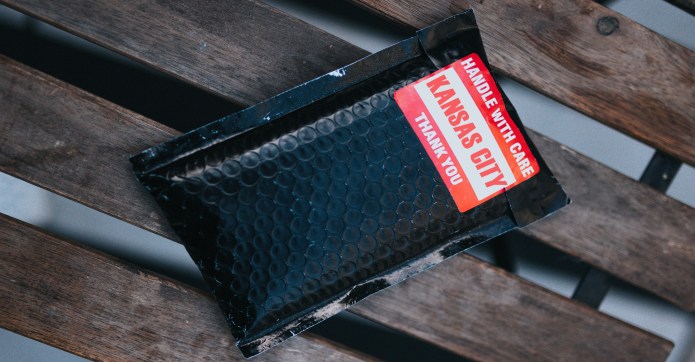


Art & Me

http://youtu.be/2Uik8LrlAXI


This girl is happiest in an artful world, so she does her best to do her part.


#art    #artist    #artistic    #whatisart    #creativeprocess

#writer    #writing   #novelist    #author   #books    #words

#paint   #painting    #painter    #photography    #digitalart

#music    #musician    #singer    #vocalist   #songwriter

#selfdiscovery    #caves    #lifeasanartist    #collage    #love

#darkness     #woundedchild     #magicalchild     #childarchetype

#exhibitionist    #creative    #creativity    #arts&crafts     #storyteller

#primal    #storytelling    #color    #heft    #beyondthepaper

#linearnarrative    #streamofconsciousness

#liferevealed    #beforelanguage

#abstract    #unleashing

#blood


Angela Carole Brown is the author of three published books, The Assassination of Gabriel Champion, The Kidney Journals: Memoirs of a Desperate Lifesaver, and Trading Fours, and has produced several albums of music and a yoga/mindfulness CD.   Bindi Girl Chronicles is her writing blog.   Follow her on Twitter, Facebook, Instagram & YouTube.

Satori

Satori

I don’t know why this has struck me on the most lusciously overcast day we’ve seen yet this year, but a remembrance of one of the hottest days that last summer saw suddenly flit past my eyes, and I thought I’d share it here.  It was an especially hard day for me, as I futily tried to rid my brain of obsessive thoughts over a personal issue.  Here’s what happened (not the personal issue, which I’ll just keep personal, but the day in question).  I decided that going to see friends of mine who are in a band perform at a summer solstice fair in Santa Monica would be just the needed anesthetic for my flooded brain.

When I arrived at the beach, it was a gorgeous day in spite of the triple-digit heat, and everyone from every Venice/Santa Monica walk of life was out, and in their inimitably Bohemian form. My kind of folks. I traversed from where I’d parked my car about six blocks inland of Main Street, and found the stage where my friends would be playing.

And as the music began, and I found a nice shade spot on a nearby curb on which to sit, I began to catch myself, here and there, not listening to the music. The blue noise in my head was louder. So, I briefly moved away from the crowd and called a friend who lives in the neighborhood and had him meet me there, just to add to the party.

He showed up, and we sat together and clapped our hands and snapped our fingers, and “whoooo whoooo”d and whistled at the end of solos, and were happy to see each other. But I was still afflicted. What other tricks could I pull? What other pill could I pop?

And that’s when I realized that this music before me was being used by me as a tool for checking out. And it deserved to be heard for its own sake. Not as distraction from problems, where then its only task is to be noisy enough to drown out that other noise. For that matter, I could’ve found a nice landfill where sanitation trucks would loudly dump their refuse. Or just sat by the side of a freeway overpass and let the engines and car horns and screeches easily drown out the clutter in my head. But I chose music instead.

Something that is sacred and transformative. Something that is never noise. I whored it.

And just at the instant that I had this realization, I truly heard the music for the first time that day. And felt lifted. I even, at one point, felt my phone vibrate on my hip and I ignored it (something I simply never do) in favor of a magical moment between two guitar players that I just didn’t want to sacrifice. And then it was gone. Blue noise in the head back again. And as loud as ever.

I started to notice the people around me. A little boy, maybe 4 or 5, danced and twirled euphorically until his father swooped him up onto his shoulders and his mother suddenly slathered his little face with sun block. It took the kid by surprise, who expressed his great irritation in the form of tears, wails, and a furious wiping of his face. Until only seconds later, the annoying sun block was forgotten, and little tyke was euphoric in giggles and twirls once again. It made me smile, which turned into a laugh.

I noticed an older woman, maybe homeless, it was hard to tell, who found herself a chair in the hot sun, and sat for the entire two sets of music, never once moving to find shade, as everyone else was doing, and so completely focused on the music in front of her. And I wondered what key to enlightenment she had that I could not seem to find.

And in those moments of people-watching, I was once again tuned into the music. As if the music was the conduit to a sudden state of presence. To listening, and observing, and taking in every sensation, every smell, every sound, every judgment even. And embracing it all. The crazy man with the playhouse on his head, who played air drums right along with the real drummer on stage, was glorious to me. And I thought of the scene in the movie American Beauty where the video-wielding kid from next door shows his new girlfriend footage he’d taken of a piece of paper floating in the breeze, and how beautiful he found this thing that was really nothing. It is a statement about finding treasure in every cell of every thing.

And as my day progressed, I found myself in and out of this remarkable sense of true presence, of finding that treasure in every cell, interspersed with hits of my blues and my burdens, which are all about being chained to past and future, and recognized what Buddhists call satori, which is defined as a “brief flash of insight.” I was flashing all over the place. But could never seem to find what in aeronautics is called gimbal lock.

Can we really reach a point where we’re always in an uninterrupted state of true presence, never allowing our problems to sit in the brain and furiously try to work themselves out, as brains will do? Or if we can at least count on a few brief flashes here and there to periodically anchor us and remind us that everything has value for its own sake, and not just as tools for medicating our wounds, isn’t that enough?

And sure enough, on the ride home, I felt full. Full with a day of communing with friends, and hearing wonderful music, and eating great food, and laughing. And none of it made my problems go away. It just managed to put those problems in their proper place in my brain, instead of allowing them the indulgent, repressive center stage.

I heard music that day for its own sake, even if only for moments at a stretch. And I found great meaning in the littlest things, if only in brief flashes.

I’ll take it.


Angela Carole Brown is the author of three published books, The Assassination of Gabriel Champion, The Kidney Journals: Memoirs of a Desperate Lifesaver, and Trading Fours, and has produced several albums of music and a yoga/mindfulness CD.   Bindi Girl Chronicles is her writing blog.   Follow her on Twitter, Facebook, Instagram & YouTube.

The Big Purr : CD Review


Pasheen

I confess I have a particular weakness for female vocalists with low voices. It’s as if they are saying to a world that is enamored with high notes and prepubescent timbers, “tough shit.” And with a shrug of the shoulder and a gleam in the eye, they pull and tug at your groin with those low notes, rumble the rafters, and take you to places that only seem to exist in acid-washed film noir and lurid pulp novels. Pasheen is such a creature on her most recent jazz CD The Big Purr (it is tempting to suggest that the CD’s title is all about those low notes, but that’s awfully easy), and one suspects that she is clearly aware of the inevitable comparisons to sultry contraltos like Julie London, and so puts it right out there, as she does on the opening cut, So High, as if to say, “well, there’s Julie…and then there’s me.” Pasheen makes it clear that she won’t stand in anyone’s shadow, and then proceeds to blast the genre altogether with lyrics that are as playful and mischievous as they are seductive and alluring.

From the first sound one hears (the crackling of an old LP – remember those?) we are placed frankly and unapologetically in a world that could never be inhabited by the teeny-boppers who command the world’s current stage. There is wicked in every fiber of Pasheen’s voice. She is creating her world, song after song, layer after layer, paint stroke upon paint stroke, and welcoming us in, but with a “beware” sign. It’s an underground world. A world that moves at a stroll’s pace. A world of shadows and seduction. A world that almost doesn’t belong in today, but somehow equally in an era bygone and a tomorrow that waits patiently (read timelessly) until the bubble-gummers burn themselves out.

And then there’s that voice! It is textured and haunting, a lesson in the mastery of phrasing, a history rich with tales and battle scars and luscious liquored flavorings, always in impeccable control, if at moments purposely letting loose grace notes both feral and unrestrained, and with the fattest, sexiest vibrato I think I’ve ever heard. Most importantly, at least to this listener, the voice is rife with poignancy and pathos. And every bit of it works.

Pasheen seems happiest (in a lyric) when letting us know that she knows her environment, her fellow jazz players, the luminaries in the genre; and that while she most definitely celebrates them, she also takes her rightful place in the pantheon. Oh believe me, she belongs.

She has fun on cuts like Busy Man (“being a type-A over-achiever myself, I realize that I could end up in a 24-step program”). It’s a lyric that makes one chuckle, while all the time knowing full well that this Big Purr of a singer moves at a Type-A pace for NO ONE, but vamps by, daring you to come along. And so she creates contradictions that serve to remind us just how complex we human beings really are.

There is an underlying sadness in Vanity, a song about cosmetic surgery. What’s most compelling about this cut is Pasheen’s unwillingness to pick a side on the subject, but instead giving us a startling portrait of modern life’s arguably most pathological preoccupation, and that she even dares to broach such an internal-conflict topic within the jazz environment, a neighborhood, from a lyrical standpoint, that has usually been relegated to weepy love songs, clever Porter-esque turns of phrase, and comedic sexual innuendo. She dares to complicate the idiom.

If I seem to be harping a whole lot on lyric, it’s probably because I’m a vocalist too, and lyric means everything to us. But never for a minute think that the rest of the package is an afterthought. Strong melodic writing and a sophisticated harmonic environment puts these songs (more than half of which Pasheen composed or co-composed) squarely in a league with the most timeless of them.

Trumpeter Carl Saunders’ scatting, on his composition You’re So Cute, had me laughing in the jolliest way from pure joy at the fun he is obviously having, a trick that belongs exclusively and exuberantly to the jazz genre, and yet few do it well. I get the feeling this may be signature for Mr. Saunders, as he is given complete carte blanche on this cut, with Pasheen respectfully giving her colleague the floor. Takes balls to give the floor in that way, when it’s your album. But then Pasheen has a pair on her that, I dare say, rivals any of her male counterparts.

As evidenced in her tome to Billy Tipton. Her heart is practically breaking on the wonderfully odd and iconic song Cross Dress, leading us to consider a world so intolerant that it demands the Big Lie. It is equal parts shame-on-us reprimand and loving tribute to the many whose lives were relegated to the fringes. It is melancholic without ever moving into the territory of dirge-y sadness.

My favorite cut has to be the finale track, The Truth, composed by the Diva, herself, which paints a landscape of the Seek, the Search, the Path, and which suggests that this radiant singer has depth to spare, yet she keeps it light and fun: “Maybe god is a goddess in a strapless dress.” Frankly, I’m envisioning that goddess with shocking platinum hair.

She has the best of the best as her production and performance team: Co-producer Barry Coffing and engineer Talley Sherwood to start with, and a parade of some of the business’s top session players from L.A. and Houston, including celebrated woodwind player Bob Sheppard, who offers gorgeous warm-toned tenor solos on most of the tracks, and who, all, help to make every track strong and tight. Straight-ahead swing, crisp bossas, and ECM-esque rhythms create the bed for this body of work to lie on.

Pasheen straddles playfulness and pathos with equal aplomb on this recording of twelve stellar cuts, and celebrates the genre of jazz in such a unique Pasheen-only way, that one gets the feeling she loves rocking the boat of the comfortable, and shaking up folks’ worlds, all for the sake of a powerful musical moment.

Her liner notes include thank-you’s to animal rescuers and to our soldiers, which gives a clue into the passion and compassion at work in this beautiful songstress’ heart. But you won’t have had to read about it in the liner notes to feel it with every note sung.

You’ll find you need to hear The Big Purr again and again just to catch every finely layered nuance. It was a joy for this listener. Congratulations Diva!

And as always:
Create – even if you’re not an artist
Support artists – especially the independents
Live well – doesn’t take money to do it
And be whole

Pasheen:  http://www.reverbnation.com/pasheen


Angela Carole Brown is the author of three published books, The Assassination of Gabriel Champion, The Kidney Journals: Memoirs of a Desperate Lifesaver, and Trading Fours, and has produced several albums of music and a yoga/mindfulness CD.   Bindi Girl Chronicles is her writing blog.   Follow her on Twitter, Facebook, Instagram & YouTube.