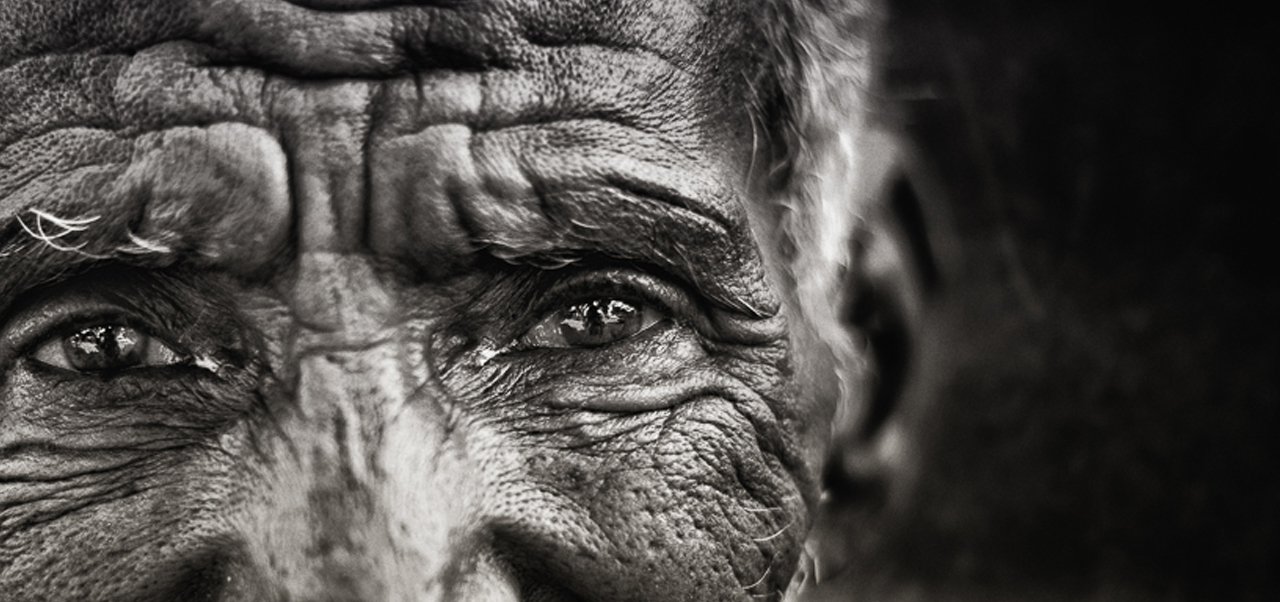
An Old Black Man Someday (A Call For Peace)

110-copy

There is so much to say.  And I have been largely silent on the subject, in this social media playground.  Because others are more articulate.  The world is full of articulate polemics on the subject.  An entire movement – Black Lives Matter – has been necessitated.  This strange epidemic.   It is.  An epidemic.  And for much of the world, it is somewhat of an abstract.  But think of someone’s son.  Someone’s father.  Someone’s brother.  Think of them as children growing up.   Think of where (and why) we have turned a very wrong corner, after ALL of the vital work of the civil rights movement, of history! and the enlightenment of men that has continually tried to be fostered and fought for.

I added the following stanza to a song I wrote 15 years ago, because there is a new dynamic now:

In matters global to familial, my solemn heart doth daily pray;
Let not endangered be the old black man someday.

Endangered.  Think of that word.   That threat.   That awesome haunt of prophecy.

In the wake of this epidemic that seems to be our nation’s startling reality, my 15-year-old song rings now with a sobering irony.  It was originally written about my brother Mike, spun from, and into, a pastoral, nostalgic, childhood idyllic.

Today it chills.

I feel so strange about this offering, because as artists we always want to reflect the times, but what this reflects hurts me to my core.  I have three brothers in total, all young men still.  I just want them to live to be old men someday.  That they happen to be black . . .


An Old Black Man Someday


Angela Carole Brown is a published author, a recipient of the Heritage Magazine Award in poetry, and has produced several albums as a singer/songwriter, and a yoga/mindfulness CD. Bindi Girl Chronicles is her writing blog.   Follow her on INSTAGRAM & YOUTUBE.

Those Who Read Books

J693x503-11682


Those who read books travel the world and time itself.

Are explorers, adventurers, discoverers.

Take on beggars and kings with no thought in the ranking.

Have their minds forced open and their spirits ever expanding

in insatiable hunger for more.

Those who read books fill themselves with wonder.

Know that a book is a friend,

a teacher, a priest,

an agitator.

Are not afraid to be made uncomfortable.

Grow the wings that continue, muscle by muscle,

to sprout upon reaching “The End” time and time anew.

Fly.  Fall.  Fly again.

Those who read books are changed.

And glad of it.


Angela Carole Brown is a published author, a recipient of the Heritage Magazine Award in poetry, and has produced several albums as a singer/songwriter, and a yoga/mindfulness CD. Bindi Girl Chronicles is her writing blog.   Follow her on INSTAGRAM & YOUTUBE.

Just Fly

holocene
 

Take into account

neither physics,

nor logic,

nor science.

Nor common sense,

Nor empiricism.

Nor dull matter.

But give ALL to the

imagination, the intuition,

the realm beyond the senses,

and the boundlessness

of a child.

And fly.


Angela Carole Brown is the author of three published books, The Assassination of Gabriel Champion, The Kidney Journals: Memoirs of a Desperate Lifesaver, and Trading Fours, is a recipient of the Heritage/Soulword Magazine Award in poetry, and has produced several albums of music and a yoga/mindfulness CD.   Bindi Girl Chronicles is her writing blog.

The Little Death  (Un Poéme Concret)

The Little Death (Un Poeme Concret)


Yes, Said She

Yes, said she


Angela Carole Brown is the author of three published books, The Assassination of Gabriel Champion, The Kidney Journals: Memoirs of a Desperate Lifesaver, and Trading Fours, is a recipient of the Heritage/Soulword Magazine Award in poetry, and has produced several albums of music and a yoga/mindfulness CD.   Bindi Girl Chronicles is her writing blog.  Follow her on Twitter, Facebook, Instagram & YouTube.
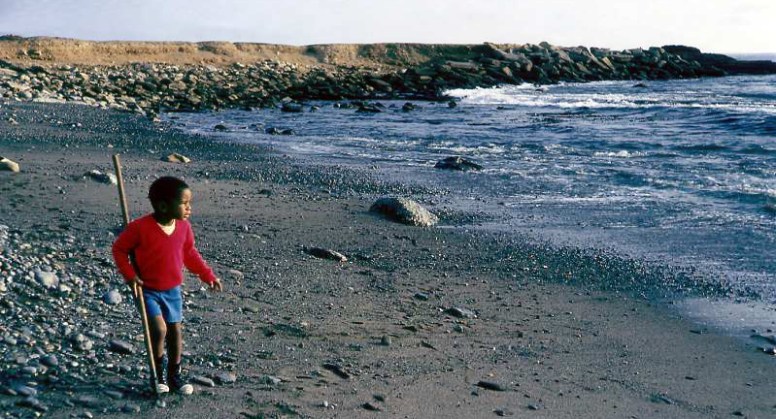
The Daughter’s Sonnet (A Father’s Day Tribute)

 Old-Man-12


if by thy brow a simple sweat doth bleed

a countenance of noble toil hence laboured

then bounty borne god wouldst baptize the seed

to harvest rich the terra to be savoured


much have i pondered on the whole of thine

existence, footmen of the earth thou art

thou’st tilled the ground to ripeness, intertwining

labour and love for thy children’s start


the waxing of an oak from seed to tit’n

accords the span of seasons thou hast trod

through wars of men. thy battle doth enlight’n

a stalwart vigor ‘neath thy shield and rod


wisdom environs thine autumnal year

a gift i quest to conquer in my youth

but make myself a showy sonneteer

whilst thou with simpler words discourse in truth


yielding must be my grant, that i might learn

to recognize that wisdom is a page

from thy books i ought read, instead of spurn

the heart of thou who art the truest sage


o weary dotards, weak only in frame

thy wizened visage resting on the world

a yore of life abundant thy sole claim

whilst greater words ne’er from a mouth unfurled


growth and a shaping yet have i to mold

to learn from thee thy lessons, men of old


Angela Carole Brown is the author of three published books, The Assassination of Gabriel Champion, The Kidney Journals: Memoirs of a Desperate Lifesaver, and Trading Fours, is a recipient of the Heritage/Soulword Magazine Award in poetry, and has produced several albums of music and a yoga/mindfulness CD.   Bindi Girl Chronicles is her writing blog.

Van Gogh’s Ear

Abstract Banner

he stared at his blank canvas for hours.

frustrated.

couldn’t get a thing done.

finally he just doused his naked body with flat green house paint

and in a magic-mushroomed fog

threw himself against the elevator lift.

he picked himself up off the floor.

stepped back.  stared.  hmmm.

it was this perfectly contoured jade silhouette of his body

divided in sublime harmony and symmetry

right between two testicles by the parting of the

double steel doors.

from that day forth every time he yanked on the ropes and opened that thing to leave

he’d flash on the excruciating image of his

right nut soaring one way and his

left nut soaring the other.

was there a symbolic message somewhere in that image, he wondered?

that maybe castration was the true doorway to freedom?

as many women as there were who had messed with his head and therefore his art

he had to at least consider the possibility.

he got the hell outta there for the night and went to a neighborhood bar.

walked in and saw the most beautiful woman he’d ever seen.

kinda like an angel.

reminded him o’ that old joke :


man walks into a bar.  sees the beautiful woman.

tells her he wants to make sweet love to her.

Sorry i can’t, she quips, i’m on my blue period!


he downed a couple of quick shots of Old Forester.

slapped his money on the bar like a cowboy.

decided against approaching his beautiful woman.

and sulked on back home.

thought to himself :


why’d that damned Vincent have to go and cut his ear off,

and raise the bar of brilliant suffering for all the rest of us?


Angela Carole Brown is the author of three published books, The Assassination of Gabriel Champion, The Kidney Journals: Memoirs of a Desperate Lifesaver, and Trading Fours, and has produced several albums of music and a yoga/mindfulness CD.   Bindi Girl Chronicles is her writing blog.   Follow her on Twitter, Facebook, Instagram & YouTube.

Morning-glory: A Reluctant Aubade

That day one summer long ago,

my first here on this plane,

when snatched a glimpse did I the break of Morning

and watched him from my window,

a dazzling hue arrested my eyes. I saw him.

He crept upon the slumbering earth,

roving in quiet majesty.

That day in summer did I catch his dusty blush

and hold his secrets in my silence. He moved

before me in a grassland clearance

and smiled. And whereupon that smile stole

my heart, he paraded his progeny,

the vineyards and wheat beds,

the fields of heather.

Quite in his glory, onward did Morning creep like a

feline thief as I watched him that day in summer.

Conducted he the meeting of rays to rain on

rooftops. Morning knelt when he caught sight of the

ground below on which rested a wet leaf and a

chilly worm. Victim to an unusual cold was the tiny

creature, changing tempos of its journey, slowing

to decipher a warmer place.

And in his paternal clemency, Morning scooped

it up in his cradled palms and blew

a warming breath; the tiniest of treasures for a

journeyed worm.

And I wept for Morning’s uncommon gentleness

and called him God.

I clung to kind Morning that day in summer.

Swallowed him I tried, poured him over me

to lose myself within him, a baptism, a fornication.

He passed across my heart,

perched me on a high ridge

that I might watch him move through the trees

and provoke them to dance.

Morning sprinkled his sun

over the sea and me. And out of his

sun-drenched gourd

drank I, and became like a drunkard.

Till distorted Morning became and began to retreat.

Did my clinging turn him from me? I feared my part in this.

And all on earth stilled.

A whippoorwill sang, calling out to

the dusky mystery.

I gripped fast the hem of Morning’s garment,

pleading to be rescued from these coming terrors.

And Morning spoke, bidding me fear not

the illusory monsters of the dark.

“They are but reflections of your fears,”

he spoke. And Morning called himself not God.

“Merely a tilling limb,” he sang. “Night being the humble other.

Welcome her.”

And his sun was no more.

My heart ruptured an ulcer of grief.

I felt Morning’s treason,

and stood scorned and afraid.


So Night advanced, the temptress.

I recoiled and cursed Morning, seeking refuge

where I might amid blooming dogwoods

and blushing primrose.

Thus from beyond the clouds,

a curtain drawn for a diva,

sauntered her infamous moon,

the blood moon,

great and glorious, rendering ghost stories.

And my fear alighted in anticipation

of phantoms that walk the earth. Of fallen angels

and wraiths who haunt the body and gust the rivers.

Of skies so black as would harrow up the soul of

Proserpine herself, and make her a

crying worshipper of the light.

Treasonous Morning was wrong.

Night was nothing humble.

Strut was Night’s word.

And she snagged me. Setting ablaze the sky with

trinkets of opal and ice, Night worked

in her artful splendor,

sucking up the fugue of day, to spit forth a grand

suite for twilight.

Before me nocturnal creatures frolicked and showed me

her masterwork of intuition, vivid dreams,

and womanly magic,

all while rending each other to the bone,

a reptilian dance of survival that only Night’s drape occasioned.

The Dead of dark.

The Nameless apprehension of shadows.

Fireflies, which gave me the tiniest tease of light,

ornamented evergreens like a Christmas tree.

Night wrapped me in her lithe black stole,

— glamour queen! —

and caused me to fall in violet love.

There I indulged in the dark enigma of her,

drowned myself in her inky nectar

to wear her on me,

and thought no more on His Majesty the Morning.

Till, while in my reverie, a spell of time I could not name,

but seemed the blink of an eye,

Night’s tide began to abate, her moon to blanch,

and before my witness, faded

from her gaudy grandeur to a limp gray.

My spirit caved as I prophesied a second betrayal.

Night closed her eyes,

without goodbye, without balm,

and fell to her cycled quietus.


Serenely did sigh a swallow’s

sweet twitters and song.

Softly did burst into bloom the magnificent

morning-glory flower.

And whereupon the inconstant Night yielded to

Morning’s inconstant mien, leaving me

to endure the insufferable inconstancy,

once more did I weep,

for loved them both did I that day

in summer long ago,

and for the days to come,

of every season.

And sorrowed yet surrendered

that seize them each my prisoner

in selfish grip I could not,

and call them

my very

own.

Angela Carole Brown is the author of three published books, The Assassination of Gabriel Champion, The Kidney Journals: Memoirs of a Desperate Lifesaver, and Trading Fours, and has produced several albums of music and a yoga/mindfulness CD.   Bindi Girl Chronicles is her writing blog.   Follow her on Twitter, Facebook, Instagram & YouTube.

I Discover Treasures

CrosswalkBox


Newborn pups suckling from their mother
who is wary of the stranger stopping to take it all in.
As well she should be for her protection of her young is a wonderful thing to behold.

A lone bloom in a garden full of yet-grown flowers.

A couple on a street corner holding hands and kissing.
Perhaps a little too intimate for public view.
So deliciously meretricious.

A crosswalk box so layered in endless encounters with midnight taggers and their spray paint cans
that it has transcended its civic role and become art.

A fledgling on the pavement before me
whose little life has been lost from falling out of the nest too soon.
The scurrying ants upon it.

The windshield glass in the street shattered into snow and the splats of red upon it.
The ubiquitous yellow tape.
Remnants of a city tragedy that are merely an inevitable part in the tapestry.

A sky that radiates a marbled canvas of unspeakable magnificence.
Or the rolling dark angry eyes of a tempest creeping.

The tiniest thing is mine.

All mine.

To love.

To cherish.

To covet.

To reflect upon.

To mourn.

Perhaps a moment of silence and a bowed head.

Just another day on my morning walk.   A meditation.

Until it is someone else’s turn for a captivating discovery.

And then to be able to let it go.

To appreciate its impermanence.

To move on to the next wonder.

The next brush.

The next audacious interception with life in all of its astonishment.

I once opened a fortune cookie to a fortune that was meant for me:
You discover treasures where others see nothing unusual.


I DO discover treasures where others see nothing unusual.

It is my proudest trick.

I also brazenly plagiarize fortune cookies.


Angela Carole Brown is the author of three published books, The Assassination of Gabriel Champion, The Kidney Journals: Memoirs of a Desperate Lifesaver, and Trading Fours, and has produced several albums of music and a yoga/mindfulness CD.   Bindi Girl Chronicles is her writing blog.   Follow her on Twitter, Facebook, Instagram & YouTube.

Four Points of a Twenty-three Day Odyssey


Abstract-Painting-Fluid-Acrylic


1.

. . . And he told them he didn’t do portraits.

They asked him why, and he said because

the last time he did a portrait he was

screamed at by the model who claimed

he didn’t capture the true her.

As if she might’ve had some clue

as to what that was.  See, when the work

gets too personal for anyone else besides him,

that’s when he always gets into trouble.

And there are all the little ulteriors that

hang in the balance, besides.

So he doesn’t do them.

But this family wouldn’t leave him alone.

And it’s not as if he doesn’t like to be begged.

Who doesn’t?

But these people were REALLY trying to

twist at his heartstrings.

They said the portrait was in memory of their dead mother.

Oh, boo hoo.

And when that didn’t work – sentimentality rarely does with him –

then they tried to yank on his empty pockets

with offers of ungodly amounts of money.

And that is where he fell.

It’s where he always falls.

Plus, they were able to convince him,

gullible fool that he can be,

that a dead woman could hardly

scream at him about a job not well done.

So they all shook hands, and the process began.

An impossible one, he would later come to find,

but then he’s always been of the opinion that

Creation is a job for someone with at least

a high school diploma or the equivalency.

And at all times requires a crash helmet.


2.

. . . How had he let himself fall for it again?

How do you paint someone you don’t know?

Because, you see, it isn’t just a face you paint.  It’s a spirit.

An energy.

So, faced with that puzzle, and since he didn’t know the dead woman personally,

he decided he would do everything he could think of to learn about her life.

He started gathering, collecting, rallying around him all the trinkets that spelled her life.

Anything her family could possibly dig up.

Photographs.  Letters.  A handkerchief bearing the scent of

lilacs and mothballs.  Very telling, that one.

Purses with lipsticks glued inside.

There was a pair of old nylons,

never worn, just packed neatly away in a rusted hope chest.

A brooch of black pearls and emeralds.

Most of the emeralds missing.

A very badly tarnished silver teething cup

with a name inscribed.  Hmmmm.  Laura.

Just like the movie.

A dead rose from Laura’s funeral, which someone had

flattened between the pages of

Psalms and Proverbs.

And an old, musty, floral-printed dress.

He placed every bauble and memory on tables and chairs all around him,

And just sat for days,

staring at the stained wallpaper,

feeling a bit like the irascible Raskolnikov.

He held in his hand the dead woman’s hair brush,

all ensconced in tangled and mangled

grey and black hairs.

Slowly he lifted it to his nose to smell.

Only hair.  Nothing special.

You know, what can you really get from hair?

Maybe a hint of old, stale Bergamot.

Just trying to get acquainted.

He felt like he was on a first date.

What the hell.  He popped a few Black Mollies and started.

But to his hallucinogenic dismay, his first stroke was weak –

ignorant – uncommitted – bullshit!

The color was wrong, the light was wrong, the intent was wrong.

So he threw it out, and sat three more days.

He had run through every canvas and every little tube of his oils

trying to express dead Laura.  Then he couldn’t even afford to

re-stock his supplies!

So in pure and pissed-off desperation, he thought to his huffing self,

I will slit my wrists if I have to,

and paint her on the walls with my own blood!

The truth is, it’s just too goddamned expensive to be a starving artist these days.

And a good dental plan certainly couldn’t hurt to make it a more sought-after position.


3.

. . . So he just sat.

For days upon days with the sights and smells of dead Laura.

Reading her letters, memorizing her penmanship, sleeping with her quilt draped over his legs.

He paced his flat for countless unbathed, sweaty days,

and went through several fifths and an easy carton of Marlboros.

He listened to the weeping timbre of Callas on an old turntable, because that voice was how he felt.

Until one day, out of the blue, after all of the madness,

for mad was what he had become,

he suddenly realized – he was wearing her.

Laura.

As one puts on a cloak and lavishes in its feel, so he wore her very life on his ripe body.

It hung from his limbs, perhaps a little snug in the arms,

but every part of her was now in his grasp.  Every little nuance.

He knew her better than he knew himself.

He was a bit awed and trembling, but needed to shake it off so that he could keep going

and actually get some paint to canvas.

He immediately hastened to the business of stretching a canvas on a 10 ft. x 10 ft. frame.

So huge and unmanageable was the thing that he had to literally lie on top of it.

He mixed paints with such a flurry that he stumbled clops of swirly color onto the canvas

before it had even been given the chance to be completely mixed,

so much faster did his head work than his hands.

He painted her with a fever by day, and with a pitch by night.

Hues of every conceivable shading and variation surfaced.

Thoughts toppled over one another to get to the canvas.

And a sort of unhinged randomness became his M.O.

For twenty-three haunted days of glorious, glorious madness

he pranced and flung paint to the round-the-clock screams of Fishbone

(he had long, by this point, abandoned Callas)

and a half pint of Old Forester.

And it was – a masterpiece.

Was he even allowed to feel that?

Somehow, he didn’t care.

He circled it for fear that he’d dreamt it.   But it was real.

And he breathed in the smell of her, which was beyond the pungent turpentine, stale bourbon, and cigarette smoke.

He stared at her until she bewitched him, and he would be so bewitched.

She was strong, yet sad and eloquent, just like her love letters.

And angry too, like that cracked hand-mirror that he could just see her

dashing against a wall.

Yet vulnerable, as in the melancholy eyes that graced every one of her photographs.

But most of all . . .

Well, look for yourself.

Is she not the most exquisite beauty you have ever seen?

It probably comes as no surprise by now that he had

fallen in love with Laura.

The minor detail that she was dead didn’t seem to stop that

ball from dropping, did it?

So the cliché IS true.  All artists do fall in love with their models.

Even the expired ones.

This career is definitely not for the faint of heart.


4.

. . . And then as if the laws of fate weren’t already

finding him the perfect punch line to a joke,

the family of dead Laura was not, as it turns out,

especially thrilled with his portrait after all.

Idiot!   (This was to him, not them)

He should know better.

How many times in the past had he already walked into this trap?

See, they wanted something they could put on their mantle like a holy shrine,

to decorate with flowers.

They weren’t interested in something they might have to ponder!

They wanted something they could readily identify.

Like a police sketch!

“It doesn’t even look like her.”

“It doesn’t look like her?  It is the very essence of her!”

They asked him how he would know that.

“How would I know that?  How would I know that?

HUMAN NATURE IS MY JOB!”

“Human nature? Human nature?  Is that what you call it?  Human nature?  Well, maybe buddy, but what do you know about our mother? What do you know about our mother? What do you know about our mother? Whatdoyouknowaboutourmother!!!”

They were mindless wind-up toys.

He could not stand the sound of their voices.

“We’ve lived with her all our lives.  What have you lived with?   A hair brush?  A broken mirror?”

He finally burst:   ” I’VE WORN THE PANTYHOSE!  CAN YOU SAY THE SAME!!!?”

What kind of fetishistic weirdo are we dealing with?  they must surely have been thinking.

He didn’t care.

The truth is, they’d’ve fared better taking her photo to a booth on Coney Island for a three-minute chalk portrait,

and he told them as much.

They called him a narcissistic dilettante.

He called them cretins.

And once again, between artist and the

rest of the conscious world, it seemed,

there lay the abyss.

And so the family of dead Laura stormed off

with all her trinkets and whatnots,

and he walked away with no money in his pockets,

but his own Laura right there on his wall,

where no one could ever touch her again.

She was his.  He was hers.

And as he sipped, not swigged this time, his shot of Old Forester,

he could not help but reflect on an Ingmar Bergman line:

I could always live in my art, but never in my life.


Angela Carole Brown is the author of three published books, The Assassination of Gabriel Champion, The Kidney Journals: Memoirs of a Desperate Lifesaver, and Trading Fours, and has produced several albums of music and a yoga/mindfulness CD.   Bindi Girl Chronicles is her writing blog.   Follow her on Twitter, Facebook, Instagram & YouTube.