OLD

New_Beginnings

“If wrinkles must be written upon our brows, let them not be written upon the heart.”
– James A. Garfield

“May you live all the days of your life.”
– Jonathan Swift

My New Year’s Resolution this year:  TO BOLDLY GO WHERE NO ONE HAS GONE BEFORE.   Wish me luck!    And should I happen to get lost in the Black Hole, somebody please feed my cat.

Symbols have always been important to me.  They are only imbued with whatever power we give them, but when they are imbued they resonate loudly, penetrate profoundly, and have the absolute ability to shift paradigms.  I’m also a perpetual seeker, so I always seem to be in search of life’s answers to the questions that matter; our place and role in the world, our alliances and community with other living creatures and the reasons for them, etc.  So, needless to say, tongue-in-cheek resolutions aside, the transition of the New Year has always had powerful meaning for me.  Forever, I have practiced certain rituals, usually inward-turning ones, that help me to reflect, restore, reform, renew, and remember.  Reflect on the choices I’ve made in the year that is leaving, and whether those choices have reaped what they intended.  Restore balance where things have begun to feel out of control, and sanity where insanity has been allowed to rule.  Reform habits that have now grown so old and dusty that they no longer serve.  Renew, in order to make room for better habits and better mindsets.  And Remember Everything, toward maintaining or gaining humility, understanding, clarity, lessons.  Because if it’s not about always evolving toward our greatest, god-realized selves and away from our basest selves, whenever possible, and perpetually, then what IS it all for?

New Year’s Day just also happens to be my birthday, so truly this yearly symbol and practice and ritual could not be more perfect for me.  Parties, celebrations, candles, champagne, friends and gatherings aside, my birthday has always been, for me, an opportunity to turn inward, to claim some part of the day for solitude, self-inquiry, meditation/prayer, and perhaps even a symbolic deed.

Example:  One year (which had been an unusually difficult one) I took the midnight hour moment (after counting down and then singing Auld Lang Syne with the band, of course, because I’ve sung a gig on every New Year’s Eve  since 1988) to unfold a list that I had made of every difficult and painful moment that had occurred that year, and I proceeded to ritually tear it up in order to say, to myself, to God, to the Source, to the Collective Consciousness, however it actually works, that I was done with those burdens and embracing a new consciousness and a new energy.

Well, here I am on another birthday, and other than writing this thought I’ve no plans except to watch the Rose Parade on TV with my breakfast and mimosa, maybe take a walk, go get a massage, or do some living room yoga.  Perhaps I’ll end the day at the movies (one of my favorite pastimes).  Who knows?  As I’ve anticipated today, I’ve loved the idea of making no plans, because it is SO NOT me.  I’m a planner, an organizer, a connector of dots.  There’s something lovely (but a little scary for an anal-retentive planner like myself) in the idea of “let’s see where the day takes me.”

My friend Robin Swenson recently posted on Facebook, in response to all the birthday wishes he’d recently received (Capricorns forever!): “getting older never gets old.”   I absolutely cheered to read that, and reflected back to my 50th birthday.  Not only had I spoken “50!” out loud, which I realized was a great sin, according to many of my female friends (and especially being in the business I’m in?!) but just three days prior to that Big Day I dared to throw the biggest celebration I could possibly think of, which included an orchestra, a rock star, and a big-ass cake with a big-ass “50” written across it in chocolate-covered strawberries.  I know women who slink through their “big one” on tip-toe, hoping no one will notice.  I also realize it will be impossible not to sound self-righteous when I say that I didn’t want to be that woman.  To each her own, of course, but I just really didn’t want to own shame about turning fifty.   And the truth is, it’s a tough quest, but at the very least I figured I would fake it ‘til I make it.

And so, a party.  A big-ass, brazen party, which I will remember with a giggle for the rest of my days.

That said, it still wasn’t the simple pill that magically eradicated all my struggles with aging.  But it was a damned good start, and a damned good party.  And yes, because New Year’s Day is my birthday, those inward-turning reflections often (though not always) ring with themes of aging.

The above quotes came from two really great cards I received this year.  When you hit a certain age, the cards start reflecting either good-natured jokes about old age (usually welcomed) or more sensitive reflections on the beauty of aging (never a bad idea, in this fragile, age-obsessed culture).  These two have given me particular pause.

We all know at some point in our lives (if we aren’t already there) that we’re going to have to make peace with aging.  We are destined for this reflection.  At least if you’re from this American culture.  Other cultures embrace their elders as the venerated among them.  And that veneration being inherent in the very blood, there is no real need for reflection upon it, for it is welcomed as a crown.  But in this culture, we have had the great misfortune, shaped and molded by our media, of nullifying our elderly and the very idea of growing old.  We’d rather die young and leave a good-looking corpse than to wrinkle, lose hearing and bladder control, grow gray or bald, have to depend on our children for our care, and watch the sexual part of our identity slowly fade away.  These are mortifying concepts to most Americans.  And mortifying not because it means being closer to death, but because it means becoming society’s invisible.  How do you claim thick, opaque, rich, visibility in a society that refuses to regard you?

And therefore, at least if you’re a thoughtful and conscious human being, the time will come when you must reflect on aging, and make peace with it.

I have often referred to my “old age” with a self-deprecating humor, a way to deflect my sense of grief over losing my youth, and to disarm its power.  I am often told to stop that.  And while I understand the impulse in my loved ones to encourage me to love myself, and I merely say “thank you” in response, what I really want to do is tell them to wake up and smell the coping mechanism, and to please allow me that.

On the other hand, I have lately been observing the heartbreaking tendency in some women, who are hovering around this age, to be mortally unforgiving of their bodies’ age-related transformations, in ways that are not remotely meant to be funny or to share a laugh about.  This is not even grief.  This is downright hatred of self.  It is venomous and venal, the stuff of cautionary tales and selling one’s soul for that shiny piece of youth. I often feel surrounded, and I try desperately to counter the onslaught of self-repulsion I hear with that humor I try to use, to be the voice of irreverence, if not reason.  But more often than I’m comfortable with I find myself falling in line with the rhetoric, and the next thing you know I’m spitting my own disgust at my growing thighs in the choir of I-loathe-myself commiseration.  Like I said, a tough quest.  I feel for women’s restlessness, and I retreat to the comfort and safety of my jokes, and I tell myself that my making jokes about aging is different, very different, and that their restlessness does not belong to me (even if I do borrow it from time to time), that my humor is a positive thing, a way of embracing aging, of not having to desperately cling to youth, of refusing to view old as a dirty word.

If we say OLD enough times, it’ll lose its power.

But I suspect it’s all the same animal, and I am as guilty as anybody.

I have had a recent epiphany regarding this matter. (I love calling these little thoughts and discoveries epiphanies, because it automatically eliminates any contradictory position.  There is sacredness to one’s epiphany.  You don’t dare touch it.)  It is this:

I can either yearn to be young again, a place to which I can never return, therefore the instinct to obsess over it is a complete, self-sabotaging waste of energy; or I can embrace the age I am by simply choosing to be better at it.

One way I can accomplish this is to realize, and own, that my graying hairs, my creeping lethargy, my mid-section spread, my aches and pains that seemingly come from nowhere, do not belong to me; they belong to my body.  And my body is not me; merely the house I live in (I have my Buddhist and Eastern-thought studies to thank for that implantation).

And by being able to put that in its proper place, perhaps I stand the chance of forgiving myself these “afflictions,” as I have viewed them. Of recognizing my own power to be empathetic to them, and to ultimately transform them from afflictions into trophies.  Of reconciling both the flower AND the thorns of my body.  Of claiming the truth that aging isn’t a sentence – it is a call-to-arms.  A call for me to wake up and be alert, to realize that the days ahead are more precious than the ones behind, to recognize that the awareness of time running out gives me (a naturally lazy person) a swift kick in the rear and tells me to move, to produce, to achieve, to make my mark and leave my legacy, and to make every moment in the remainder of this life one of quality and vibrancy.  I’m in the most thankless business there IS (the entertainment industry) when it comes to the subject of aging.  And I’ve watched my comrades, who have been lighting up stages and electrifying audiences for years, suddenly start scrambling to figure out how to stay relevant in an industry that reveres extreme youth.  I have absolutely no answers to offer here.  Only my own gut telling ME to stop scrambling.  Stop panicking.  Stop trying to please people who barely see me.  Stop trying to fit my square peg in the round hole that is this business.  To, instead, make whatever it is I have to make, to create, to produce, to contribute to this world, on my own terms.  And if I’ve learned anything from my Eastern pursuits, I’ll learn to simply do the deed, and let go of the outcome.  All I can do is my part.  With integrity.   With clarity.  With the kind of self-love that makes me take better care of myself, yet with the compassion to forgive my body’s DARING to get old.

And it means not being afraid of that word … OLD … but instead shouting it proudly to the rafters.  Like, say, a birthday party with a rock star?  Because while the word may invoke our Western-culture-indoctrinated images of fatter, slower, frailer, grayer, less sexy, invisible … it also, and more importantly, means Wisdom.  Experience.  SeasoningAMAZING Grace.

That was 50’s epiphany.  Today I woke up with aching joints and cursed God for making me fifty-four.

“Old age is no place for sissies.”
– Bette Davis

Happy New Year, my friends!


Angela Carole Brown is the author of three published books, The Assassination of Gabriel Champion, The Kidney Journals: Memoirs of a Desperate Lifesaver, and Trading Fours, and has produced several albums of music and a yoga/mindfulness CD.   Bindi Girl Chronicles is her writing blog.   Follow her on Twitter, Facebook, Instagram & YouTube.

Always At My Fingertips

gyan-mudra

“The real voyage of discovery consists not in seeking new lands but seeing with new eyes.”  Marcel Proust

Last week I was in a bad way.

Just life stuff.

Then I immersed myself in a daily regimen of meditation.

I do that anyway, but this has been more of an intensive.

And already I feel lifted, unburdened, and putting everything in its proper perspective.

My home and family were not destroyed in a typhoon.

I wasn’t the victim of a bomb explosion.

What’s happening in my life right now is merely an inconvenience, not catastrophe.

Sure, there’ll be moments again where I’m ready for the razor blades,

but it’s reassuring to know that there is a concrete way to anchor myself

always at my fingertips (in gyan mudra!)

whenever I need it.

God bless the power of silence and turning inward.


Angela Carole Brown is the author of three published books, The Assassination of Gabriel Champion, The Kidney Journals: Memoirs of a Desperate Lifesaver, and Trading Fours, and has produced several albums of music and a yoga/mindfulness CD.   Bindi Girl Chronicles is her writing blog.

The Damsel Culture

http://www.vuni.net - digital art

So, as I was on my way out the door this morning for my daily walk, I decided to do a different route, for interest’s sake, and walked past a kidney care center that I’ve seen many times, but haven’t paid much attention to, ever since I moved into the neighborhood.  Today I decided to stop in and inquire about their services, since as a kidney donor I need to do annual blood and urine tests to make sure all is in working order.  I have a primary care physician, but he’s quite a drive away, and I thought how cool it might be to have at least this part of my life be right around the corner.

When I walked in the front door, which is merely feet from the sidewalk on the very busy major thoroughfare of Devonshire Boulevard, I was instantly hit with a room filled with very sick people all hooked up to dialysis machines.  Feet from the street.  It so startled me to be that un-buffered, to not, instead, walk into an office or lobby or receptionist’s desk first, before entering the League of Great Sickness.  Because of my experience with the transplant, I’ve grown accustomed to that environment, so I wasn’t made uncomfortable; it merely startled me.  And it was at that moment that I pondered the strangeness of my reaction.  And the buffered culture we live in.

Everything is buffered for us.  From waiting rooms and front desks that – ordinarily – shield us from discomfort until we’re ready and geared to walk through certain doors, to signs at amusement parks that warn about possible vomiting or nausea if we get on that roller coaster.

And it instantly took me back to a poetry and prose reading I attended years ago at this wonderfully bohemian coffee house in Glendale, and the eye-opening lesson I’d learned that night.  I had signed up to read, had been in the midst of writing the book that incidentally has just come out (but this isn’t a plug, no way, I wouldn’t do that here … The Assassination of Gabriel Champion on Amazon … ), and had decided to read a passage I’d just finished working on, which included a rather graphic bit of violence.

After I read, I got some really great feedback which assured me I was on the right path with my writing.  And then this couple came up to me, a husband and wife, and proceeded, as delicately as they could, to inform me that the both of them, at an earlier point in their lives, had been the victims of violence similar to the one in my passage, and that while they appreciated my writing, and the earnestness of its content, they really wished I had been sensitive enough to warn the audience ahead of time that this reading would contain some graphic scenes, because they were unprepared to listen to something like that, and would’ve elected to step outside.

“We didn’t want to walk out on you in the middle of your reading.  We actually do believe in being courteous and respectful.  We just kind of wish you had been as courteous and respectful.”

I had no defense or comeback.  They were right.  I didn’t know who was in my audience, or what someone’s background might’ve held.   This couple certainly wasn’t asking me to censor anything, or to refrain from reading, or anything resembling a challenge to my freedom of speech and expression.  They’d simply requested a warning, so that they could elect whether or not to listen.  Perfectly reasonable.

I’ve never forgotten that, and because of that experience, so many years ago now, it is my absolute practice any time I’ve ever included a passage from one of my books on my website, or on any other public forum, and which may contain violence, sex, or strong language, to always include a disclaimer at the beginning of the passage.  Of course, no such disclaimer is ever necessary for the books themselves.  You’re a free agent.  If you elect to pick up my/anyone’s book, then it’s your responsibility to read what the book’s about on the back cover, and decide for yourself if you want to dive in.  But as for excerpts that appear anywhere publicly, if the passage contains strong content, I let people know.  I’ve subscribed to that practice ever since that night of the kind, respectful, fragile couple who schooled me.

Today, as I ruminate on our buffering society, and our need to be cocooned from difficulty and discomfort, I question if that’s what’s best for us.  Merely question.  This thought is all of an hour old, and I’m still processing it even as I’m typing this.  No judgments have been handed down yet.

But is it better that we be “protected” from reality; sickness and death, the scariness of roller coasters, or the contents of a book?  Or might it actually serve us better to be thrust headlong into that great jolt of life in all of its layers of beauty and ugliness and bliss and pain?

We live in a more frightened society today than we did years ago.  I don’t know, for example, a single parent who would allow their small children out alone on Halloween today, yet when I was a kid our parents almost never accompanied us.  We were free to roam the neighborhood, and everyone knew and trusted the neighborhood.  That’s not our reality today.  I realize it, and I respect it.  But I can’t honestly say whether I believe we’re a more violent culture today than a generation ago (I seriously doubt it), or if we’ve merely become pampered by a society whose principle commercial agenda is the selling of ease, convenience, instant gratification, and comfort.  And the fierce protection of our rights to never let our precious feet touch the dirty ground.  And fear.  Our society sells fear.

Dare I extend that idea to include the insidious sway of the self-help culture, which insists that we “fake it till we make it”?  And I actually feel a bit traitorous for even saying that, because I’m the biggest digester of self-help lit of anyone out there.  You should see what books are in my purse right now.  But that’s exactly why I know this to be true.  Even memoirs are almost never about brave self-reveals any longer, being able to lay your own self-discovered flaws on the table, and merely from doing so, transforming them, for yourself and your reader.  Which is incredibly powerful.

The self-help dictum says NO.  We must never admit fear, jealousy, rage, pettiness.   We must always be about self-promotion.  I can’t tell you how many times I’ve been “corrected” and reprimanded because I’ve dared to share my flaws in my insight-writing.  The intention is always well-meaning; the person is clearly in my corner.  But it makes me crazy nonetheless, because I can assure anyone out there that the sharing of those flaws has an intention, and is usually accompanied by an epiphany that makes it obvious I’m aware of its injury to me; that I am, just by writing about it, already in the throes of moving away from it, and toward something more evolved.  There are those who just can’t allow you to be flawed in public.  Because it might make them have to look at themselves.

The self-help movement was never supposed to be about anesthetization.  It grew out of Eastern thought:  Buddhism, the Yoga Sutras, the Tao, etc.  But it has become something very pop/pulp indeed.  The above-mentioned spiritual disciplines (my beloved gang!) never advocated denial.  We don’t transform from our weakness and flaw and condition just by magically denying it, despite what The Secret promises.  It takes hard work.  And the hardest part of the work is FACING.  Not being buffered by the warm-fuzzies.

And on that thought, as my dear friend Chokae Kalekoa likes to playfully say (with a rolled neck of course):  “Namaste, Bitches!”

Did I really need protection from witnessing the patients hooked up to dialysis as I walked through that door this morning because Blanche DuBois couldn’t hold a candle to my delicate sensibilities?  Should we be cultivating a world of Blanches?  Or would we be better served by throwing ourselves into the water, as we do children when we’re teaching them to swim, because there’s nothing that steels our spine like feeling that great jolt of life?   To remind us that we ARE alive?

I guess I clearly HAVE taken a position, after all.  And me!  I’m a coward!  A cautious, hesitant, worrisome coward, who cries easily, and can NOT watch those Sarah-McLachlan-underscored commercials about animal cruelty.  I’m almost always afraid of leaping, of being yanked out of my comfort zone.  But I also recognize the incredible power and radiant beauty and ridiculous boundlessness of those who DO know how, and are brazen.  I am envious of them.

One of my favorite quotes (you all know it), by Jack Kerouac, speaks to that very kind of human:

“The only people for me are the mad ones, the ones who are mad to live, mad to talk, mad to be saved, desirous of everything at the same time, the ones who never yawn or say a commonplace thing, but burn, burn, burn like fabulous yellow roman candles exploding like spiders across the stars.”

They’re the only ones for me too, Mr. Kerouac.

Namaste, Bitches!


Angela Carole Brown is the author of three published books, The Assassination of Gabriel Champion, The Kidney Journals: Memoirs of a Desperate Lifesaver, and Trading Fours, and has produced several albums of music and a yoga/mindfulness CD.   Bindi Girl Chronicles is her writing blog.   Follow her on Twitter, Facebook, Instagram & YouTube.
Satori

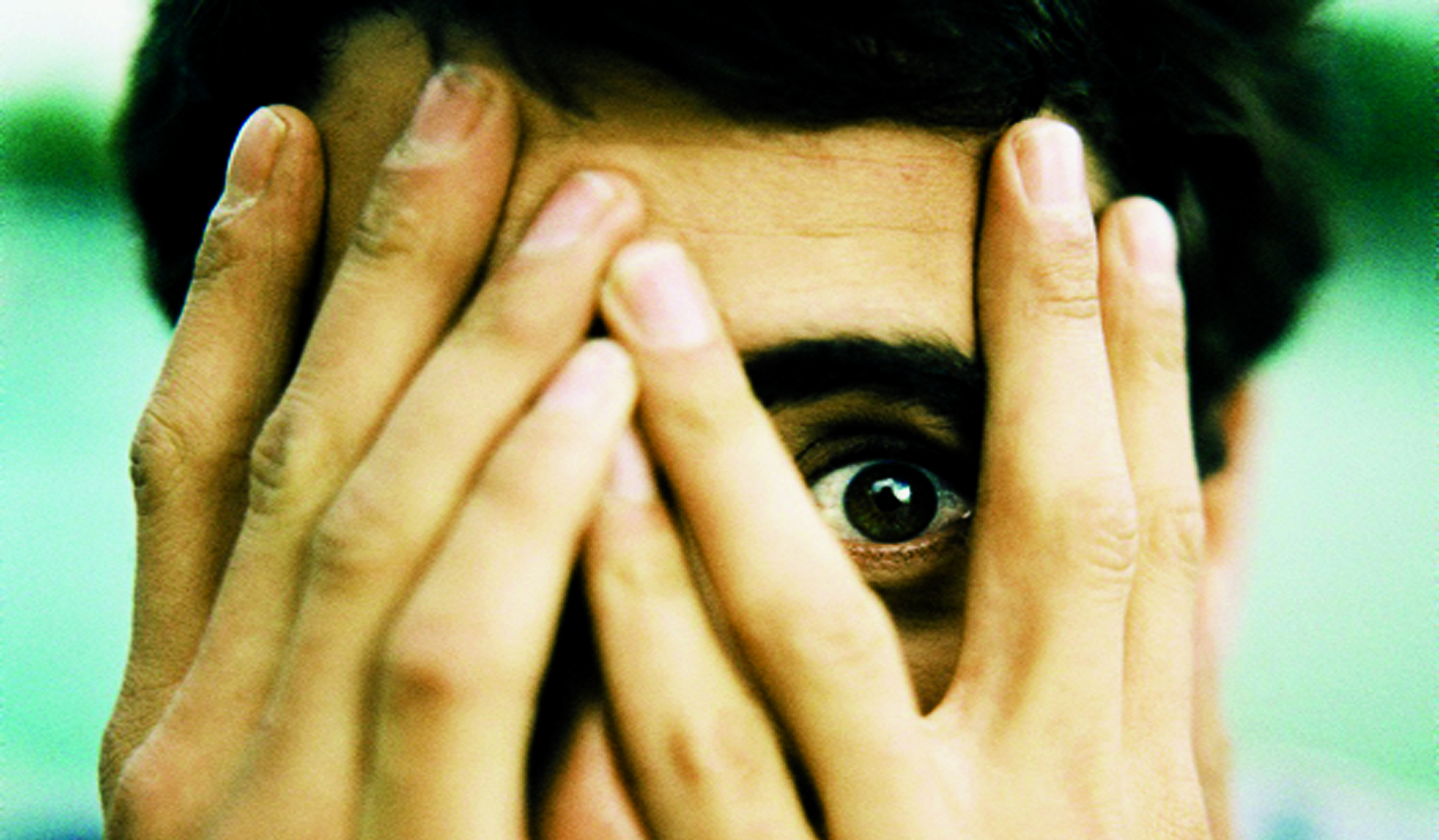
Satori

I don’t know why this has struck me on the most lusciously overcast day we’ve seen yet this year, but a remembrance of one of the hottest days that last summer saw suddenly flit past my eyes, and I thought I’d share it here.  It was an especially hard day for me, as I futily tried to rid my brain of obsessive thoughts over a personal issue.  Here’s what happened (not the personal issue, which I’ll just keep personal, but the day in question).  I decided that going to see friends of mine who are in a band perform at a summer solstice fair in Santa Monica would be just the needed anesthetic for my flooded brain.

When I arrived at the beach, it was a gorgeous day in spite of the triple-digit heat, and everyone from every Venice/Santa Monica walk of life was out, and in their inimitably Bohemian form. My kind of folks. I traversed from where I’d parked my car about six blocks inland of Main Street, and found the stage where my friends would be playing.

And as the music began, and I found a nice shade spot on a nearby curb on which to sit, I began to catch myself, here and there, not listening to the music. The blue noise in my head was louder. So, I briefly moved away from the crowd and called a friend who lives in the neighborhood and had him meet me there, just to add to the party.

He showed up, and we sat together and clapped our hands and snapped our fingers, and “whoooo whoooo”d and whistled at the end of solos, and were happy to see each other. But I was still afflicted. What other tricks could I pull? What other pill could I pop?

And that’s when I realized that this music before me was being used by me as a tool for checking out. And it deserved to be heard for its own sake. Not as distraction from problems, where then its only task is to be noisy enough to drown out that other noise. For that matter, I could’ve found a nice landfill where sanitation trucks would loudly dump their refuse. Or just sat by the side of a freeway overpass and let the engines and car horns and screeches easily drown out the clutter in my head. But I chose music instead.

Something that is sacred and transformative. Something that is never noise. I whored it.

And just at the instant that I had this realization, I truly heard the music for the first time that day. And felt lifted. I even, at one point, felt my phone vibrate on my hip and I ignored it (something I simply never do) in favor of a magical moment between two guitar players that I just didn’t want to sacrifice. And then it was gone. Blue noise in the head back again. And as loud as ever.

I started to notice the people around me. A little boy, maybe 4 or 5, danced and twirled euphorically until his father swooped him up onto his shoulders and his mother suddenly slathered his little face with sun block. It took the kid by surprise, who expressed his great irritation in the form of tears, wails, and a furious wiping of his face. Until only seconds later, the annoying sun block was forgotten, and little tyke was euphoric in giggles and twirls once again. It made me smile, which turned into a laugh.

I noticed an older woman, maybe homeless, it was hard to tell, who found herself a chair in the hot sun, and sat for the entire two sets of music, never once moving to find shade, as everyone else was doing, and so completely focused on the music in front of her. And I wondered what key to enlightenment she had that I could not seem to find.

And in those moments of people-watching, I was once again tuned into the music. As if the music was the conduit to a sudden state of presence. To listening, and observing, and taking in every sensation, every smell, every sound, every judgment even. And embracing it all. The crazy man with the playhouse on his head, who played air drums right along with the real drummer on stage, was glorious to me. And I thought of the scene in the movie American Beauty where the video-wielding kid from next door shows his new girlfriend footage he’d taken of a piece of paper floating in the breeze, and how beautiful he found this thing that was really nothing. It is a statement about finding treasure in every cell of every thing.

And as my day progressed, I found myself in and out of this remarkable sense of true presence, of finding that treasure in every cell, interspersed with hits of my blues and my burdens, which are all about being chained to past and future, and recognized what Buddhists call satori, which is defined as a “brief flash of insight.” I was flashing all over the place. But could never seem to find what in aeronautics is called gimbal lock.

Can we really reach a point where we’re always in an uninterrupted state of true presence, never allowing our problems to sit in the brain and furiously try to work themselves out, as brains will do? Or if we can at least count on a few brief flashes here and there to periodically anchor us and remind us that everything has value for its own sake, and not just as tools for medicating our wounds, isn’t that enough?

And sure enough, on the ride home, I felt full. Full with a day of communing with friends, and hearing wonderful music, and eating great food, and laughing. And none of it made my problems go away. It just managed to put those problems in their proper place in my brain, instead of allowing them the indulgent, repressive center stage.

I heard music that day for its own sake, even if only for moments at a stretch. And I found great meaning in the littlest things, if only in brief flashes.

I’ll take it.


Angela Carole Brown is the author of three published books, The Assassination of Gabriel Champion, The Kidney Journals: Memoirs of a Desperate Lifesaver, and Trading Fours, and has produced several albums of music and a yoga/mindfulness CD.   Bindi Girl Chronicles is her writing blog.   Follow her on Twitter, Facebook, Instagram & YouTube.
So, This Bindi Thing…

Head shot you tube copy 2

For years I’ve worn the jeweled ones. Colorful ornamental drops that nestle between the eyebrows. The first time I even thought to do so was after seeing a White woman wearing one at a party. This was years ago. Though the bindi is of Hindu derivation, and comes from ancient tradition, and I’ve obviously seen Indian women wearing them since I can remember, I was struck by this non-Indian woman daring to be brazen enough to do this tradition that was not of her own culture (the truth is, I have no clue what this woman’s background or experience was). The point is that it opened up something in me. I realized that most people, at least that I’ve ever observed in life, attach themselves to rituals, causes, and agendas based upon very compartmentalized associations.

How many people march in Gay Pride parades that aren’t gay? How many African-Americans associate themselves with Jewish causes? How many Caucasians walk around sporting African kufis on their heads as a simple matter of fashion and personal taste? Of course the answer is never none. There are always those treasured jewels who believe in a world beyond their own personal demographic, who embrace that above all else this is a human culture, and not just a racial one, or a gender one, or a sexual preference one, or whatever. The movie Cloud Atlas dared to challenge that notion by its very casting (an Asian woman portraying a Mexican. A Black woman portraying a White woman. A woman portraying a man. A White man portraying a Chinese man). But the bottom line is that in most cases, because we belong to a certain culture, race, gender, etc., we must know our place.

I’ve always been someone who’s done ODD.  It’s been an inadvertent skill, not one I particularly chose, but one I’ve been sort of stuck with, as a kind of dubious blessing.

One example that is a complete tangent from this discussion of the bindi, but will set the tone for you of my proclivities toward being otherly, and is just one, among the many things, that branded me for life and set the mold for quirky. Quirky has been with me since childhood, for better or for worse, much of which ended up being for worse, as adolescence defiantly insists on an adherence to conformity. And the example that rings loudest is the time as an early teen that I picked up a dead bird and brought it home. I found it lying in my path as I walked the grounds of my junior high school on my way to class. It was beautiful. A perfect blue jay. So beautiful in fact, and unmarred even in its death, that I was drawn to pick it up. It had a warmth to it, and I placed it in my purse. I carried it there for the rest of the day, precariously aware that if I moved this way or that, I could accidentally squish it and squirt guts all over my wallet and tampons. When I got it home, I placed it in one of my mother’s Tupperware bowls and put it in her freezer. When my parents asked me why I would keep such a thing, I told them I planned on having it taxidermied some day. I truly wish I could go back in time and notice their faces at this out-to-lunch pronouncement, and have to give it to them; they were always great sports for my idiosyncrasies. And there my bird stayed for years, nestled between the rib-eyes and the popsicles. It eventually saw its fate when Mom and Dad separated, and as my dad was preparing to move out of our house he unplugged the garage freezer (the extra one in which we would store pounds of meat), forgetting that my frozen bird was in there, and Birdy was maggot food before anyone discovered it. I’ll let you sit with that one for a minute.

Here’s one more. I promise we’ll get back to the bindi thing, but I just can’t seem to resist a circuitous route. While in college, I decided to start writing my first novel, and I actually spent the next eight years writing its first draft. I’m a Black girl from Compton. Yet my story was not what you might expect from that demographic. Mine was not an urban tale of encounters with Crips, or what have you. I decided to write a book about England in the 1930’s. I’d never been to England, or any other place beyond my sheltered Southern California upbringing. But something in me was compelled to do that which would never have been expected of me. I had a very specific agenda to be the opposite of predictable.

I think it’s probably fairly deep-seated. Perhaps steeped in a childhood of being severely outcast. When ostracization is your childhood, you tend to simultaneously and paradoxically try to blend in AND steel yourself by going the exact other way. And today I realize that this has been my engine my entire life. Associating myself with rituals, agendas, causes, even fashion that are beyond my own cultural background.

After seeing that White woman sport her between-the-eyebrows jewel, and being enchanted by that, I started sporting them myself, as much for the statement of otherly as for the beauty mark that they give any woman. What’s a Black girl doing wearing a Hindu ceremonial dot? I actually got annoyed, during the era of Madonna’s album Ray of Light, when she was suddenly shown sporting them along with her henna body art, during one of her endless reincarnations, and thought (the entire Hindu population aside): “Hey, she totally stole my thing!”   My thing, of course, only being a thing if the most famous pop star in the world is actually stalking my life in order to steal things from me.  Yes, I do live inside my own special world.

My line, whenever asked about my bindi, and which is meant to diffuse any real discussions of my reasons for wearing it, because that can sometimes be exhausting, is usually, dryly, “It’s to cover up the bullet hole.” It tends to get a laugh, and perhaps even has the person walking away with yet more intrigue about the mysteries of Angela. Or not. But this is who I am. I store dead birds, and I write books about Fascist Europe as a teen, instead of hanging out with my girlfriends and listening to Heatwave.

What’s silly about my Madonna annoyance, of course, is that I’ve hardly been the only non-Hindu out there sporting these. The bindi became instantly popular once the Material Girl and Gwen Stefani and Shania Twain made them fashion statements. But like any popular trend, which always has a “use by” date, other than the heritage and culture from which it comes, the bindi long ago got replaced as the trend du jour.

So, why am I still sporting mine? Because I have never adhered to the fashion of the day. But that’s the easy answer. More profoundly is that what I never foresaw when I first started wearing them was that I would, years later, come to pursue a spiritual life that is largely Eastern (Buddhist, Taoist, and Yogic practices, and meditation), and the idea of the symbolic third eye, of inner vision and enlightenment, which is the very place from which one meditates, as well as being the sixth-chakra spot of sight and insight, and which has resonated with my deepest heart. To think that a fashion whim, as well as the instincts to be otherly, has turned into a spiritual lifeline.

And so here I stand, present day, and after years of wearing the jeweled ones, or even just applying simple dots by the various means of make-up pencils, ink pens, or fingernail polish, I finally got my bindi made permanent in 2011, thanks to the wonders of the tattoo gun. It’s a part of me now.  Me, the Black chick from Compton.

I’ve always tended to think of myself as Hippie Girl (braided hair, tattoos, nose-piercing, and a weirdly fetishistic fondness for Birkenstocks, tie-dye, and Nag Champa). I collect crystals. I light candles when it comes time to commemorate the memory of someone. I burn sage when I feel the need to purify my surroundings. I rearrange furniture whenever my gut tells me that my home is in a state of discord, which means that I’ve been employing the practices of Feng Shui long before I’d ever even heard of it, and certainly before it became the new thing several years ago. I’ve even begun lately dabbling with the Tarot and palm reading, which, in spite of its popular mis-press, isn’t about predicting someone’s future, but is about locating and identifying archetypal energy and behavior, but that’s another tangent for another day. The point is, I do fully embrace the practices of healing and wellness, both the literal and the symbolic.

I don’t have a clue where any of that comes from, other than the fact that I am the Perpetual Seeker. I search for enlightenment in every hemp-strewn cubbyhole and New Age. But I cannot deny that it’s also a matter of my own brand of defiance against being pigeon-holed.

There is a price to pay for choosing to be otherly (still debating whether it’s actually a choice). It can be lonely. It can create a life of few inner circles. It can foster isolation. But those of us who align ourselves with its principles know that in spite of the possible challenges, we are staking our place in the world by the very practice of discombobulating people’s minds about who we are, and their instincts to compartmentalize us, and ultimately their inability to do so. It may have originated from a deep-seated place, but I have discovered that I quite like it.

More than anything, at this point in my life, my permanent bindi symbolizes the virtues of honor, integrity, grace, and peace of spirit. It is a reminder, every time I look in the mirror, of my pursuits of wellness and wholeness.  The actual work to attain these things is, of course, all on me.

I still like to say that it’s there to cover up the bullet hole. I make myself laugh, even if I don’t make anyone else. I still love it, nestled between my rapidly thinning eyebrows. I’d better.  Because it’s not going anywhere now.


Angela Carole Brown is the author of three published books, The Assassination of Gabriel Champion, The Kidney Journals: Memoirs of a Desperate Lifesaver, and Trading Fours, and has produced several albums of music and a yoga/mindfulness CD.   Bindi Girl Chronicles is her writing blog.   Follow her on Twitter, Facebook, Instagram & YouTube.